
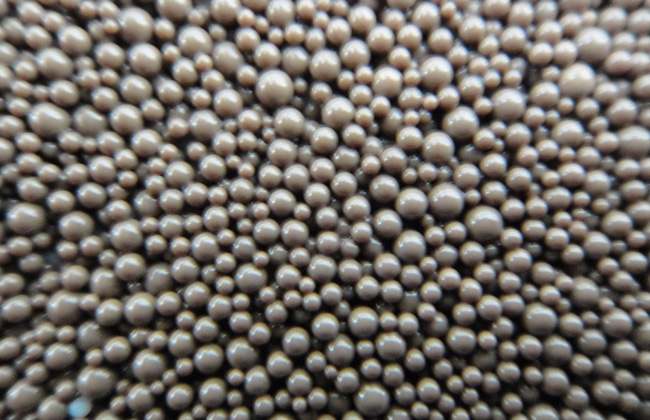
Application
Alkylation: Strong Acid Catalyst Resin for Alkylation Reactions
Solid acid catalyst resin for alkylation reactions, a safer alternative to HF and AlCl3 catalysis for detergents, lubricant additives and fine chemicals.
Application
A solid-acid alternative to hydrofluoric and sulfuric acid alkylation for cleaner, safer processing.
Alkylation introduces an alkyl group onto an aromatic ring or another molecule, and is a core reaction in the manufacture of detergents, lubricant additives and fine chemicals. Traditionally this reaction has relied on hazardous liquid catalysts such as hydrofluoric acid or aluminum chloride. Strong acid resin catalysts offer a solid-acid alternative that removes the handling risk of these liquid acids while still delivering the acidity needed to drive the reaction.
How the Catalyst Works
The resin's sulfonic acid groups protonate the alkylating agent, generating the reactive intermediate that attacks the aromatic substrate. Because the acid sites are anchored to the polymer matrix rather than dissolved in the reaction mixture, the catalyst does not contaminate the product and can be removed from the process simply by filtration or by staying fixed in a packed-bed reactor.
Key Benefits
- Eliminates the safety and corrosion concerns of liquid HF or AlCl₃ catalysts
- High mechanical strength and abrasion resistance withstand continuous fixed-bed operation
- Uniform particle size gives consistent flow and pressure drop in the reactor
- Simplifies product purification since no catalyst neutralization or washing is required
Our macroporous strong acid resin, built on the same platform as the D005 Catalyst Resin, brings this safer solid-acid approach to alkylation processes.
Related Products
-
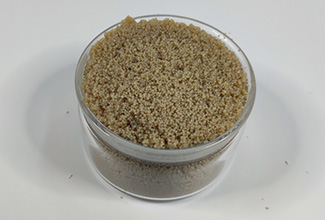 D005 Catalyst ResinAppearance: Gray opaque spherical particles.Ionic form:H+Volume complete exchange capacity(mmol/ml):≥4.7
 -
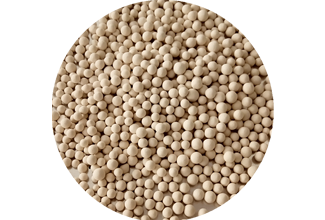 Macroporous Strong Acidic Resin CatalystAppearance: Gray-yellow to gray-brown opaque spherical particles.Ionic form:H+Granularity(mm):0.315-1.25
