
(1) Monomer. It is a low-molecular organic substance that can be polymerized into a macromolecular compound. It is the main component of ion exchange resin, so it is also called the matrix. Such as styrene, acrylic acid, etc.
(2) Crosslinking agent. It is a substance that can play a bridging role when linear structure molecules are condensed, so that the groups in its molecules are bonded to each other to form an insoluble network. The commonly used crosslinking agent for ion exchange resin is divinylbenzene. The percentage of crosslinking agent in ion exchange resin is called crosslinking degree. The cross-linking degree of ion exchange resin used in chemical desalination water treatment is generally in the range of 7% to 12%.
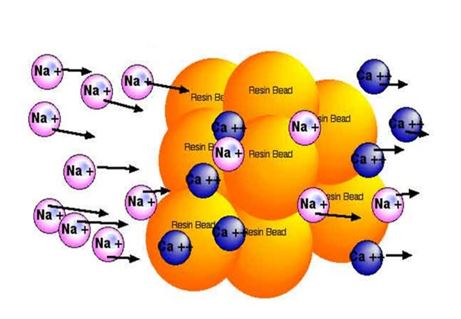
(3) Exchange group. It is a group with active ions (exchangeable ions) bonded to the monomer. It can be introduced into the resin by chemical reaction from low molecular weight molecules with dissociation ability [such as sulfuric acid H2SO4, organic amine N(CH)3, etc.]; it can also be directly polymerized by monomers with dissociation groups (such as methacrylic acid).
.png)
