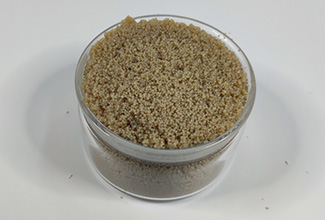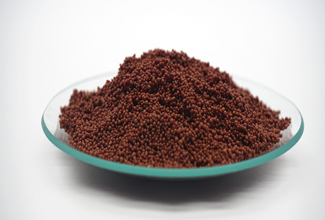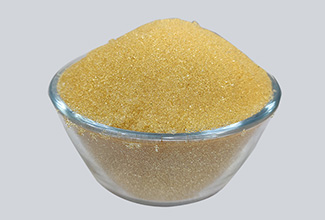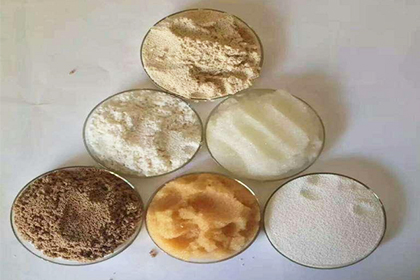
Catalytic resins, as polymer-supported catalysts, play an irreplaceable core role in industrial processes such as chemical synthesis, purification and separation, and catalytic reactions. Compared with traditional homogeneous catalysts, catalytic resins have advantages such as easy separation and recovery, reusability, and environmental friendliness, which can effectively improve process efficiency and reduce production costs. Therefore, they are widely used in many fields such as petrochemicals, fine chemicals, and pharmaceutical intermediate synthesis.
However, improper selection of catalytic resins can not only prevent them from achieving their catalytic efficiency but may also lead to low reaction efficiency, substandard product purity, increased equipment wear and tear, and even increased downtime costs and safety risks. Therefore, mastering scientific methods for selecting catalytic resins is crucial for ensuring process stability and improving production efficiency.
What are Catalytic Resins and How Do They Work?
Definition of Catalytic Resin
Catalytic resins, also known as polymer-supported catalysts, are a class of functional resins formed by supporting catalytically active functional groups (such as acidic groups, basic groups, and metal coordinating groups) on a polymer backbone. Their core structure consists of two parts: a polymer backbone (providing mechanical support and stability) and active functional groups (responsible for the catalytic reaction).
The Core Working Principle of Catalytic Resin
The essence of catalytic resins lies in the interaction between their surface active functional groups and the reaction substrate, thereby lowering the activation energy and accelerating the reaction process, while maintaining essentially unchanged chemical properties and mass before and after the reaction. Specifically, the process mainly consists of three stages: First, substrate molecules are adsorbed onto the active sites on the catalytic resin surface; second, the active functional groups undergo a catalytic reaction with the substrate, propelling the reaction towards the target product; finally, the reaction product detaches from the active sites, the catalytic resin returns to its initial state, and can continue to participate in the next catalytic cycle.
Among these, ion exchange is the core mechanism of action for most catalytic resins (such as acid-base catalytic resins)—through the exchange of ions on the resin framework with ions in the reaction system, the reaction environment is adjusted, promoting efficient catalytic reactions.
The Core Advantages of Catalytic Resins in Industrial Applications
Compared to traditional homogeneous catalysts, catalytic resins offer significant advantages in industrial processes, which is a key reason for their widespread application: First, they are easy to separate and recover, requiring no complex separation processes to separate the resin from the reaction system, avoiding the impact of catalyst residue on product quality and reducing catalyst loss. Second, they are reusable; after simple regeneration, catalytic resins can be recycled multiple times, significantly reducing catalyst usage costs. Third, they offer high catalytic selectivity; by controlling the active functional groups and structure of the resin, targeted catalytic reactions can be achieved, reducing side reactions and improving product yield. Fourth, they are environmentally friendly, avoiding the environmental pollution caused by the difficulty in recovering homogeneous catalysts, aligning with the trend of green chemical development. Fifth, they have stable mechanical properties, adapting to temperature and pressure changes in industrial processes and are not easily degraded or damaged.
The Difference Between Catalytic Resins and Traditional Homogeneous Catalysts
Although both catalytic resins and traditional homogeneous catalysts can accelerate catalytic reactions, they differ significantly in structure, performance, and application scenarios. The main differences are as follows: In terms of their physical form, catalytic resins are solid-phase catalysts, while traditional homogeneous catalysts are mostly liquid or gaseous and completely mixed with the reaction system. Regarding separation difficulty, catalytic resins can be separated and recovered through simple methods such as filtration and centrifugation, while homogeneous catalysts require complex processes such as distillation and extraction, resulting in higher costs. In terms of reusability, catalytic resins can be regenerated and recycled multiple times, while homogeneous catalysts are mostly difficult to recover and reuse, leading to high one-time consumption costs. In terms of environmental impact, homogeneous catalysts tend to remain in products or wastewater, causing environmental pollution, while catalytic resins effectively avoid this problem.
Key Factors to Consider Before Selecting a Catalytic Resin
Before selecting a catalytic resin, it is necessary to clarify the core requirements and boundary conditions of your own process. The following five factors directly determine the compatibility of the resin and are the basic prerequisites for selection.
Process Conditions (Temperature, Pressure, Ph Value)
Process conditions are the primary consideration in selecting catalytic resins, directly affecting their stability and catalytic efficiency. Regarding temperature, different types of catalytic resins have fixed applicable temperature ranges. Exceeding the upper limit will lead to resin skeleton degradation and the shedding of active functional groups, while falling below the lower limit will significantly reduce catalytic activity. Regarding pressure, high-pressure environments place higher demands on the mechanical strength of the resin, requiring the selection of resins with strong mechanical stability and resistance to breakage. Regarding pH, acid-base catalytic resins are sensitive to the pH of the reaction system. Strong acid resins are suitable for acidic reaction systems, and strong base resins are suitable for alkaline reaction systems. If the pH exceeds the applicable range, the resin will lose its activity.
Raw Material Composition and Impurity Content
The composition and impurity content of raw materials directly affect the service life and catalytic effect of catalytic resins. Impurities in the raw materials (such as metal ions, colloids, and organic matter) may adsorb onto the resin surface, blocking active sites and causing resin "poisoning," thus reducing catalytic activity. Simultaneously, some impurities may react chemically with the resin, damaging its structure and shortening its service life. Therefore, before selecting a resin, it is necessary to clearly identify the main components, types, and contents of impurities in the raw materials, and to selectively choose catalytic resins with strong anti-fouling capabilities and high tolerance to impurities.
Target Reaction Efficiency and Conversion Rate Requirements
Different processes have different requirements for reaction efficiency and conversion rate, necessitating the selection of catalytic resins based on the target requirements. For rapidly increasing the reaction rate, resins with high density of active functional groups and strong catalytic activity should be selected; for high conversion rates, resins with high catalytic selectivity and the ability to effectively suppress side reactions should be chosen. Furthermore, for reversible reactions, the resin's role in regulating reaction equilibrium must be considered to ensure the reaction proceeds towards the target direction and achieves the expected conversion rate.
Process Scale (Laboratory Vs. Industrial Production)
Different process scales have different requirements for catalytic resins. Laboratory-scale processes typically use less resin and focus more on the resin's catalytic activity and selectivity to facilitate rapid verification of reaction effects. Industrial-scale processes, on the other hand, require resins with good catalytic performance, as well as considerations such as mechanical strength, regeneration performance, and batch stability to meet the needs of large-scale continuous production while controlling production costs.
Environmental Protection and Regulatory Requirements
With increasing global environmental awareness, industrial production is facing increasingly stringent requirements for environmental compliance. When selecting catalytic resins, it is essential to consider their environmental performance, prioritizing products that do not release toxic or harmful substances, are recyclable, and comply with local environmental regulations. Furthermore, for industries with extremely high purity requirements, such as pharmaceuticals and food, it is necessary to select catalytic resins that meet industry-specific standards (such as FDA standards) to avoid resin residues affecting product quality.
Types of Catalytic Resins
There are many types of catalytic resins, and different types of resins have significant differences in active functional groups, catalytic performance, and applicable scenarios. Understanding the characteristics of each type of resin is the key to achieving accurate selection.
Strong Acid Cation Exchange Catalytic Resin
Strongly acidic cation exchange catalytic resins primarily possess sulfonic acid groups (-SO₃H) as their active functional group, exhibiting strong acidity and maintaining catalytic activity over a wide pH range. They are characterized by high catalytic activity and strong stability, making them suitable for various acidic catalytic reactions, such as esterification, etherification, hydrolysis, and alkylation. Furthermore, these resins exhibit strong temperature tolerance, adapting to medium- and high-temperature process conditions, making them one of the most widely used types of catalytic resins in industrial production.
Weakly Acidic Cation Exchange Catalyst Resin
The active functional group of weakly acidic cation exchange catalytic resins is mainly the carboxyl group (-COOH). They are weakly acidic and only exhibit catalytic activity in neutral or alkaline reaction systems. Their characteristics include high selectivity, environmental friendliness, low regeneration difficulty, and low regenerant dosage. They are suitable for reactions requiring high selectivity but not high catalytic activity, such as the separation and purification of amino acids and hydrolysis reactions under mild conditions.
Strongly Basic Anion Exchange Catalytic Resin
The active functional groups of strongly basic anion exchange catalytic resins are mainly quaternary ammonium groups (-NR₃OH), which give them strong basicity and allow them to maintain catalytic activity in acidic, neutral, and basic reaction systems. They are characterized by high catalytic efficiency and significant catalytic effect on nucleophilic reactions, making them suitable for various basic catalytic reactions, such as saponification, addition, and elimination reactions. They can also be used to remove acidic impurities from reaction systems.
Weakly Basic Anion Exchange Catalytic Resin
The active functional groups of weakly basic anion exchange catalytic resins are mainly primary amine groups (-NH₂), secondary amine groups (-NHR), and tertiary amine groups (-NR₂). They are weakly basic and only exhibit catalytic activity in acidic reaction systems. Their characteristics include large adsorption capacity and good regeneration performance, making them suitable for catalytic reactions and impurity adsorption under acidic conditions, such as the reduction of nitro compounds and the treatment of acidic wastewater.
Special Catalytic Resins
Specialty catalytic resins are a class of resins designed for specific reaction requirements. They come in many varieties, commonly including chelating catalytic resins, chiral catalytic resins, and metal-supported catalytic resins. Chelating catalytic resins can form stable chelates with metal ions, making them suitable for the separation and purification of metal ions and metal-catalyzed reactions. Chiral catalytic resins possess chiral recognition capabilities, making them suitable for the synthesis and resolution of chiral compounds, and are widely used in the pharmaceutical and fine chemical industries. Metal-supported catalytic resins, on the other hand, support metal catalysts (such as palladium, platinum, and copper) on a resin framework, combining the separation advantages of resins with the high catalytic activity of metals, and are suitable for reactions such as hydrogenation and oxidation.
Catalytic Resin Specifications and Their Impact on The Process
The specifications of catalytic resins directly determine their catalytic performance, service life, and compatibility. When selecting them, the following core specifications should be given special attention to clarify their impact on the process.
Particle Size and Particle Size Distribution
Particle size and particle size distribution are important physical parameters of catalytic resins, primarily affecting the flow rate and mass transfer efficiency of the reaction system. Smaller particle sizes result in a larger specific surface area of the resin, exposing more active sites and leading to higher catalytic activity. However, this also increases the resistance of the reaction system and reduces the flow rate. Larger particle sizes result in a faster flow rate, but catalytic activity may decrease. Furthermore, resins with uniform particle size distribution ensure uniform fluid distribution within the reaction system, avoiding uneven catalytic efficiency caused by excessively fast or slow local flow rates, while also reducing resin wear and extending its service life.
Specific Surface Area and Pore Structure
Specific surface area and pore structure directly affect the catalytic activity and selectivity of catalytic resins. A larger specific surface area means more active sites on the resin surface, resulting in a larger contact area with the substrate and higher catalytic efficiency. Pore structure determines the contact efficiency between substrate molecules and active sites. Resins with moderate pore size and large pore volume promote the diffusion of substrate molecules to active sites and facilitate the detachment of product molecules, preventing pore blockage. For catalytic reactions involving large molecular substrates, resins with larger pore sizes should be selected to ensure that substrate molecules can smoothly enter the pores and interact with the active sites.
Switching Capacity
Exchange capacity refers to the total number of ions that a unit mass or volume of catalytic resin can exchange. It is divided into total exchange capacity and working exchange capacity, and mainly affects the catalytic lifetime and reaction efficiency of the resin. The higher the exchange capacity, the more active functional groups the resin can support, the longer the catalytic lifetime, and the larger the volume of the reaction system that can be processed. Working exchange capacity is closer to the actual process requirements and is greatly affected by process conditions (such as temperature, pH, and flow rate). When selecting working exchange capacity, it is necessary to combine the actual process parameters to ensure that the working exchange capacity of the resin meets the reaction requirements.
Mechanical Stability
Mechanical stability refers to the ability of a catalytic resin to resist wear, breakage, and compression, directly affecting its service life and the feasibility of industrial applications. In industrial production, resins must withstand stirring, flow rate impacts, and pressure changes. If mechanical stability is insufficient, breakage and pulverization can easily occur, leading to the loss of active sites and potentially clogging equipment pipelines, affecting continuous process operation. Therefore, for high-flow-rate, high-pressure processes, catalytic resins with high mechanical strength and good wear resistance must be selected.
Chemical Stability
Chemical stability refers to the ability of a catalytic resin to resist chemical corrosion and avoid structural damage in a reaction system, primarily depending on the chemical properties of the resin skeleton and active functional groups. The resin must have good compatibility with the solvents, reactants, and products in the reaction system to prevent chemical reactions that could lead to skeleton degradation and the shedding of active functional groups. For example, in strongly oxidizing reaction systems, resins with strong antioxidant properties should be selected; in organic solvent systems, resins with good tolerance to organic solvents should be selected to ensure stable catalytic performance throughout the entire process cycle.
Core Considerations for The Performance and Service Life of Catalytic Resins
When selecting catalytic resins, it is important to consider not only their initial catalytic performance but also their stability and service life during long-term use to avoid decreased process efficiency and increased costs due to resin performance degradation.
Matching of Catalytic Activity and Selectivity
Catalytic activity and selectivity are core performance indicators of catalytic resins, and they must be precisely matched with the target reaction of the process. Insufficient catalytic activity will lead to low reaction efficiency and failure to achieve the expected production progress; insufficient selectivity will lead to an increase in side reactions, reduce product yield, and increase subsequent separation and purification costs. Therefore, when selecting a resin, it is necessary to clearly define the type of target reaction and substrate characteristics, and choose a resin whose activity and selectivity meet the requirements. If necessary, the catalytic effect of the resin can be verified through small-scale experiments.
Regeneration Capacity and Regeneration Cost
Regeneration capability is a significant advantage of catalytic resins over traditional homogeneous catalysts and is also key to controlling production costs. During long-term use, the activity of resins gradually declines; regeneration can restore their catalytic activity and extend their service life. When selecting resins, attention should be paid to the regeneration difficulty, regenerant dosage, and regeneration cycle. Resins with simple regeneration processes, low regenerant costs, and high regeneration efficiency should be prioritized. For example, weakly acidic and weakly basic resins are easier to regenerate than strongly acidic and strongly basic resins, and their regeneration costs are also relatively lower.
Expected Service Life
The lifespan of catalytic resins is affected by various factors such as process conditions, raw material impurities, and regeneration frequency. When selecting a resin, it is necessary to consider the operating cycle of your own process and reasonably anticipate its lifespan. Generally speaking, the lifespan of industrial-grade catalytic resins is 1-3 years. If the process conditions are mild, the raw material impurities are low, and regeneration is timely, the lifespan can be extended to 3-5 years. Choosing a resin with a longer lifespan can reduce the frequency of resin replacement, thereby reducing downtime and replacement costs.
Scale Prevention and Treatment
Scaling is a common problem during the use of catalytic resins, mainly caused by the adsorption of impurities in the raw materials and the deposition of reaction products. It clogs resin pores, covers active sites, and significantly reduces catalytic activity and lifespan. When selecting resins, priority should be given to those with strong anti-scaling capabilities. Simultaneously, pretreatment steps (such as filtration and adsorption) should be incorporated into the process design to reduce the impurity content in the raw materials. During use, the resin should be cleaned and regenerated regularly to promptly remove surface scale and ensure its normal operation.
Common Misconceptions When Selecting Catalytic Resins
In the actual selection process, many companies fall into selection pitfalls due to insufficient understanding of resin characteristics and process requirements, resulting in poor resin compatibility and low process efficiency. Below are five of the most common pitfalls that should be avoided.
Ignoring the Compatibility of Process Temperature and Ph
This is one of the most common selection pitfalls. Many companies focus only on the catalytic activity of the resin, neglecting the impact of process temperature and pH on the resin, leading to resin degradation and loss of activity during use. For example, using a strongly acidic resin in an alkaline reaction system will cause the sulfonic acid groups in the resin to fall off, resulting in an instantaneous loss of catalytic activity; using a resin that is not heat-resistant in a medium- or high-temperature process will cause the resin skeleton to soften and break, rendering it unusable.
Ignoring the Impact of Raw Material Impurities
Some companies, when selecting resins, only focus on the main components of the raw materials, neglecting the impact of impurities. This leads to the resin becoming "poisoned" and scaling within a short period of use, resulting in a significant decrease in catalytic activity. For example, heavy metal ions in the raw materials can combine with the active functional groups of the resin, causing the active sites to be occupied; colloidal impurities can clog the resin pores, affecting mass transfer efficiency. All of these factors shorten the resin's lifespan and increase production costs.
Choosing the Wrong Resin Type
Different types of catalytic resins are suitable for different types of reactions. Choosing the wrong resin can lead to low catalytic efficiency and an increase in side reactions. For example, using a weakly acidic resin for a strongly acidic catalytic reaction will result in insufficient catalytic activity, preventing the reaction from proceeding normally. Using anion exchange resins for acidic catalytic reactions will not only fail to exert a catalytic effect but may even cause them to react with the reaction system.
Prioritizing Cost Over Performance
To reduce initial procurement costs, some companies choose cheaper but lower-performing resins. While this may seem like a cost-saving measure, it actually increases long-term production costs. Lower-performing resins have lower catalytic efficiency, shorter lifespans, and higher regeneration frequencies, leading to decreased process efficiency, more downtime, and increased regeneration costs. In the long run, the overall cost is far higher than that of high-quality resins.
Neglecting the Needs of Regeneration and Maintenance
Many companies focus solely on the initial properties of resins when selecting them, neglecting their regeneration and maintenance requirements. This leads to the resins rapidly losing their activity during use due to untimely regeneration or improper maintenance. For example, some resins require specific regenerators and regeneration processes. If companies are not aware of these requirements beforehand, they cannot regenerate effectively and must frequently replace the resin, increasing costs.
Step-By-Step Guide to Selecting the Right Catalyst Resin
Based on the above analysis, the following is a scientific and practical step-by-step guide to help you accurately select the catalytic resin that meets your process requirements, avoid selection pitfalls, and improve process efficiency.
Step 1: Define Process Objectives and Core Parameters
First, it is necessary to clearly define the core objectives of the process, including the target reaction type, product yield, reaction efficiency, and production scale. Simultaneously, it is crucial to identify the core process parameters, such as reaction temperature, pressure, pH value, solvent type, raw material composition, and impurity content. This forms the basis for selecting a catalytic resin; all subsequent selections must revolve around these parameters.
Step 2: Analyze he Adaptation Requirements of Process Conditions
Based on the analyzed process parameters, the resin compatibility requirements are clarified: the applicable temperature range of the resin is determined by combining the reaction temperature; the acid-base type (acidic, basic, neutral) of the resin is determined by combining the reaction pH value; the chemical stability requirements of the resin are determined by combining the solvent type; and the mechanical strength and batch stability requirements of the resin are determined by combining the production scale.
Step 3: Assess the Impact of Raw Material Characteristics and Impurities
A detailed analysis of the raw material composition is crucial to identify the type, content, and characteristics of impurities. This analysis should assess the potential impact of impurities on the resin (e.g., poisoning, scaling) and select resins with strong anti-fouling capabilities and high tolerance to impurities. If the raw material contains a high level of impurities, adding a pretreatment step to the process can be considered to reduce the impact of impurities on the resin.
Step 4: Select the Resin Type According to the Reaction Requirements
Based on the target reaction type, select the appropriate resin type: for acidic catalytic reactions, prioritize strongly acidic or weakly acidic cation exchange catalytic resins; for basic catalytic reactions, prioritize strongly basic or weakly basic anion exchange catalytic resins; for specific high-end reactions (such as chiral synthesis and metal catalysis), select corresponding specialty catalytic resins. Simultaneously, further narrow down the selection range by considering catalytic activity and selectivity requirements.
Step 5: Compare Resin Specifications
For each selected resin type, its core specifications, including particle size and distribution, specific surface area and pore structure, exchange capacity, mechanical stability, and chemical stability, are compared. Based on the specific process requirements, the resin with the most suitable specifications is selected. For example, resins with larger pore sizes are chosen for macromolecular substrate reactions, while resins with moderate particle size and high mechanical strength are selected for high-flow-rate processes.
Step 6: Assess the Feasibility of Regeneration and Maintenance
Understand the resin regeneration process, regeneration agent dosage, and regeneration cycle; assess your company's regeneration capabilities and maintenance costs; and select resins with simple regeneration processes, low regeneration costs, and convenient maintenance. Simultaneously, confirm whether the resin supplier can provide regeneration technical support to ensure effective regeneration and maintenance of the resin during use.
Conclusion
Choosing the right catalytic resin is crucial for ensuring industrial process stability, improving production efficiency, and reducing production costs. The key lies in: clearly defining the goals and parameters of your process, understanding the characteristics and applicable scenarios of various catalytic resins, avoiding common selection pitfalls, following a scientific step-by-step screening guide, effectively communicating with suppliers, and, when necessary, verifying resin performance through small-scale experiments.
It is important to emphasize that there is no "optimal solution" for catalytic resin selection, only the "most suitable solution." Different processes have different requirements; the best choice is a resin that adapts to your specific process conditions, achieves the target reaction efficiency and conversion rate, and offers high cost-effectiveness for long-term use.