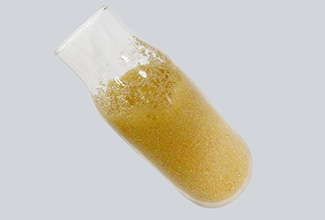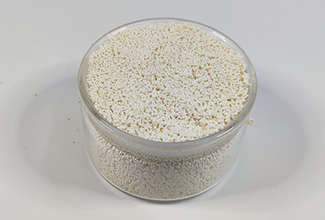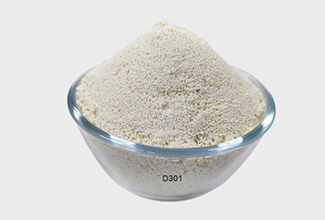
As a core material in industrial fields such as ion exchange, water treatment, and chemical separation, the quality of resin directly determines the stability and efficiency of the production process. Inferior resin not only leads to decreased ion exchange efficiency and substandard effluent quality, but its fragile structure and brittleness can also generate resin powder, clogging equipment pipelines and increasing equipment maintenance costs and downtime. Long-term use of inferior resin can also result in rapid performance degradation, necessitating frequent replacements, significantly increasing operating costs, and even affecting the quality of the final product, leading to compliance risks.
Key Performance Indicators to be Evaluated in Resin Quality Testing
The quality of resin depends primarily on the performance of its key performance indicators. These indicators directly relate to the resin's effectiveness, lifespan, and applicable scenarios, and are the core focus of quality testing. Below is a detailed introduction to the six key performance indicators that must be evaluated during the testing process.
Ion Exchange Capacity
Ion exchange capacity is the most crucial performance indicator of resin, referring to the total number of ions that a unit mass or volume of resin can exchange. It is divided into total ion exchange capacity and working ion exchange capacity. Total ion exchange capacity reflects the theoretical exchange capacity of the resin, determined by its chemical structure; working ion exchange capacity, on the other hand, is the effective exchange capacity that the resin can exert in actual application scenarios, influenced by factors such as water quality, temperature, and flow rate. Both are core criteria for judging the strength of resin exchange performance.
Particle Size Distribution and Uniformity
The particle size distribution and uniformity of the resin directly affect its filling effect, water flow rate, and ion exchange efficiency in the equipment. Resin with excessively uneven particle size will lead to uneven water flow distribution within the equipment, with some areas having excessively high flow rates and insufficient ion exchange, while other areas will have excessively slow flow rates, easily causing blockages and increasing the operating pressure of the equipment. A uniform particle size distribution ensures the stability of the resin bed and improves the efficiency and consistency of ion exchange.
Mechanical Strength and Wear Resistance
During use, resin undergoes multiple mechanical operations such as filling, backwashing, and regeneration, while also being subjected to the impact of water flow. Therefore, mechanical strength and wear resistance are crucial. Resin with insufficient mechanical strength is prone to breakage and wear during operation, producing resin powder (commonly known as "fines"). This not only clogs the equipment but also reduces the total amount of resin, decreases the exchange capacity, and shortens the resin's service life.
Chemical Stability
In industrial applications, resins are often exposed to complex environments, including acidic, alkaline, or organic solvent-containing environments. Chemical stability directly determines the resin's service life and performance stability in these environments. The chemical stability of a resin is primarily manifested in its resistance to acids, alkalis, organic solvents, and oxidants. Resins with insufficient stability will undergo chemical degradation, leading to structural damage, a sharp drop in exchange capacity, and even dissolution in the medium, contaminating the byproducts.
Moisture Content and Swelling Behavior
Moisture content refers to the amount of water inside the resin, which is closely related to the number of active groups and pore structure of the resin, and directly affects the ion exchange activity of the resin. Swelling behavior refers to the characteristic of resin changing volume in different media (such as water, acid, alkali). Excessive or insufficient swelling will affect the filling effect of the resin in the equipment, and may even lead to resin bed deformation and equipment damage. Therefore, it is necessary to test and control it accurately.
Contaminant and Impurity Content
During production, transportation, or use, resins may become contaminated with impurities such as organic pollutants, metal ions, and particulate matter. These impurities can occupy the active groups of the resin, reducing its exchange capacity, and may also contaminate the treatment medium (such as drinking water or chemical raw materials). Therefore, detecting the content of pollutants and impurities in the resin is a crucial step in determining whether the resin meets the usage standards.
Preparations Before Resin Quality Testing
Scientific and accurate resin quality testing relies heavily on thorough preparation. The adequacy of this preparation directly impacts the accuracy and reliability of the test results, preventing errors caused by insufficient preparation and ensuring accurate assessment of resin quality. Below are four key preparatory steps for testing.
Prepare the Necessary Testing Equipment and Materials
Depending on the specific test, corresponding testing equipment and materials must be prepared in advance to ensure the smooth conduct of the test. Core equipment includes: analytical balance (accuracy 0.1 mg), beakers, pipettes, burettes, oven, desiccator, sieves (different aperture sizes), laser particle size analyzer, abrasion tester, etc.; core materials include: standard titration solutions (such as hydrochloric acid, sodium hydroxide), deionized water, resin samples, filter paper, etc. All equipment must be calibrated in advance to ensure accuracy meets testing requirements; materials must be of guaranteed purity to avoid introducing impurities that could affect the test results.
Resin Sample Collection: Obtain Representative Samples
Sample collection is crucial to ensuring the representativeness of test results and avoiding misjudgments of overall resin quality due to sample bias. The collection process must adhere to the principles of "randomness, uniformity, and comprehensiveness": samples should be collected from different locations (top, middle, and bottom) of the resin packaging, with a minimum sample size of 50g per batch; samples should be kept clean and dry to prevent contamination during collection, and proper labeling (e.g., batch number, collection time, and resin type) should be used.
Sample Pretreatment: Ensure Consistent Testing Conditions
After collection, resin samples need to be pretreated to eliminate residual impurities, moisture differences, and other factors, ensuring all tests are conducted under uniform conditions. Pretreatment steps mainly include: repeatedly rinsing the sample with deionized water to remove surface-adsorbed impurities and soluble salts; drying or conditioning the sample (e.g., immersing it in a specific medium to stabilize the resin) according to the test requirements; and placing the dried sample in a desiccator to cool to room temperature to prevent moisture absorption from affecting test data.
Operational Safety Precautions
Resin quality testing involves chemical reagents (such as acids and alkalis) and precision equipment, requiring strict adherence to safety operating procedures. Operators must wear gloves, goggles, and lab coats to prevent chemical reagents from contacting skin and eyes; the experimental site must be well-ventilated and kept away from fire sources and flammable materials; precision equipment must be used according to the operating instructions to avoid damage or testing errors caused by improper operation; chemical waste liquids after testing must be collected centrally and disposed of properly to prevent environmental pollution.
Ion Exchange Capacity Testing: a Core Indicator of Resin Performance
Ion exchange capacity is a core indicator for measuring the exchange ability of resin and a key basis for judging the quality of resin. Whether purchasing new resin or assessing the performance degradation of resin in use, ion exchange capacity testing is an essential step. The following details the testing methods, calculation methods, and result interpretation for ion exchange capacity.
Definition And Importance of Ion Exchange Capacity (Iec)
Ion exchange capacity (IEC) refers to the amount of ions that a unit mass (or volume) of resin can exchange, usually expressed in mmol/g (millimoles per gram) or mmol/mL (milliliters per milliliter). It directly reflects the resin's ability to adsorb and exchange ions. A higher IEC value indicates stronger exchange performance, meaning the resin can handle more ions under the same operating conditions and has a longer service life. For industrial applications, accurately determining the IEC value of resin helps companies rationally calculate resin usage, optimize process parameters, and reduce operating costs.
Titration Test Method for Total Ion Exchange Capacity
The total ion exchange capacity is commonly tested using titration, which is simple to operate and highly accurate. The specific steps are as follows: 1. Take about 0.5g of the pretreated dried resin sample and place it in an Erlenmeyer flask. Add a certain amount of standard hydrochloric acid solution and soak for a period of time to allow the resin to be fully saturated with hydrogen ions. 2. Rinse the inner wall of the Erlenmeyer flask with deionized water and add phenolphthalein indicator. 3. Titrate with standard sodium hydroxide solution until the solution turns pale red and does not fade within 30 seconds. Record the volume of sodium hydroxide solution consumed. 4. Calculate the total ion exchange capacity of the resin based on the titration data.
Calculation of Working Ion Exchange Capacity in Practical Applications
The working ion exchange capacity is the effective exchange capacity of the resin under actual operating conditions. It is affected by factors such as water quality, temperature, flow rate, and regeneration conditions, and needs to be calculated based on the specific application scenario. The calculation method is as follows: 1. Record the volume of the resin bed, the flow rate of the treatment medium, and the treatment time; 2. Detect the concentration of the target ions in the medium before and after treatment, and calculate the total number of ions exchanged by the resin; 3. Divide the total number of exchanged ions by the mass (or volume) of the resin to obtain the working ion exchange capacity. The working ion exchange capacity more closely reflects actual usage needs and is an important basis for enterprises to determine whether the resin meets production requirements.
Interpretation of IEC Test Results: Normal Range and Abnormal Signals
The normal range for IEC varies among different types of resins: the total IEC for strongly acidic cation exchange resins is typically 4.5-5.5 mmol/g, for strongly basic anion exchange resins it is typically 3.0-4.0 mmol/g, and for weakly acidic and weakly basic resins it is relatively lower. If the test result is below the normal range, it indicates that the resin may have quality problems (such as insufficient active groups), contamination, or performance degradation. If the IEC value is too high and fluctuates significantly, it may be due to sample contamination or testing operation errors, requiring retesting for confirmation.
Evaluation of Resin Particle Size Distribution and Uniformity
The particle size distribution and uniformity of resin directly affect the permeability of the resin bed, water flow distribution, and ion exchange efficiency, thus impacting the stability of the entire production process. Therefore, accurately assessing the particle size distribution and uniformity of resin is a crucial step in resin quality testing.
The Effect of Particle Size on Resin Performance
The size and uniformity of resin particles mainly affect three aspects: First, water flow velocity. If the particle size is too large, the water flow velocity is too fast, resulting in insufficient ion exchange and reduced treatment efficiency; if the particle size is too small, water flow resistance increases, equipment operating pressure rises, and blockages are more likely to occur. Second, contact efficiency. Uniform particle size ensures even spacing between resin particles, allowing for sufficient contact between the treatment medium and the resin, improving exchange efficiency; uneven particle size can lead to short circuits in the medium, preventing some resin from functioning effectively. Third, backwashing effect. Uniform particle size facilitates the removal of impurities during backwashing, preventing impurities from accumulating in the resin bed and extending the resin's service life.
Methods For Testing Particle Size Distribution: Sieving Method And Laser Diffraction Method
There are two commonly used methods for testing resin particle size distribution, which can be selected according to testing needs: 1. Sieving method: The pretreated resin sample is placed in a set of standard sieves with different aperture sizes, vibrated and sieved, and the mass of resin remaining on each sieve is weighed. The proportion of resin in different particle size ranges is calculated to obtain the particle size distribution curve. This method is simple to operate, low in cost, and suitable for routine testing. 2. Laser diffraction method: Using the principle of laser diffraction, the particle size distribution of resin particles is detected by a particle size analyzer. This method has high accuracy and fast testing speed, and can obtain more detailed particle size distribution data, making it suitable for testing scenarios with high precision requirements.
Evaluation of Particle Size Uniformity and Its Impact on Performance
Particle size uniformity is usually expressed by the "uniformity coefficient," which is the ratio of the particle size accounting for 90% of the total mass of the resin sample to the particle size accounting for 10% of the total mass. The closer the ratio is to 1, the more uniform the particle size. Resins with a uniformity coefficient ≤ 1.2 can be considered to have good particle size uniformity; a ratio greater than 1.5 indicates a wider particle size distribution and poor uniformity. Resins with poor particle size uniformity are prone to problems such as bed compaction and uneven water flow during use, leading to decreased ion exchange efficiency, difficulty in backwashing, and accelerated resin wear and breakage.
Acceptable Particle Size Range for Different Types Of Resins
Different types of resins have different acceptable particle size ranges depending on the application: 1. Cation exchange resins: commonly used particle size range is 0.315-1.25 mm, with a uniformity coefficient ≤1.2; 2. Anion exchange resins: commonly used particle size range is 0.45-1.25 mm, with a uniformity coefficient ≤1.2; 3. Mixed bed resins: require particle size matching between cation and anion exchange resins, typically with the cation resin particle size slightly smaller than the anion resin to ensure uniform mixing and improve exchange efficiency. Resins exceeding the above ranges may not meet the filling and usage requirements of conventional equipment.
.png)
Test The Mechanical Strength and Abrasion Resistance of The Resin
During long-term use, resin undergoes multiple operations such as filling, backwashing, regeneration, and shutdown, while also being subjected to the impact of water flow and friction between particles. If its mechanical strength and wear resistance are insufficient, it is prone to breakage and wear, producing resin powder, which affects equipment operation and resin performance. Therefore, testing the mechanical strength and wear resistance of resin is crucial for determining its service life.
The Effect of Mechanical Strength on Resin Service Life
Mechanical strength refers to the resin's ability to resist breakage and abrasion, directly determining its service life. Resin with insufficient mechanical strength is easily broken during backwashing due to water flow impact, and is easily worn away in the resin bed due to inter-particle friction. The resulting resin powder can clog equipment pipelines, leading to increased water flow resistance and poorer backwashing efficiency. Simultaneously, the exposed active groups of the broken resin are insufficient, resulting in decreased exchange capacity and requiring frequent resin replacement, significantly increasing the company's operating costs. Therefore, mechanical strength is one of the core quality indicators of industrial resins.
Test Methods for Abrasion Resistance: Tumbling Test and Wear Test
There are two commonly used methods for testing abrasion resistance, which are simple to operate and can effectively reflect the abrasion resistance of resin: 1. Tumbling test: Take a certain amount of pretreated resin sample and place it in a tumbling bottle with hard balls. Set a certain speed and time for tumbling friction. After the test, weigh the mass of the unbroken resin and calculate the wear rate (wear rate = mass of broken resin / mass of original resin × 100%). The lower the wear rate, the better the abrasion resistance of the resin. 2. Wear test: Use an abrasion tester to simulate the friction environment of resin in equipment. By detecting the mass loss of resin over a certain period of time, its abrasion resistance is evaluated. The smaller the mass loss, the stronger the abrasion resistance.
Wear Rate Measurement and Result Interpretation
Wear rate is a core indicator for evaluating the wear resistance of resin. The measurement method is as follows: Before testing, weigh the resin sample (recorded as m1). After a specified wear resistance test, filter out the broken resin powder using a standard sieve, and weigh the remaining unbroken resin (recorded as m2). Then, the wear rate = (m1-m2)/m1 × 100%. Generally, the wear rate of high-quality resin should be ≤1.0%. If the wear rate exceeds 2.0%, it indicates that the resin has poor wear resistance, its service life will be significantly shortened, and it is not suitable for long-term industrial applications.
How to Identify Resins With Poor Mechanical Strength
Besides professional testing, resins with poor mechanical strength can be preliminarily identified using simple methods: 1. Visual observation: Resins with poor mechanical strength have rough particle surfaces, are prone to powdering, and will show obvious powder falling off when gently rubbed by hand; 2. Water rinsing test: Place the resin in a beaker, add deionized water, and stir vigorously. If a large amount of resin powder appears in the water, it indicates that the resin has insufficient mechanical strength; 3. Comparative test: Perform a tumbling test under the same conditions on different batches of resin samples. Resins with high abrasion rates have poor mechanical strength.
Assess The Chemical Stability of The Resin
In industrial applications, resins are often exposed to complex environments, including acidic, alkaline, and environments containing organic solvents or oxidants. Chemical stability directly determines the resin's suitability and service life in these environments. Insufficient chemical stability can lead to chemical degradation, resulting in structural damage, a sharp drop in exchange capacity, and even contamination of the treatment medium. Therefore, assessing the chemical stability of resins is crucial.
The Importance of Chemical Stability in Harsh Industrial Environments
In many industrial settings (such as chemical wastewater treatment, acid and alkali solution purification, and organic solvent separation), resins need to be in prolonged contact with strong acids, strong alkalis, organic solvents, or oxidants. Insufficient chemical stability can lead to the following problems: the resin skeleton is damaged, causing dissolution or softening and resulting in resin failure; active groups are shed, significantly reducing the exchange capacity; and the resin color changes (e.g., yellowing or blackening), producing toxic and harmful substances that contaminate the treated medium. Therefore, chemical stability is a crucial prerequisite for a resin to withstand harsh industrial environments.
Acid and Alkali Tolerance Tests: Immersion Test and Ph Stability Test
Acid and alkali tolerance is a core indicator of resin chemical stability. Two common testing methods are: 1. Immersion test: Pretreated resin samples are immersed in hydrochloric acid and sodium hydroxide solutions of specific concentrations for a specified time (usually 24 hours) at a prescribed temperature. Observe the resin's appearance changes (e.g., whether it dissolves, softens, or changes color). After immersion, test the resin's ion exchange capacity. Compare the capacity with that before immersion. If the capacity decreases by no more than 5%, the resin has good acid and alkali tolerance. 2. pH stability test: Resin samples are placed in solutions with different pH values (1-14). After equilibration, observe the changes in resin performance. If the resin remains stable over a wide pH range, it indicates strong pH adaptability.
Organic Solvent and Oxidant Tolerance Assessment
For resins that need to be used in organic solvents or oxidant-containing environments, their tolerance must be additionally tested: 1. Organic solvent tolerance: Immerse the resin sample in common organic solvents (such as methanol, ethanol, acetone) for a certain period of time, and observe whether the resin dissolves, swells excessively, or its performance decreases. If there are no obvious changes in the appearance and performance of the resin, it indicates that its organic solvent tolerance is good. 2. Oxidant tolerance: Immerse the resin sample in a solution containing oxidants (such as sodium hypochlorite, hydrogen peroxide) for a certain period of time, and test the resin's exchange capacity and mechanical strength. If the performance degradation is not obvious, it indicates that its oxidant tolerance is qualified.
Common Signs of Resin Chemical Degradation
When resin undergoes chemical degradation, obvious signs will appear, which can be identified by the following characteristics: 1. Appearance changes: The resin color darkens, turns yellow, or even black; the particles soften, stick together, or dissolve; 2. Performance changes: The ion exchange capacity decreases significantly, the regeneration effect deteriorates, and the quality of the treated medium water fails to meet standards; 3. Solution changes: The treated solution becomes turbid, has an odor, or dissolved organic matter is detected, indicating that the resin has undergone chemical degradation and needs to be replaced promptly.
Detecting Contaminants and Impurities In Resin
During production, transportation, storage, or use, resins may become contaminated with various pollutants and impurities. These impurities can occupy the active groups of the resin, reduce its exchange capacity, affect treatment efficiency, and even contaminate the treatment medium. Therefore, detecting the content of pollutants and impurities in the resin is a crucial step in ensuring resin quality and safe use.
Common Types of Contaminants in Resins
The contaminants in resin can be mainly divided into two categories, requiring targeted testing: 1. Organic contaminants: These mainly originate from residual organic matter during the production process, airborne organic matter adsorbed during transportation and storage, and organic impurities (such as humic acid and grease) in the treatment medium during use. These contaminants can clog resin pores, occupy active groups, leading to "organic pollution" of the resin and a decrease in exchange capacity. 2. Inorganic impurities: These include metal ions (such as iron, copper, calcium, and magnesium), particulate matter, and salts, mainly originating from raw materials, water quality, or equipment corrosion. These impurities can affect the resin's exchange performance and may also cause the impurity content in the treated medium to exceed the standard.
Test Methods For Organic Pollutants: Total Organic Carbon (Toc) Analysis
Total organic carbon (TOC) analysis is a commonly used method for detecting the content of organic pollutants in resins, offering high accuracy and ease of operation. The specific steps are as follows: 1. Take a pretreated resin sample and repeatedly rinse it with deionized water to remove soluble organic matter adsorbed on the surface; 2. Place the resin sample in a TOC analyzer, and convert the organic carbon in the resin into carbon dioxide through high-temperature combustion or oxidative decomposition; 3. Detect the carbon dioxide content and calculate the TOC value in the resin. The lower the TOC value, the lower the content of organic pollutants in the resin, and the better its quality.
Methods for Detecting Inorganic Impurities
The detection of inorganic impurities requires selecting the appropriate method based on the type of impurity. Two commonly used, precise detection methods are: 1. Ion chromatography: Primarily used to detect soluble inorganic ions (such as chloride, sulfate, calcium, and magnesium ions) in resins. Different ions are separated using an ion chromatograph, and the impurity content is calculated based on the peak area. This method offers good separation efficiency and high accuracy. 2. Atomic absorption spectrometry: Primarily used to detect metal ions (such as iron, copper, and lead) in resins. Characteristic absorption peaks of metal ions are detected using an atomic absorption spectrometer, and the metal ion content is calculated. This method can detect trace amounts of metallic impurities.
The Impact of Contaminants on Resin Properties and Treatment Methods
Pollutants can affect resin performance in various ways: organic pollutants can "poison" the resin, reducing its exchange capacity and making regeneration difficult; metal ions can occupy the active groups of the resin, reducing exchange efficiency and potentially causing color changes; particulate matter can clog resin pores, affecting water flow and ion exchange. Different treatment methods can be used for different pollutants: organic pollutants can be removed through alkaline regeneration and oxidant cleaning; metal ions can be eluted through acid washing and chelating agent treatment; particulate matter can be removed through backwashing and sieving. If the pollution is severe and the resin performance cannot be restored, it must be replaced promptly.
Regular Resin Quality Testing is Conducted to Ensure Optimal Performance
Review of Core Testing Methods and Metrics
Resin quality testing is a crucial step in ensuring stable and efficient industrial production. The core testing content includes six key indicators: ion exchange capacity, particle size distribution and uniformity, mechanical strength and abrasion resistance, chemical stability, contaminant and impurity content, and moisture content and swelling behavior. The corresponding testing methods are scientific and operable, accurately reflecting the resin's quality status. Through these tests, a comprehensive understanding of the resin's performance can be achieved, mitigating the risks associated with inferior resins.
The Value of Proactive Testing in Reducing Operating Costs
Implementing regular resin quality testing falls under the category of proactive maintenance and provides crucial support for enterprises to reduce operating costs. Testing allows for the early detection of resin performance degradation and contamination, enabling timely regeneration, extending resin lifespan, and reducing replacement costs. It also prevents losses such as production downtime and product quality defects caused by resin failure; optimizes resin usage and process parameters; improves production efficiency; To ensure the accuracy and stability of resin quality testing, companies are advised to do the following: establish a comprehensive resin quality testing process, standardizing each step including sample collection, pretreatment, and testing operations; equip themselves with professional testing equipment and personnel, and conduct regular equipment calibration and personnel training; establish customized quality benchmark standards based on their specific application scenarios; and regularly summarize test data, analyze resin performance variation patterns, and optimize resin usage and maintenance strategies. Through scientific and systematic quality testing, resins can consistently deliver optimal performance, safeguarding the company's production.ergy consumption and maintenance costs. In the long run, regular testing can bring significant economic benefits to enterprises.
Achieving Reliable Resin Quality Assessment
To ensure the accuracy and stability of resin quality testing, companies are advised to do the following: establish a comprehensive resin quality testing process, standardizing each step including sample collection, pretreatment, and testing operations; equip themselves with professional testing equipment and personnel, and conduct regular equipment calibration and personnel training; establish customized quality benchmark standards based on their specific application scenarios; and regularly summarize test data, analyze resin performance variation patterns, and optimize resin usage and maintenance strategies. Through scientific and systematic quality testing, resins can consistently deliver optimal performance, safeguarding the company's production.