In pharmaceutical manufacturing, the extraction stage directly impacts drug purity, production efficiency, and cost control; separation and purification technologies lie at the very heart of this critical stage. The quality of a pharmaceutical product directly determines its therapeutic efficacy and safety; even trace impurities can compromise patient safety, making highly efficient and precise separation and purification methods absolutely essential.
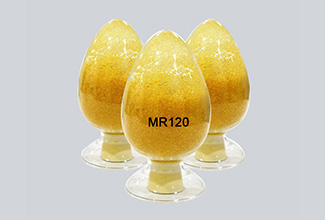
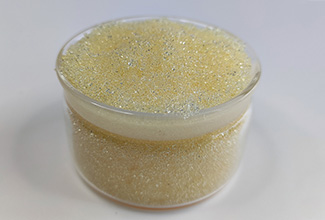
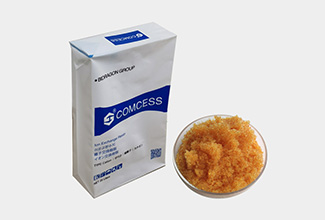
Ion exchange resin is a polymeric material endowed with ion-exchange capabilities. Its core operating principle is relatively straightforward: ions within the resin matrix exchange with target ions present in a solution, thereby facilitating the adsorption and separation of the desired components. Subsequently, an elution process is employed to recover the target components, thereby completing the extraction and purification cycle.
Compared to traditional solvent extraction and precipitation methods, ion exchange resins have their own unique advantages: they are highly selective and can accurately identify target components; they are recyclable and can be reused repeatedly; and they are environmentally friendly, requiring no large amounts of organic reagents. These characteristics have led to their widespread adoption within the field of pharmaceutical extraction.
In pharmaceutical manufacturing, ion exchange resins are primarily utilized for the extraction and purification of a diverse range of substances, including alkaloids, antibiotics, and amino acids. This application not only enhances product quality and reduces production costs but also ensures compliance with the pharmaceutical industry's stringent Good Manufacturing Practice (GMP) regulations. For pharmaceutical companies, mastering the key points of ion exchange resin application can effectively solve the pain points of low purity, large waste, and serious pollution in traditional extraction. This is also the key reason for the rapid popularization of ion exchange resin in the pharmaceutical extraction field.
Why Are Ion Exchange Resins Suitable for Pharmaceutical Extraction?
Pharmaceutical-grade ion exchange resins differ significantly from their standard industrial counterparts; their core characteristics are designed specifically to meet the rigorous safety and regulatory compliance requirements of pharmaceutical manufacturing. Chemical stability is one of its core characteristics. Under the pH range and temperature conditions commonly used in drug extraction, it will not decompose or dissolve, nor will it produce toxic or harmful residues, thus effectively ensuring drug safety.
Furthermore, their adsorption capacity is exceptional, enabling the efficient capture of target components from solution. They also demonstrate remarkable adaptability, maintaining stable performance across a wide spectrum of extraction systems—whether acidic, alkaline, or neutral. Collectively, these inherent characteristics establish the fundamental prerequisites that render ion exchange resins ideally suited for application in pharmaceutical extraction processes. The application of ion exchange resins in pharmaceutical extraction relies primarily on three core principles: ion exchange, adsorption-elution, and molecular sieving. The application of these principles, which are combined with common components in pharmaceutical extraction such as alkaloids, antibiotics, and amino acids, each has its own emphasis.
Alkaloids typically carry a positive charge and can therefore be adsorbed using cation exchange resins. For antibiotics, precise separation can be achieved by selecting the appropriate anion or cation exchange resins based on their specific ionic characteristics. Adsorption-elution constitutes a critical step in the extraction process: target components are first adsorbed onto the resin and subsequently desorbed using a suitable eluent, thereby achieving the concentration and purification of the desired substances.
Compared to traditional extraction techniques, the advantages of using ion exchange resins are particularly pronounced. Traditional solvent extraction methods require the use of large quantities of organic reagents; this not only poses a risk of environmental pollution but may also result in the retention of harmful residues within the final product, thereby compromising its purity.
Ion exchange resin technology effectively mitigates these issues. By relying on the principles of ion exchange rather than requiring large volumes of organic solvents, this technology significantly reduces the risk of contamination while simultaneously enhancing product purity. Although precipitation methods are operationally simple, they often lead to the loss of target components and result in low extraction efficiency; conversely, ion exchange resins minimize component loss, simplify subsequent purification steps, and boost overall production efficiency.
The pharmaceutical industry is subject to stringent GMP compliance requirements regarding production processes. Consequently, both the manufacture and application of ion exchange resins must strictly adhere to relevant standards. From the selection of raw materials and manufacturing processes to the resin regeneration cycle, every stage must be carefully managed to ensure the complete absence of toxic or harmful residues, thereby guaranteeing the regulatory compliance and safety of pharmaceutical production.
Specific Application Scenarios Of Ion Exchange Resins In Pharmaceutical Extraction
1. Extraction and Purification Of Alkaloids
Alkaloids are the core active ingredients of many drugs and are widely found in traditional Chinese medicines and natural products, such as matrine in Sophora flavescens, berberine in Coptis chinensis, and caffeine in tea. The extraction and purification of these components can all utilize ion exchange resins.
The specific application process is not complicated. First, the traditional Chinese medicines or natural products are crushed and extracted to obtain a crude extract containing alkaloids. Then, the crude extract is passed through an ion exchange resin column, where the alkaloids will exchange ions with the resin and be adsorbed on the resin surface, while impurities are discharged with the waste liquid.
The selection of ion exchange resins for alkaloid extraction is usually dominated by strong acid cation exchange resins, as these resins have a strong adsorption selectivity for alkaloids and can effectively separate the target components. After adsorption, an appropriate eluent is selected for elution to desorb the alkaloids from the resin. After concentration and drying, high-purity alkaloid products can be obtained.
The practical value of this method is obvious. It can increase the extraction rate of alkaloids, improve it by a certain proportion compared to traditional methods, and reduce the impurity content, making subsequent purification steps simpler. Moreover, the resins can be regenerated and reused, reducing the cost of consumables and being particularly suitable for large-scale industrial production.
2. Extraction and Separation Of Antibiotics
Antibiotics are a type of drug with large usage and wide application in the pharmaceutical industry, such as penicillin, streptomycin, and tetracycline. In the production process of these products, extraction and separation are key steps that directly determine the purity and efficacy of antibiotics.
Ion exchange resins are widely used in the extraction of antibiotics, especially in the production of streptomycin, gentamicin, and neomycin sulfate, where they are almost indispensable. Antibiotic fermentation broths are complex in composition, containing not only the target antibiotics but also a large amount of impurities. Traditional extraction methods are difficult to achieve precise separation.
The key to resin selection lies in matching the ion characteristics of the antibiotics. For example, streptomycin is an alkaline antibiotic and is suitable for extraction with strong acid cation exchange resins; tetracycline antibiotics can be selected based on their pH conditions, choosing appropriate anion and cation exchange resins.
In actual production, ion exchange resins can effectively solve the problems of low purity and difficult separation in antibiotic extraction. Through the adsorption and separation of the resins, impurities, pigments, and ineffective components in the fermentation broth can be removed, obtaining high-purity crude antibiotics. After further refinement, they can meet the requirements of drug production. At the same time, continuous operation of resin columns can be adapted to large-scale industrial production, ensuring the stability of product quality.
3. Extraction and Purification Of Amino Acids And Peptides
Amino acids and peptides are important raw materials in biopharmaceuticals and health product production, such as lysine, glutamic acid, insulin, and peptide antibiotics. Their extraction and purification processes have high precision requirements, and ion exchange resins are commonly used separation materials.
In the extraction of amino acids, ion exchange resins are mainly used for the separation of amino acids in biological fermentation broths. The amino acid solutions obtained from biological fermentation are complex in composition, and different amino acids have different ion characteristics. By selecting appropriate ion exchange resins, precise separation of different amino acids can be achieved, while impurities in the fermentation broth are removed.
In the extraction and purification of peptide drugs, the advantages of ion exchange resins are more obvious. Peptide components have poor stability, and high temperatures and organic solvents can lead to the loss of their activity. However, the extraction process with ion exchange resins is mild, requiring no high temperatures or large amounts of organic solvents, effectively preserving the activity of peptides.
There is an amino acid production enterprise that previously used the traditional precipitation method to extract lysine, resulting in a low extraction rate, high impurity content, and high subsequent purification costs. After switching to ion exchange resins, not only was the extraction rate improved, but the content of impurities was significantly reduced. At the same time, the amount of reagents used was decreased, and the overall production cost was considerably lowered. The production efficiency also saw a notable increase.
4. Other Pharmaceutical Extraction Scenarios
Apart from the three main applications mentioned above, ion exchange resins have many other uses in pharmaceutical extraction. In the extraction of traditional Chinese medicinal materials, in addition to alkaloids, the extraction of active components such as flavonoids and saponins can also utilize ion exchange resins, which can effectively enhance the extraction rate and purity of these active components.
The purification of pharmaceutical intermediates is another important application scenario. Many pharmaceutical intermediates generate impurities during the synthesis process, such as heavy metal ions and organic impurities. Ion exchange resins can effectively remove these impurities, ensuring the quality of the intermediates and laying a foundation for subsequent drug synthesis.
In the field of biopharmaceuticals, such as the production of monoclonal antibodies and vaccines, ion exchange resins also play a significant role. The separation and purification of these biological products have extremely high requirements. Ion exchange resins can precisely separate the target biological components through ion exchange, remove impurities such as contaminating proteins and nucleic acids, and ensure the safety and efficacy of the biological products.
The Key Factors Influencing The Application Effect Of Ion Exchange Resins In Pharmaceutical Extraction
The selection of resin type is the core factor determining the extraction effect. Different pharmaceutical extraction components have different ionic characteristics, and the corresponding resin types also vary. For instance, for extracting alkaloids, amino acids and other cationic components, cation exchange resins are often chosen; for extracting certain acidic antibiotics and organic acids, anion exchange resins are selected.
In addition, the pore size of the resin is also crucial. Large molecular components such as polypeptides and enzymes are suitable for macroporous ion exchange resins, which can ensure that the target components smoothly enter the resin interior and enhance adsorption efficiency; for small molecular components, microporous resins can be chosen to improve selectivity.
The control of process parameters will also directly affect the extraction efficiency and product purity. pH value is one of the key parameters. Different target components have different degrees of ionization under different pH conditions, and the adsorption effect will also vary. The pH value of the extraction system needs to be adjusted according to the characteristics of the components.
Temperature and flow rate also need to be reasonably controlled. Excessively high temperature may lead to the inactivation of the target components or a decline in resin performance, while excessively low temperature will reduce adsorption efficiency. A flow rate that is too fast will result in insufficient contact time between the target components and the resin, leading to incomplete adsorption. A flow rate that is too slow will affect production efficiency. The concentration of the eluent also needs to be optimized. A concentration that is too high may cause impurities to be eluted together, affecting purity, while a concentration that is too low will result in incomplete elution.
The regeneration and maintenance of the resin are related to the usage cost and service life. After being used for a period of time, the adsorption capacity of the ion exchange resin will decline, and regeneration treatment is required. The main method of regeneration is to use an appropriate eluent to thoroughly desorb the impurities and uneluted components adsorbed by the resin, restoring its adsorption performance.
The regeneration cycle needs to be adjusted according to the production situation. Frequent regeneration will increase the consumption of reagents and labor costs, while insufficient regeneration will affect the extraction effect. At the same time, during daily use, it is necessary to avoid resin contamination, such as avoiding the blockage of resin pores by heavy metal ions and large molecular impurities, in order to extend the service life of the resin.
Quality control is also an indispensable link. The performance of the resin needs to be regularly tested, such as adsorption capacity, selectivity, and stability, to ensure that it meets the requirements of pharmaceutical production. During the extraction process, the concentration and purity of the eluent should also be regularly tested, and process parameters should be adjusted in a timely manner to ensure that the product quality meets compliance standards.
Industry Application Cases
A large antibiotic production enterprise mainly produces streptomycin, gentamicin and other products. Previously, it used traditional solvent extraction methods, which had problems such as low extraction efficiency, low product purity, and severe organic reagent pollution, as well as high production costs.
After introducing ion exchange resin extraction technology, strong acid cation exchange resins were used for the adsorption and separation of antibiotics. After optimizing the process parameters, the extraction efficiency of streptomycin increased by 12%, the product purity rose from 92% to 98.5%, the consumption of organic reagents decreased by 60%, and the annual production cost was reduced by nearly one million yuan. At the same time, it met the GMP compliance requirements, and the product qualification rate significantly increased.
Another Chinese medicinal materials extraction enterprise, specializing in the extraction of matrine, berberine and other alkaloids, previously used precipitation methods, with an extraction rate of only about 65%, high impurity content, and difficult subsequent purification. After switching to ion exchange resin extraction, the extraction rate increased to 82%, the impurity content decreased by 70%, the subsequent purification steps were simplified, the production efficiency increased by 30%, and the competitiveness of the product in the market significantly enhanced.
From industry data, the market size of ion exchange resins in the field of pharmaceutical extraction is growing year by year. Among them, the application in the field of antibiotic extraction is the highest, reaching about 45%, followed by the extraction of active components from Chinese medicinal materials and amino acids, accounting for 28% and 17% respectively. With the continuous improvement of product quality and environmental protection requirements in the pharmaceutical industry, the application scope of ion exchange resins will further expand.
Challenges & Future Trends
At present, the application of ion exchange resins in pharmaceutical extraction still faces some practical challenges. The high cost of specialized resins for the pharmaceutical industry is a prominent issue, especially for those dedicated to biopharmaceuticals and high-end antibiotic extraction, which are much more expensive than ordinary industrial resins. This undoubtedly increases the production costs for small and medium-sized enterprises and to some extent limits their widespread application.
The technical difficulty of large-scale continuous production also cannot be ignored. Some enterprises' production processes are still at the intermittent operation stage, making it difficult to improve production efficiency and ensure the stability of product quality. The standardization of resin regeneration technology also affects the application effect. In some enterprises, the regeneration process is not standardized, which not only shortens the service life of the resin but also may lead to a decrease in the purity of the extracted product, affecting the quality of the medicine.
In the future, the development trend of ion exchange resins in the field of pharmaceutical extraction can be driven in multiple directions. The research and development of high-performance specialized resins is one of the core directions, focusing on improving the selectivity, adsorption capacity, and service life of the resins, while reducing production costs to meet the diverse needs of different types of pharmaceutical extraction.
The integration with other separation technologies also has great potential. For example, combining ion exchange resins with membrane separation and chromatography technologies can further optimize the extraction process, improve extraction efficiency and product purity, and better meet the strict requirements of high-end fields such as biopharmaceuticals.
The development of green and low-carbon regeneration technologies is equally crucial. Researching and developing environmentally friendly regeneration reagents can not only reduce environmental pollution during the regeneration process but also simplify the regeneration process, helping enterprises reduce operational costs.
With the rapid development of the biopharmaceutical and innovative drug industries, the application of ion exchange resins in the fields of monoclonal antibodies, vaccines, and peptide drugs will also become a key development direction in the future, with market demand expected to continue to grow.
Summary
Ion exchange resins have significant value in pharmaceutical extraction, enhancing product purity, reducing costs, minimizing pollution, and meeting GMP requirements. They are suitable for extracting various components such as alkaloids and antibiotics. Reasonable selection and optimization of the process can help pharmaceutical enterprises enhance their competitiveness, and their application will become increasingly widespread as the industry develops. If you have any needs for resin selection or process optimization, please contact us for professional solutions and quotations.