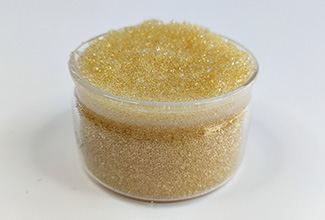
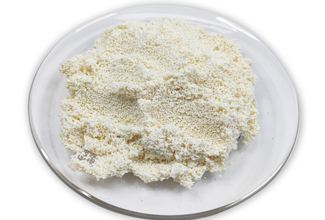
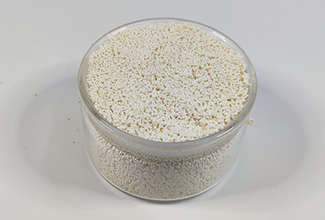
Ion-exchange and adsorption resins are indeed utilized in certain stages of fruit juice processing. Resin technology is a well-established choice, particularly when manufacturers need to precisely control acidity, remove off-flavors, enhance color stability, or produce high-purity juice ingredients.
It is important to note that not all fruit juice production involves resin treatment. NFC (Not From Concentrate) fresh-squeezed juice typically undergoes only extraction, pasteurization, and filling, without resin processing; resin technology is more commonly found in production lines for concentrated juice, refined reconstituted juice, and ingredients for advanced juice processing.
Unlike industrial resins used for water treatment, fruit juice processing requires specialized resins that meet food-contact standards. These resins are designed to selectively remove specific components from the juice rather than simply performing a general filtration.
Why Is Resin Technology Used In Fruit Juice Processing?
The composition of raw juice extracted from fresh fruit is determined entirely by the raw material itself and does not necessarily meet the requirements for the finished product's taste, appearance, and shelf life. The core function of resin technology is to selectively adjust the juice's composition while retaining as much flavor and nutritional value as possible.
Common processing objectives include controlling excessive acidity, removing unwanted ions and organic acids, reducing bitterness in citrus juices, improving color and clarity, removing specific undesirable trace compounds, enhancing batch-to-batch consistency, and facilitating juice concentration and purification steps.
In a typical concentrated juice production line, resin treatment usually takes place after pre-treatment and before concentration. The general process flow is: Fresh Fruit → Crushing & Extraction → Clarification/Pre-treatment → Resin Column Treatment → Fine Filtration → Concentration/Blending → Finished Juice.
Performing the resin treatment before concentration avoids efficiency losses caused by increased viscosity and minimizes side reactions during the subsequent evaporation stage.
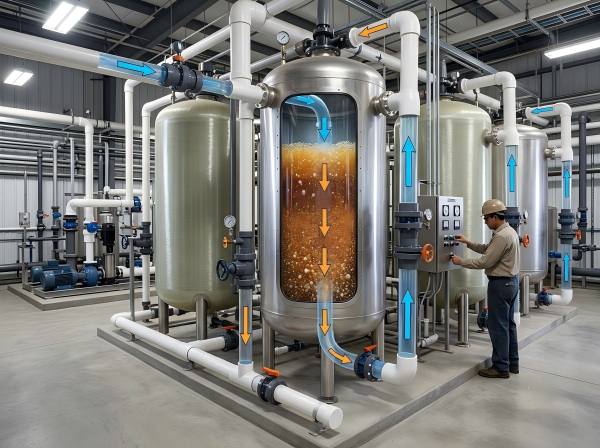
How Ion Exchange Resins Achieve Juice Deacidification
Deacidification is the primary application of ion exchange resins in the fruit juice industry; for the vast majority of juice processing lines utilizing resins, the main goal is to adjust the sugar-to-acid ratio.
Common Organic Acids In Fruit Juice
Different fruits have different dominant acidic compounds, a factor that directly dictates the choice of resin and process parameters. The acidity in citrus juices (oranges, lemons, grapefruits) comes primarily from citric acid, which accounts for over 80% of the total organic acids. Pome fruits (apples, pears, loquats) are dominated by malic acid, while berries (grapes, cherries) contain a mixture of tartaric, malic, and citric acids. Additionally, juices contain small amounts of other organic acids such as succinic acid and quinic acid; although these constitute a minor fraction, some can influence the aftertaste and mouthfeel.
Principles Of Organic Acid Removal Using Anion Exchange Resins
Juice deacidification primarily employs weakly basic anion exchange resins, which adsorb organic acid anions through the mechanism of ion exchange. Simply put, the organic acids in fruit juice dissociate into acid anions in an acidic environment. As the juice flows through a resin column, these anions bind to the basic active groups on the resin and are retained there; simultaneously, the resin releases hydroxide ions, which combine with hydrogen ions from the juice to form water, thereby reducing the overall acidity.
This process does not remove all the acid. In actual production, flow rate and processing volume are controlled to remove only a portion of the organic acids, adjusting the juice's pH and titratable acidity to a target range that balances sweetness with a refreshing quality. For instance, the pH of raw citrus juice typically ranges from 3.2 to 3.8; after deacidification, it can be adjusted to 3.6–4.0, significantly reducing tartness and astringency without sacrificing the juice's flavor complexity. Specialized weakly basic anion exchange resins can effectively remove citric acid while retaining the juice's Vitamin C and folic acid, avoiding the flavor dilution associated with the dilution method.
Factors Affecting Deacidification Efficiency
In actual production, deacidification efficiency is not determined solely by the resin; multiple parameters influence the final result. The juice's initial pH and total acidity are fundamental factors; the higher the acidity of the feed, the shorter the processing cycle for a given amount of resin. Feed flow rate is the parameter easiest to regulate; the industry typically maintains it at 1–5 bed volumes per hour (BV/h). A slower flow rate extends the contact time between the juice and the resin, resulting in a higher degree of deacidification; however, excessively low flow rates reduce production capacity, requiring a balance based on the target acidity. Temperature also plays a role; while moderately increasing the temperature can accelerate the ion exchange rate, fruit juice is heat-sensitive, so temperatures are usually kept close to ambient levels to prevent the loss of flavor compounds and browning. Additionally, factors such as resin loading, the content of suspended solids in the juice, and the presence of other co-existing ions affect the actual working exchange capacity. The production goal is never simply the maximum deacidification rate, but rather the consistent achievement of preset acidity targets and flavor profiles.
.png)
Can Ion-Exchange Resins Debitter Fruit Juice?
Debittering citrus juice is another established application for resins; however, strictly speaking, this process relies more on adsorption resin technology than on traditional ion exchange.
Sources of Bitterness in Citrus Juice
After juicing citrus fruits such as oranges, grapefruits, and lemons, a distinct bitterness often develops over time. This is primarily caused by two substances: naringin and limonin. Naringin is a flavanone glycoside that leaches from the peel and segment membranes during juicing, creating an immediate, noticeable bitterness upon tasting. Limonin is a triterpenoid compound that forms gradually from precursor substances after juicing—a phenomenon commonly known as "delayed bitterness" or "after-bitterness." Both substances are perceptible even at very low concentrations; for instance, the taste threshold for limonin in orange juice is approximately 6 mg/L, beyond which consumers can clearly detect an unpleasant taste.
How Resins Remove Bitter Compounds
To address naringin and limonin, the industry commonly employs food-grade macroporous adsorption resins. These resins selectively adsorb bitter molecules from the juice using van der Waals forces and their porous structure; this is a physical adsorption process rather than an ion-exchange reaction. The resins are engineered with specific pore sizes and surface properties to strongly adsorb bitter compounds of moderate molecular weight while minimizing the adsorption of sugars and aroma components. Compared to enzymatic debittering, the resin method offers faster processing speeds and is suitable for continuous, large-scale production. Additionally, the resins can be regenerated and reused, resulting in more stable operating costs.
Can Resins Remove Color and Polyphenols from Fruit Juice?
In addition to deacidification and debittering, resin technology is frequently used for juice decolorization and polyphenol regulation to enhance product storage stability.
While the natural pigments and polyphenols in fruit juice contribute to flavor and nutritional value, they are prone to oxidation and polymerization during storage, leading to browning, darkening of color, and the formation of sediment. For concentrated fruit juices intended for long-term storage, these changes can directly impact the product's quality grade. Using a combination of acrylic ion-exchange resins and macroporous adsorption resins allows for the selective removal of certain ionic pigments and polyphenol precursors, thereby improving juice clarity and enhancing color stability throughout its shelf life.
Compared to traditional activated carbon decolorization, the resin method offers superior selectivity; it does not indiscriminately adsorb aroma compounds or nutrients, and the resins can be regenerated and reused rather than frequently discarded. Activated carbon, however, has its own advantages—such as a stronger capacity to adsorb large-molecule pigments—so the two are often used in tandem in actual production rather than one completely replacing the other.
Common Types of Ion-Exchange and Adsorption Resins in Juice Processing
Different processing objectives require distinct resin types; selecting the wrong resin may not only fail to achieve the desired result but could also compromise juice quality.
Weakly Basic Anion-Exchange Resins
These are the primary resins used for juice deacidification, serving mainly to remove organic acids and adjust the sugar-to-acid ratio. Weakly basic resins exhibit a low degree of dissociation of their active groups, ensuring stability in the acidic environment of fruit juice; they offer good selectivity for organic acid anions and require less alkali solution for regeneration. Most food-grade deacidification resins feature a macroporous structure, providing enhanced resistance to organic fouling—a crucial attribute for complex matrices like fruit juice.
Strongly Acidic Cation-Exchange Resins
Cation-exchange resins are rarely used in standard juice production, finding application primarily in specialized demineralization and ash-removal processes. They adsorb cations such as calcium, magnesium, and potassium from the juice, thereby reducing ash content and removing trace amounts of heavy metal ions. In advanced juice processing and the production of high-purity fructose-glucose syrups, they are paired with anion-exchange resins to form a desalination system capable of completely removing ionic components from the juice.
Macroporous Adsorption Resins
Macroporous adsorption resins are key materials for debittering, decolorizing, and removing polyphenols from fruit juice. Functioning through physical adsorption, they are not strictly classified as ion-exchange resins, yet they are widely utilized across the juice industry. Depending on pore size and surface polarity, these resins can selectively adsorb bitter substances, pigments, polyphenols, or specific organic impurities; they are among the most commonly used resin types in fruit juice refining.
Matching Treatment Objectives with Resin Types
The following table allows for quick matching of common resin types to specific processing objectives:
|
Process Objective |
Common Resin Types |
|
Deacidification / Adjustment of sugar-to-acid ratio |
Weakly basic anion exchange resins |
|
Desalination / Demineralization / Ash content reduction |
Cation resin + Anion resin combination |
|
Debittering of citrus juice |
Macroporous adsorption resins |
|
Decolorization / Improvement of color stability |
Macroporous adsorption resins / Acrylic anion resins |
|
Removal of polyphenols / Reduction of browning |
Macroporous adsorption resins |
Are Ion Exchange Resins Used in Food Processing Safe?
This is a primary concern for many manufacturers, as it directly impacts product compliance and consumer safety.
Why Food-Grade Resin Is Essential
Fruit juice is a food product intended for direct consumption. When it comes into direct contact with resin, substances such as leachables and residual monomers within the resin may migrate into the juice. During production, food-grade resins undergo strict controls regarding raw material purity, polymerization residues, and extractables to ensure that no harmful substances are released into the food under normal operating conditions. Key factors to consider include: levels of extractables and migrants, residual polymerization monomer content, chemical stability against acid/alkali cleaning, cleanability and disinfectability, and compliance with relevant regulatory standards.
Differences Between Food-Grade Resin and Industrial Water Treatment Resin
Standard industrial water treatment resins must never be used directly in fruit juice production. Industrial-grade resins are designed solely to meet water treatment performance criteria and have lax requirements regarding leachables and residual monomers; some contain synthetic additives or residual solvents that do not meet food-contact standards, posing safety risks if they come into direct contact with juice. Compliant food-grade resins must meet mandatory regional standards: in China, they must comply with the GB 4806 series (specifically GB 4806.6 for resins); products exported to the US must meet FDA 21 CFR regulations; and products for the EU market must comply with relevant food-contact material regulations. Reputable suppliers of food-grade resins provide comprehensive compliance test reports and declarations of conformity for food-contact materials, which should be verified during procurement.
Resin Regeneration After Fruit Juice Processing
Resin is not a disposable consumable; once saturated through adsorption, it can undergo regeneration to restore its exchange or adsorption capacity for reuse.
Why Resin Regeneration Is Necessary
Resins have finite active sites and adsorption capacities. After processing a certain volume of juice, the active sites become occupied by substances such as organic acids and bitter compounds. This leads to a significant decline in processing efficiency, with the acidity and bitterness levels of the treated juice gradually rising. At this stage, the feed flow must be stopped to perform regeneration, which involves eluting the adsorbed substances from the resin and restoring its functional capacity. Under normal operating conditions, food-grade resins used in juice processing can be cycled hundreds of times, with a service life of 2 to 3 years.
Typical Regeneration Process Flow
While regeneration steps vary by resin type, the overall process is similar. Taking a fixed-bed resin column as an example, the general regeneration steps are: stop feed → backwash to loosen the resin bed → introduce regenerant for reaction → slow rinse (displacement) → fast rinse until specifications are met → equilibration/restoration → return to service.
Backwashing serves to flush out suspended solids trapped in the resin bed and loosen the bed to prevent channeling; the regenerant must pass through the resin bed at a slow flow rate to ensure sufficient contact and reaction; displacement and fast rinsing flush out residual regenerant and eluted substances, ensuring the juice is not contaminated when processing resumes. Specific regeneration parameters—such as regenerant concentration, dosage, and contact time—vary based on resin type, juice composition, and equipment design; the process parameters provided by the resin manufacturer generally serve as the standard.
Common Chemicals Used for Regeneration
Regenerants differ significantly depending on the resin type. Cation exchange resins are typically regenerated using food-grade hydrochloric acid or sulfuric acid, utilizing high concentrations of hydrogen ions to displace adsorbed cations; weakly basic anion exchange resins are generally regenerated with food-grade sodium hydroxide solution, sometimes supplemented with a small amount of sodium chloride (table salt); regeneration of macroporous adsorption resins is more flexible—depending on the adsorbed substance, elution can be performed using dilute alkali, dilute acid, or low-concentration ethanol solutions. It is important to note that not only must the resin itself meet food-grade requirements, but the regeneration chemicals, control of residues from the rinsing process, and cleaning validation of the entire system must also comply with food production hygiene standards to ensure the regenerated resin poses no safety risks to the juice.
Selecting the Right Resin for Juice Processing
There is no single "best" choice; the key is matching the resin to your specific process requirements and material characteristics.
First, clarify your core processing objectives. What is the primary problem you wish to solve? Is it adjusting acidity, debittering, decolorization, ash removal, or eliminating specific impurities? Different objectives require entirely different categories of resins. For instance, if only deacidification is required, a weak-base anion exchange resin suffices; however, if simultaneous debittering and decolorization are needed, a combination of adsorbent resins and ion exchange resins used in series may be necessary.
Verify the fundamental characteristics of the juice. The inherent properties of the juice directly impact resin performance; therefore, key parameters must be identified before selecting a resin: juice type, pH value, titratable acidity, sugar content (Brix), color intensity, primary organic acid composition, suspended solids content, and standard processing temperature. For example, juices with high pectin or high suspended solids content require clarification pretreatment; otherwise, resin pores can easily become clogged, leading to rapid resin failure.
Evaluate processing volume and operating conditions. Production capacity and operational methods also influence resin selection. Factors to consider include the design flow rate, desired regeneration cycle, resin working exchange capacity, contact time, and the availability of on-site regeneration facilities. Continuous, large-scale production typically favors resins with high exchange capacity and rapid regeneration rates to minimize downtime, whereas small-batch, multi-variety production lines prioritize resin fouling resistance and ease of cleaning.
Ensure compliance with food-contact regulations. Finally, it is essential to verify the resin's food-contact qualifications, including applicable regulatory standards, third-party test reports, traceability, and compatibility with the sanitizers and cleaning agents used in production. For export products, compliance with the local regulations of the target market must also be confirmed.
Advantages of Resin Technology in Juice Processing
The enduring application of resin technology in the juice industry stems from its ability to resolve specific pain points associated with traditional methods.
The most notable advantage is the precision of component control. For example, deacidification allows for precise adjustment to target pH and acidity levels, ensuring batch-to-batch consistency and avoiding the flavor fluctuations often caused by alkali neutralization. Secondly, the process offers high selectivity; resins can remove specific target substances while largely preserving sugars, aromas, and most nutrients—capabilities that dilution or neutralization methods lack. Resins can be regenerated and reused; in continuous large-scale production, the cost of consumables per unit of processed juice remains relatively stable, avoiding the frequent replacement and waste disposal issues associated with activated carbon. Furthermore, resin processes facilitate automation, reducing human error and offering greater adaptability to fluctuations in production capacity. Of course, these advantages apply to specific scenarios; not every fruit juice production line is suitable for resin processing. For instance, small-batch NFC juice does not require refining, so installing resin equipment would actually increase costs and result in a loss of flavor.
Conclusion
The choice of resin essentially depends on the specific substances you wish to remove from the juice. If the goal is simply to adjust acidity or control the sugar-to-acid ratio, a weakly basic anion exchange resin is the preferred option. A combination of cation and anion resins should be used for demineralization and ash reduction. Macroporous adsorption resins are best suited for addressing bitterness in citrus juice, while adsorption resins are also the primary choice for improving color, removing polyphenols, and enhancing storage stability.
When selecting food-grade ion exchange or adsorption resins for a juice production line, it is advisable to make a comprehensive assessment based on the juice's specific composition, target removal rates, operating conditions, and regeneration requirements. Whenever possible, conduct small-scale trials to verify performance before scaling up to full production.