What Are Pfas, And Why Are They Difficult To Remove?
Per- and polyfluoroalkyl substances (PFAS) are a class of synthetic organic compounds containing carbon-fluorine (C-F) bonds; representative substances include perfluorooctanoic acid (PFOA), perfluorooctane sulfonic acid (PFOS), perfluorohexane sulfonic acid (PFHxS), and perfluorobutane sulfonic acid (PFBS). Based on carbon chain length, they can be categorized into long-chain PFAS (8 carbons or more) and short-chain PFAS (7 carbons or fewer).
PFAS are known as "forever chemicals" primarily because the C-F bond within their molecules possesses extremely high bond energy (approximately 485 kJ/mol). Conventional conditions—such as standard temperatures, pH levels, or oxidation processes—are insufficient to break these bonds; consequently, once released into the environment, they undergo virtually no natural degradation and exhibit bioaccumulative properties.
Treating water for PFAS is significantly more challenging than for conventional pollutants:
- They typically exist in environmental waters at trace levels (ng/L or ppt range), placing extremely high demands on process selectivity;
- Over 12,000 PFAS compounds have been identified, with widely varying removal characteristics depending on carbon chain length and functional groups;
- Short-chain PFAS molecules are small and have low hydrophobicity, making them difficult for conventional adsorption materials to capture and highly prone to breaking through treatment units;
- Drinking water standards worldwide are becoming increasingly stringent; for instance, the US EPA's latest health advisory levels are as low as 4.0 ppt for PFOA and 20.0 ppt for PFOS, further increasing the difficulty of advanced treatment.
What Are Pfas Ion Exchange Resins?
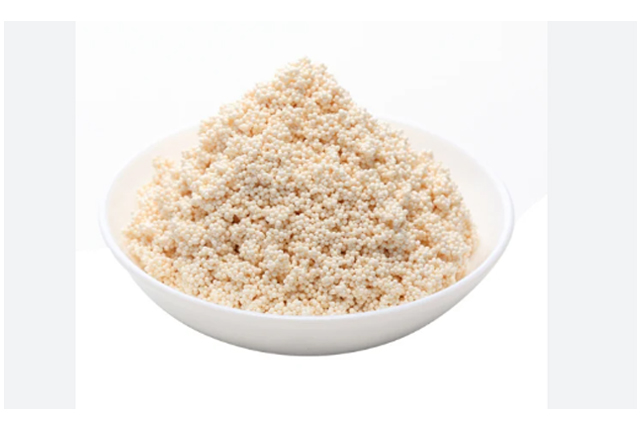
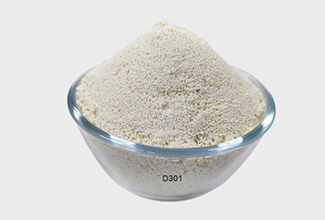
PFAS-selective ion exchange resins are a class of strong-base anion exchange resins optimized for PFAS. They feature a cross-linked polymer backbone grafted with quaternary ammonium functional groups and are utilized in the form of spherical beads.
Compared to conventional anion exchange resins, they offer enhanced adsorption capabilities—particularly for capturing trace amounts of PFAS at low concentrations—by combining ion exchange mechanisms with hydrophobic interactions.
|
Component |
Typical Structure / Description |
|
Matrix |
Crosslinked polystyrene – divinylbenzene |
|
Functional Group |
Quaternary ammonium group |
|
Resin Type |
Strong-base anion exchange resin |
|
Core Mechanism of Action |
Ion exchange + hydrophobic interactions |
|
Physical Form |
Resin beads |
.png)
Principles of PFAS Removal Using Ion Exchange Resins
Fundamentals of Ion Exchange
PFAS molecules possess a sulfonic acid or carboxylic acid group at one end, which dissociates into an anionic form at the pH levels typical of natural waters. The quaternary ammonium functional groups on the resin carry a positive charge and are initially balanced by counter-ions, such as chloride ions. As water flows through the resin bed, PFAS anions exchange with the chloride ions; the PFAS anions become immobilized on the resin, while chloride ions are released into the water.
Dual Mechanism: Electrostatic and Hydrophobic Interactions
Adsorption by PFAS-selective resins results from the combined effect of two forces:
- Electrostatic attraction: The Coulombic force between the positively charged quaternary ammonium functional groups and the negatively charged PFAS functional groups serves as the primary driving force for adsorption;
- Hydrophobic interaction: Both the fluorocarbon chain of the PFAS molecule and the polymer backbone of the resin are highly hydrophobic; their interaction further strengthens the adsorption bond.
This dual mechanism is the key reason why PFAS-selective resins offer higher capacity and better selectivity than standard anion exchange resins.
Removal Differences Among PFAS Species
A single resin exhibits varying removal performance for different PFAS species, a phenomenon fundamentally determined by molecular structure:
- Longer carbon chains result in greater hydrophobicity, stronger binding to the resin, and higher removal efficiency;
- For a given carbon chain length, sulfonic acid-based PFAS (e.g., PFOS) are removed more effectively than carboxylic acid-based PFAS (e.g., PFOA);
- Short-chain PFAS (e.g., PFBS, PFBA) rely primarily on electrostatic interactions for adsorption; due to weaker binding, they break through the resin bed earlier than long-chain PFAS, making them more difficult to treat.
Breakthrough
Resins have a finite number of exchange sites. As operation proceeds, these sites are progressively occupied by PFAS. When a certain level of saturation is reached, PFAS begins to appear in the effluent; this point is known as "breakthrough."
The industry typically defines the initial breakthrough point as the moment when the effluent concentration reaches 10% of the influent concentration, although some projects establish specific breakthrough thresholds based on discharge standards. Two key parameters associated with this process are:
- Bed life: The total operating time from the start of resin service until the breakthrough point is reached.
- Bed Volume (BV): The ratio of the cumulative volume of treated water to the resin bed volume; this is a common metric for assessing resin treatment capacity.
Engineering Advantages of The Ion Exchange Process
Ion exchange is currently one of the three mainstream technologies recognized by the EPA for treating PFAS in drinking water. Its key engineering advantages include:
- Rapid kinetics: The Empty Bed Contact Time (EBCT) typically requires only 1.5 to 5 minutes, resulting in compact equipment with a footprint approximately one-quarter that of an activated carbon system of equivalent capacity.
- High selectivity: It can preferentially adsorb trace amounts of PFAS even in environments where the concentrations of common anions—such as sulfates and nitrates—far exceed those of PFAS.
- Suitability for low concentrations: It maintains stable removal performance for PFAS at ultra-low concentrations (ng/L or ppt levels), making it ideal for advanced point-of-use or final-stage treatment.
- High water recovery rate: It consumes virtually no water during normal operation, and the volume of water required for backwashing is significantly lower than that of activated carbon or membrane-based processes.
Actual operational performance is directly influenced by resin characteristics and influent water quality; assessments must be made based on specific water quality conditions.
Ion Exchange vs. Activated Carbon vs. Reverse Osmosis
|
Comparison Dimension |
Ion Exchange Resin |
Granular Activated Carbon (GAC) |
Reverse Osmosis (RO) |
|
PFAS Selectivity |
High |
Medium |
High |
|
Treatment Speed |
Fast |
Slow |
Medium |
|
Short-Chain PFAS |
Depends on resin, generally good |
Difficult |
Generally effective |
|
System Footprint |
Compact |
Large |
Medium |
|
Water Recovery Rate |
High |
High |
Relatively low |
|
Waste Stream |
Spent resin / regeneration waste liquid |
Spent carbon |
Concentrate (brine) |
|
Core Positioning |
Specialized PFAS advanced treatment |
Broad-spectrum adsorption |
Full water quality purification |
When Should Ion Exchange Be Prioritized?
- When the raw water contains a high proportion of short-chain PFAS, or when effluent standards require ppt-level concentrations; ion exchange offers more stable performance than standard GAC.
- When site space is limited or treatment units must be retrofitted onto existing pipelines; the compact nature of the system offers a distinct advantage.
- When the goal is targeted PFAS removal without overall desalination; operating costs are lower than RO, and there is no burden of managing large volumes of concentrate.
How To Select The Appropriate Pfas Ion Exchange Resin
Selectivity for target PFAS
The primary basis for selection is the specific type of PFAS present in the water. Different resins vary in functional group structure and backbone hydrophobicity, resulting in significant differences in affinity for long-chain vs. short-chain compounds and sulfonates vs. carboxylates. If both long-chain and short-chain PFAS are present, a process using different resins in series may be required.
Matrix And Structural Type
- Matrix material: Polystyrene-divinylbenzene (PS-DVB) matrices are highly hydrophobic and constitute the mainstream choice for PFAS-specific resins, offering superior overall adsorption performance compared to polyacrylate matrices.
- Physical structure: Gel-type resins feature high functional group density and are suitable for clean water; macroporous resins possess extensive internal pore networks, enabling rapid mass transfer and high fouling resistance, making them suitable for complex industrial wastewater or groundwater.
Adsorption Capacity And Bed Life
Adsorption capacity directly determines bed life and replacement frequency. Theoretical capacities measured in the laboratory serve only as a reference; actual effective capacity is significantly influenced by the following water quality factors:
- Higher influent PFAS concentrations result in shorter bed life.
- Competing anions, such as sulfates and nitrates, occupy exchange sites; the impact of divalent sulfate ions on short-chain PFAS removal is particularly pronounced.
- Natural organic matter (NOM) can occupy sites and block pores, leading to a reduction in effective capacity.
Single-Use Vs. Regenerable Resins
Single-use resins: Systems are simple, requiring no regeneration equipment or chemicals; they involve minimal O&M and generate no regeneration waste liquid, though long-term consumable costs are higher. They are suitable for small-scale drinking water projects and scenarios with extremely strict effluent requirements. ·
Regenerable resins: These can be reused after PFAS is eluted using chemical agents, resulting in low long-term consumable costs; however, the systems are complex and generate high-concentration waste regenerant requiring further treatment. They are suitable for high-volume applications such as large-scale industrial wastewater treatment and groundwater remediation.
Handling Of Spent Resins
Single-Use Resins
Upon reaching the breakthrough point, single-use resins have reached the end of their service life; operations must cease, and the entire resin bed must be unloaded and replaced. The spent resin is classified as hazardous waste and must be incinerated or landfilled in compliance with local environmental regulations.
Regenerable Resins
Adsorbed PFAS is displaced and eluted by passing a high-concentration regenerant solution in a counter-current flow through the resin bed; the resin regains its adsorption capacity and can be reused.
Regeneration efficiency depends on the type, concentration, and dosage of the regenerant, as well as contact time. Small amounts of residual PFAS remain after each regeneration cycle, leading to a gradual decline in performance over repeated cycles.
Limitations Of Conventional Brine Regeneration
While standard anion exchange resins can be regenerated using sodium chloride (brine) solutions, this method is ineffective for PFAS-selective resins. The EPA has explicitly stated that conventional concentrated sodium chloride solutions generally fail to effectively restore the capacity of PFAS-selective resins; this is because the interaction between PFAS and the resin involves not only electrostatic bonding but also strong hydrophobic interactions, making simple chloride ion exchange insufficient for elution.
Publicly available research indicates that while simple brine solutions show some efficacy for carboxylic acid-based PFAS, they are highly inefficient at eluting sulfonic acid-based PFAS. Some selective resins require a mixed regenerant solution containing both salt and organic solvents, whereas certain highly selective resins currently lack a cost-effective regeneration method and must be treated as single-use materials.
Key System Design Parameters
Once the resin type is selected, system design should focus on the following parameters:
Inlet flow rate and water quality: These form the basis for calculating vessel dimensions and resin volume; representative water quality analysis data must be obtained prior to design.
Empty bed contact time (ebct): Typically designed as 1.5–5 minutes for single-stage systems; a duration that is too short leads to premature breakthrough, while one that is too long increases investment costs and footprint requirements.
Bed depth: To ensure uniform flow and sufficient mass transfer zone length, the resin bed depth should generally be no less than 0.9 meters.
Vessel configuration: Select a single-vessel, multi-vessel series, or parallel configuration based on flow rate and reliability requirements.
Pressure drop: Must be controlled within a reasonable range to avoid excessive energy consumption or resin breakage.
Core principle: Both resin selection and system design should be based on actual water quality analysis and treatment objectives; direct application of standard templates is not recommended.
Inlet Pretreatment Requirements
Inlet water quality directly affects resin performance and lifespan; the following impurities must be removed via upstream pretreatment:
Suspended solids and turbidity: These can deposit on the resin bed surface, clog pores, increase head loss, and coat resin particles.
Natural organic matter: Competes for adsorption sites and forms a filter cake layer that accelerates pressure drop increases, potentially shortening bed lifespan by more than 30%.
Oils and greases: Adhere to the resin surface, severely impairing mass transfer and making regeneration difficult.
Iron and manganese ions: Easily oxidize to form hydroxide precipitates, causing irreversible resin fouling.
High concentrations of competing anions: If concentrations of ions such as sulfate are excessively high, consider upstream dilution or segregated treatment to reduce the load on the resin.
Key Application Scenarios
Drinking water treatment: Upgrading municipal water plants, point-of-use/point-of-entry advanced treatment for residential complexes or buildings, and remediation of contaminated groundwater sources;
Industrial wastewater: Advanced end-of-pipe treatment for PFAS-containing wastewater from industries such as chemicals, electronics/semiconductors, and metal surface treatment;
Contaminated groundwater remediation: Pump-and-treat projects at sites such as industrial facilities and firefighting training bases;
Landfill leachate: Used as an advanced treatment step to remove residual PFAS following conventional biological and physicochemical treatment.
Operational Performance Monitoring
Resin status and the timing for replacement or regeneration are determined based on the following indicators:
Influent and effluent PFAS concentrations: Directly indicates whether the breakthrough threshold has been reached;
Cumulative bed volumes: Used in conjunction with empirical data to estimate remaining operational life;
Pressure drop: A significant, rapid increase usually indicates resin bed clogging or fouling, requiring immediate backwashing or troubleshooting;
Performance trends: Monitoring whether the breakthrough bed volume decreases over successive runs to determine if the resin is experiencing irreversible degradation.
Key Information Required Before Procurement
- Specific PFAS species to be removed;
- Influent PFAS concentration range and effluent quality standards;
- Treatment flow rate and operational mode (continuous vs. intermittent);
- Comprehensive water quality parameters (pH, sulfate, nitrate, TOC, etc.);
- Application scenario (drinking water, industrial wastewater, or groundwater);
- Preference for a single-use (disposable) or regenerable process;
- Disposal requirements for spent resin or waste streams;
- Requirement for drinking water-related product certifications (e.g., NSF).
Conclusion
PFAS removal is a systemic challenge; every stage—from analyzing contaminant characteristics, resin selection, and system design to operational monitoring and waste disposal—directly impacts the final outcome. There is no universal resin product or "one-size-fits-all" solution; only a process configuration tailored to the specific water quality and treatment objectives can ensure long-term, stable compliance.