Ion exchange technology has become a mature gold recovery method in hydrometallurgy and serves as a significant alternative to the activated carbon adsorption process, finding widespread application in the enrichment and recovery of gold from pregnant cyanide leach solutions. Within a complete resin-based gold recovery system, the type of resin matrix is a core factor determining recovery efficiency, operational stability, and overall costs; **macroporous ion exchange resins** and **gel-type ion exchange resins** are the two most commonly used categories in the industry.
Differences in the fundamental structures of these two resin types directly influence the adsorption kinetics of gold-cyanide complexes, resistance to fouling, and regeneration/elution performance. When selecting a process, metallurgical engineers often face the dilemma of choosing between them. This article provides a systematic comparison of the performance of macroporous and gel resins in gold recovery applications, breaks down their key differences, and assists technical personnel in selecting the most suitable ion exchange resin based on the specific conditions of their leach solutions.
Fundamental Structures of Macroporous and Gel-Type Ion Exchange Resins Used for Gold Recovery
Structural Characteristics of Gel Resin Beads
Gel resins possess a uniform, continuous polymer matrix and lack permanent physical pores. Internal pores form only after the resin swells upon immersion in an aqueous solution; in the dry state, the resin contains virtually no voids.
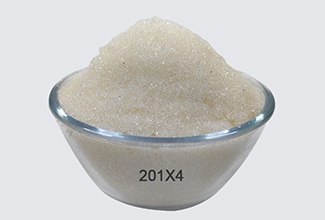
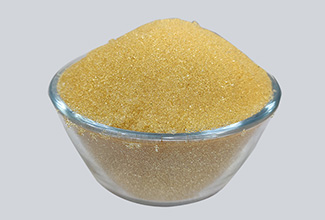
Gel resins typically appear as translucent beads, with their degree of swelling determined by the cross-linking density. When the resin comes into contact with a pregnant cyanide solution, water molecules penetrate the polymer network and push the polymer chains apart to create microscopic channels; this allows the gold-cyanide complex, Au(CN)₂⁻, to diffuse into the resin and undergo exchange adsorption.
Structural Characteristics of Macroporous Resin Beads
The polymer framework of macroporous resins inherently contains a network of interconnected, permanent pores. This physical pore structure remains stable whether the resin is dry or immersed in an aqueous solution; it does not disappear upon dehydration.
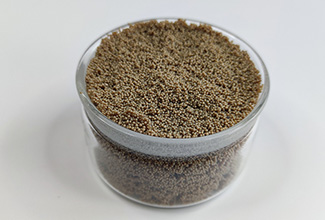
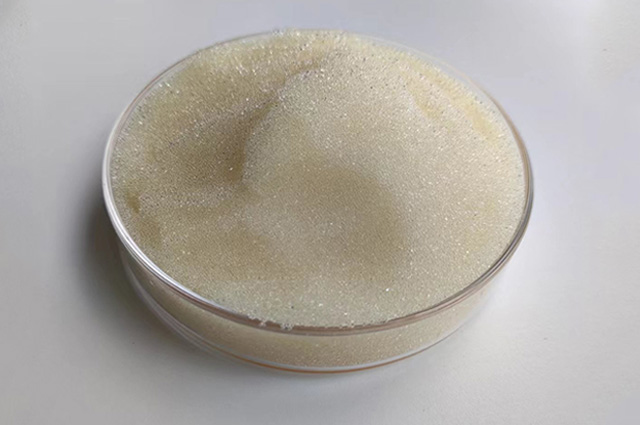
Macroporous resin particles typically appear as opaque, milky-white beads. The combination of a rigid framework and permanent pores provides fixed diffusion channels for metal complex ions, ensuring that diffusion is not restricted by the resin's swelling state.
Impact of Structural Differences on the Diffusion Path of Gold-Cyanide Complexes
Gel-type resins rely on swelling to create channels, meaning the space available for ion diffusion is significantly influenced by solution concentration and ionic strength. When the solution contains high levels of impurities, polymer chains can easily become clogged by contaminants, thereby hindering the inward diffusion of Au(CN)₂⁻.
In contrast, the permanent macroporous channels in macroporous resins allow ions to penetrate directly into the resin's interior, resulting in a more stable diffusion path. Furthermore, large-molecule impurities can move more easily through these pores without completely blocking the ion exchange reaction.
Comparison of Gold Adsorption Kinetics and Loading Capacity
Ion Diffusion Mechanisms of Gold-Cyanide Complexes in The Two Resin Matrices
In cyanide leach solutions, gold exists as the Au(CN)₂⁻ anionic complex.
Gel-type resins: Ions must penetrate the swollen polymer network; mass transfer relies on the interstitial spaces between polymer chains.
Macroporous resins: Ions can rapidly reach active exchange sites within the resin via permanent pores; mass transfer involves two steps: pore diffusion and matrix diffusion.
Adsorption Rate: Mass Transfer Speed and Contact Time Requirements
Gel-type resins achieve good adsorption rates in clean leach solutions; however, when the ionic strength of the solution is high, the degree of swelling decreases, significantly slowing the adsorption rate and requiring longer solid-liquid contact times.
Macroporous resins feature fixed pore channels and lower mass transfer resistance, allowing them to maintain stable adsorption rates even in complex water conditions and reducing the required contact time between the resin and the leach solution.
Total Exchange Capacity Vs. Actual Gold-Loading Capacity
The theoretical total exchange capacity of a resin does not equal its actual gold-loading capacity in field operations.
In conditions involving clarified, low-impurity precious metal solutions, gel-type resins exhibit high utilization of effective exchange sites, resulting in a **superior upper limit for actual gold-loading capacity**.
The permanent pores within the polymer framework of macroporous resins occupy some volume, leading to a slightly lower theoretical exchange capacity for the same particle size; however, in high-impurity systems, their effective gold-loading performance often surpasses that of gel-type resins.
Effect of Cross-Linking Degree on Resin Swelling Behavior and Gold Recovery Performance
Higher cross-linking degrees result in a more robust polymer network, lower swelling rates, and greater resistance to osmotic shock.
Gel-type resins are extremely sensitive to the degree of cross-linking: if the degree is too low, swelling is excessive and beads are prone to breakage; if it is too high, swelling is insufficient and internal channels become too narrow for gold ions to penetrate effectively. Macroporous resins possess an inherent rigid pore structure; consequently, adjustments to the degree of cross-linking result in minimal fluctuations in swelling, allowing for a wider operational tolerance range.
Selective Differences Between Gold and Associated Base Metals
Competing Anions and Base Metal Impurities in Gold Cyanide Leach Solutions
In addition to the target Au(CN)₂⁻ species, raw cyanide leach solutions from mines contain cyano-complexes of base metals such as copper, iron, and zinc, alongside competing anions like thiocyanate. These impurities compete with gold complex ions for active exchange sites on the resin, thereby reducing the selectivity of gold adsorption.
Selectivity Performance of Gel Resins in Clean, Low-Contamination Solutions
In clarified, low-impurity pregnant leach solutions derived from oxidized ores, gel resins exhibit good selectivity for gold-cyanide complexes. Under these conditions, the concentration of interfering ions is low; the resin preferentially captures Au(CN)₂⁻, and the co-adsorption of base metals remains manageable.
Selectivity Performance of Macroporous Resins in Complex, Multi-Metal Leach Solutions
When dealing with raw leach solutions containing multiple metals and high impurity concentrations, the pore structure of macroporous resins can limit the adsorption of large-molecule base metal complexes to some extent, making them more suitable than gel resins for complex ore systems.
However, it should be noted that macroporous resins do not exclusively adsorb gold; they still capture some base metal complexes, so solution pretreatment remains crucial.
Impact of Competing Ion Loading on Gold Recovery Efficiency for Both Resin Types
As base metal impurities accumulate on the resin, effective active sites become occupied, leading to a gradual decline in gold adsorption efficiency.
Once the internal network of a gel resin is occupied by competing ions, removing them via washing is difficult; in contrast, the open pore structure of macroporous resins facilitates impurity removal, resulting in less negative impact from the long-term accumulation of competing ions.
Contamination Resistance and Mechanical Stability in Gold Recovery Processes
Sources of Organic and Inorganic Contaminants in Gold Hydrometallurgical Systems
Contaminants in the leaching system fall into two categories: organic contaminants, primarily derived from organic matter in the ore and residual flotation reagents; and inorganic contaminants, including suspended ore slimes, silicates, and metal hydroxide colloids. These substances adhere to the resin surface or clog internal channels, leading to resin poisoning (fouling or scaling).
Vulnerability of Gel Resins to Fouling: Interference From Macromolecular Organics and Suspended Solids
Gel resins lack permanent pores. While macromolecular organic contaminants cannot penetrate the polymer matrix, they readily adhere to the surface of the resin beads, blocking the pores that open during swelling; fine ore slimes can also encapsulate the resin particles, obstructing the entry of gold ions.
Once fouling occurs, contaminants trapped within the gel resin are difficult to remove, resulting in a sustained reduction in gold-loading capacity.
Tolerance of Macroporous Resins in High-Turbidity Pulp Systems (Rip Process)
Macroporous resins are the preferred choice for the Resin-in-Pulp (RIP) gold extraction process. Their permanently open pore structure allows them to tolerate significant levels of suspended solids, and the impact of clogging caused by slime adhesion is far less severe than with gel resins.
Macroporous resins can continue to effectively adsorb gold even in unclarified leach pulp.
Osmotic Shock, Bead Breakage Rates, and Service Life Over Multiple Cycles
Fluctuations in solution concentration during repeated elution and regeneration cycles cause the resin to undergo periodic swelling and contraction—a phenomenon known as osmotic shock.
Gel resins exhibit significant volume changes during swelling and contraction; under long-term cycling, the beads are more prone to cracking and fragmentation, generating fines and increasing resin loss.
Macroporous resins possess a more rigid framework and undergo minimal volume changes during swelling and contraction, offering superior resistance to osmotic shock. Consequently, they exhibit lower bead breakage rates and a longer average service life under conditions requiring frequent regeneration.
Gold Desorption, Elution, and Regeneration Performance
Elution Mechanism of Gold-Cyanide Complexes on the Two Types Of Resins
Elution essentially involves using a high-concentration eluent to break the ionic bonds between Au(CN)₂⁻ ions and the resin's functional groups, thereby displacing the gold complexes from the exchange sites into the liquid phase.
In gel resins, active sites are deeply embedded within the swollen polymer network; in contrast, macroporous resins have active sites partially exposed on the inner pore walls, facilitating easier access for the eluent.
Eluent Consumption, Desorption Rate, and Gold Concentration in The Eluate
Under clean operating conditions, gel resins can yield high gold concentrations in the eluate; however, the slow penetration of the eluent into the resin matrix results in a longer overall desorption cycle and higher reagent consumption.
Macroporous resins exhibit rapid mass transfer of the eluent and shorter desorption times; they also demonstrate superior elution stability in systems with high impurity levels.
Regeneration Efficiency and Residual Gold Issues
After regeneration, residual gold complexes trapped within the resin cannot be fully removed; this residue occupies exchange sites, thereby reducing the adsorption capacity in the subsequent cycle.
Once gold complexes are trapped within the polymer matrix of a gel resin, they are difficult to remove during subsequent regeneration; conversely, residual gold within macroporous resins is more easily washed out by the eluent, resulting in lower residual levels.
Multiple Cycles: Capacity Decay Patterns of the Two Resins
After repeated adsorption-desorption cycles, the resins undergo irreversible fouling, leading to a gradual decline in effective gold-loading capacity.
The rate of capacity decay in gel resins is highly dependent on the purity of the leach solution; once organic fouling occurs, the capacity drops rapidly and irreversibly.
Macroporous resins exhibit a more gradual capacity decay curve, demonstrating a distinct advantage in long-term cyclic stability when processing complex pregnant solutions.
Operating Costs and Process Limitations
Procurement Cost Differences: Macroporous vs. Gel Resins
Given the same functional group type, macroporous ion-exchange resins incur higher raw material production costs and carry a higher unit purchase price than gel resins. Gel resins require a lower initial investment, making them a cost-effective choice for projects involving clarified pregnant solutions where upfront savings are prioritized.
Operational and Maintenance Costs: Replacement Cycles, Reagent Consumption, and Downtime
While gel resins are cheaper to purchase, high impurity levels in the pregnant solution can easily lead to resin fouling and premature failure, thereby shortening the replacement cycle. Furthermore, the need for more frequent washing and regeneration increases reagent consumption and maintenance downtime, driving up long-term operational costs.
Macroporous resins entail higher initial procurement costs but offer a longer service life, superior fouling resistance, and less frequent replacement; consequently, they demonstrate a cost advantage over the full lifecycle when operating under complex conditions.
Process Limitations for Gel Resins
Gel resins are **unsuitable for direct use in Resin-in-Pulp (RIP) processes**; they are restricted to pregnant solution systems that have undergone thorough clarification and filtration, resulting in very low levels of suspended solids and organic matter.
If the turbidity of the feed solution exceeds limits, the performance of the entire resin system will rapidly deteriorate.
Applicability of Macroporous Resins: Scenarios Justifying High Initial Investment
Macroporous resins are not the optimal choice for every scenario. If the pregnant solution is highly clarified and contains minimal impurities, the higher procurement cost of macroporous resins becomes an unnecessary expense. Their value is clearly demonstrated only in systems involving pulp feeds, high turbidity, high organic content, or complex multi-metal impurity profiles.
Applicable Operating Conditions for Macroporous and Gel-Type Resins in Gold Hydrometallurgy
Ideal Operating Conditions for Gel-Type Resins
- Pregnant leach solution undergoes thorough solid-liquid separation, resulting in very low suspended solids content.
- The raw ore is an oxide ore; the leach solution has low levels of organic matter and base metal impurities.
- The process route involves adsorption from clarified pregnant solution rather than direct adsorption from pulp.
Ideal Operating Conditions for Macroporous Resins
- The leach pulp cannot be deeply clarified; a Resin-in-Pulp (RIP) gold recovery process is planned.
- The raw ore composition is complex; the leach solution contains organic matter and relatively high concentrations of base metal complexes.
- The production line requires resins to withstand repeated regeneration and aims for a longer service life.
Process Route Matching: Clarified Pregnant Solution System Vs. Resin-In-Pulp Circuit
Clarified pregnant solution circuit: Solid-liquid separation is performed first to remove slimes; gel-type resins are the preferred choice.
Resin-in-Pulp circuit: Solid pulp comes into direct contact with the resin; macroporous resins must be selected.
Impact of Ore Matrix: Clean Oxide Ore Vs. Complex Ore With High Impurity Levels
Leach solutions from clean oxide ores contain few impurities, allowing gel-type resins to leverage their high gold-loading capacity.
For complex sulfide ores or ores with significant associated metals, the impurity load in the leach solution is high; macroporous resins are the preferred choice.
Core Decision-Making Framework for Resin Selection
Step 1: Characterize the Physicochemical Properties of the Pregnant Solution
Measure key parameters of the pregnant leach solution: turbidity, suspended solids content, organic carbon content, concentrations of associated metals (e.g., Cu, Fe, Zn), and concentrations of cyanide and thiocyanate ions. Solution water quality serves as the fundamental basis for resin selection.
Step 2: Determine the Process Circuit Configuration
Confirm the process scheme: adsorption from clarified solution versus direct adsorption from pulp (Resin-in-Pulp, or RIP). Gel-type resins are generally unsuitable for pulp circuits; however, both resin types can be evaluated and compared for clarified pregnant solutions.
Step 3: Balance Key Performance Indicators
Prioritize performance indicators based on project requirements: gold loading capacity, adsorption kinetics, fouling resistance, resin service life, reagent costs, and procurement budget.
- If the project prioritizes gold loading capacity and clean feed solution: select gel-type resins.
- If the project prioritizes fouling resistance, pulp-based processing, and long-term stable operation: select macroporous resins.
Step 4: Conduct Bench-Scale Evaluation Prior to Full-Scale Industrial Implementation
Theoretical comparisons serve only as a preliminary screening basis. It is recommended to conduct bench-scale laboratory tests using actual site leach solution to measure gold loading, elution performance, and fouling resistance. Final resin selection should be based on this empirical data to mitigate process risks associated with theoretical predictions.
Conclusion
There is no absolute superiority or inferiority between macroporous resins and gel resins; their performance depends entirely on the quality of the gold-bearing pregnant solution and the specific process flow.
Gel resins offer excellent gold-loading capacity and lower initial procurement costs when used with clean, clarified cyanide-rich solutions. In contrast, macroporous resins—characterized by a permanent pore structure—exhibit resistance to fouling and tolerance for pulp, making them suitable for metallurgical projects involving high impurity levels and resin-in-pulp (RIP) gold recovery processes.
The core logic for process selection involves first conducting a comprehensive analysis of the pregnant solution's quality to determine the process route. Subsequently, by aligning with project cost targets and verifying resin performance through laboratory-scale tests, one can select the ion-exchange resin best suited for the gold recovery production line.