Perfluoroethylene and polyfluoroalkyl substances (PFAS) have become key control pollutants in the fields of industrial wastewater and municipal water supply due to their strong persistence and bioaccumulation.With the gradual tightening of emission standards everywhere, the choice of stable and reliable treatment technology has become the core appeal of many projects.
When selecting many projects, priority will be given to comparing the purchase price per kilogram of the adsorption medium to determine the cost of the solution, but this is the most misleading approach.The unit price of the media is only a small part of the processing cost, and the scale of the system, the frequency of replacement, waste disposal, and the difficulty of operation and maintenance will all affect the final actual expenditure.
The two most widely used PFAS adsorption technologies are anion exchange resin and granular activated carbon.The two have different principles of action, different performance characteristics, and obvious differences in applicable working conditions.From the perspective of the whole life cycle cost, this paper disassembles the cost composition of the two technologies and analyzes which scheme is more economical under different operating conditions.
What Does Anion Exchange Resin And GAC Rely On To Remove PFAS?
There is an essential difference in the removal mechanism of the two media, which is the underlying reason for the subsequent performance and cost differences.
Anion Exchange Resin
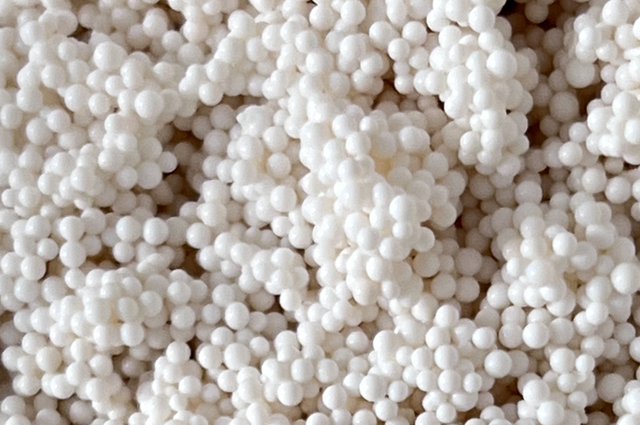
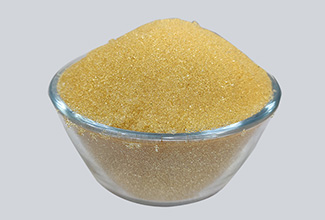
The core function of anion exchange resin is electrostatic adsorption.The resin polymer skeleton is connected with positively charged functional groups. Most PFAS take the form of anions in water. The two are combined by electrostatic gravity, and the PFAS molecules are fixed in the internal structure of the resin.In addition to electrostatic effects, the resin skeleton itself will also produce hydrophobic interactions to further capture the fluorocarbon chains of PFAS.
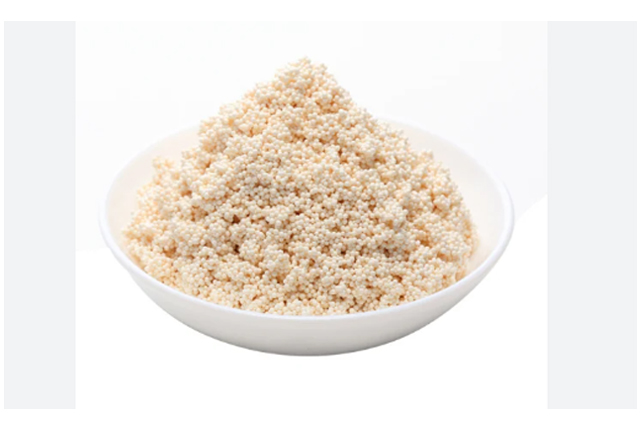
The selective macroporous resin specially developed for PFAS will be optimized in terms of pore size and functional group type. Compared with ordinary gel-type ion exchange resins, the adsorption capacity and anti-interference ability of PFAS have been significantly improved.The performance of ordinary ion exchange resins and PFAS selective resins is very different, and the general term resin cannot be used to generalize.

Granular Activated Carbon
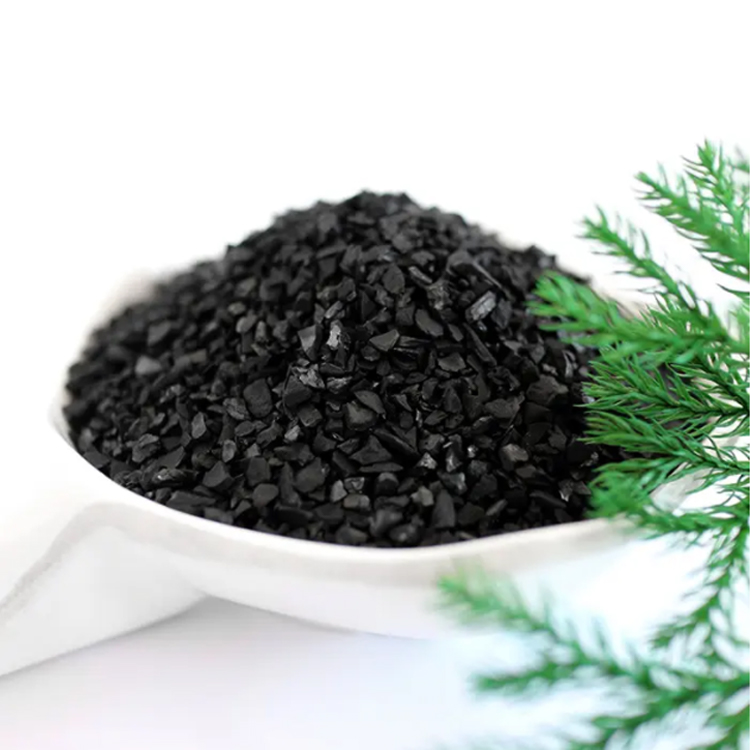
Granular activated carbon mainly relies on hydrophobic interaction and pore retention to remove PFAS.The fluorocarbon chain of PFAS is very hydrophobic and tends to leave the water environment and enter the well-developed micropores and mesopores of activated carbon, adsorbing on the inner surface of the carbon.The specific surface area and pore size distribution of activated carbon are the key to determining performance. The higher the specific surface area and the better the pore size matches the PFAS molecular size, the higher the adsorption capacity.
For long-chain PFAS such as PFOA and PFOS, the adsorption effect of GAC is usually relatively stable; however, short-chain PFAS such as PFBA and PFBS have small molecular sizes and weak hydrophobicity, which are more difficult to be captured by activated carbon pores, and the removal efficiency will be significantly reduced.

Anion Exchange Resin vs GAC: Key Performance Differences for PFAS
Before entering the cost analysis, first sort out the difference between the core performance of the two media.
|
Comparison Dimension |
Anion Exchange Resin |
Granular Activated Carbon (GAC) |
|
PFAS affinity |
Generally high for anionic PFAS |
Highly dependent on activated carbon material and pore structure design |
|
Short-chain PFAS treatment |
Some specialized resins show clear advantages |
Overall more difficult, requiring longer contact time |
|
Long-chain PFAS treatment |
Can achieve stable and efficient removal |
Generally has strong adsorption capacity |
|
Selectivity |
Can target target pollutants through functional group design |
Weak selectivity, prone to simultaneously adsorbing other organic matter |
|
Organic matter interference |
Affected by both resin type and water matrix |
Natural organic matter significantly competes for adsorption sites |
|
Media capacity |
Depends on resin chemical structure and PFAS species |
Depends on activated carbon type and influent water quality |
|
Regeneration method |
Can be regenerated in situ or off-site depending on resin type |
Mostly full replacement, or centralized off-site regeneration |
|
System footprint |
Usually relatively compact |
Larger contact tower volume required |
It should be clear that the above table is only a general performance interval, and it must not be simply understood as the resin is superior to GAC in all cases.In water sources with extremely low organic matter content and mainly long-chain PFAS, the adsorption capacity of high-quality coconut shell GAC is not bad; if there are a large number of high-concentration competing anions in the water, the adsorption capacity of ordinary anion exchange resins will also be significantly attenuated.The final actual performance is determined by the chemical composition of the resin, the specific components of PFAS, and the water quality matrix of the water inlet.
What Determines The Cost Of PFAS Treatment?
Only comparing the price per kilogram of media will seriously deviate from the real processing cost.The true cost of PFAS treatment should be measured in terms of total cost of ownership, covering the full cycle of expenditure from equipment construction to media end-of-life.
The complete cost composition mainly includes five categories: first, media-related costs, including the annual consumption corresponding to the first purchase and replacement cycle, as well as the transportation and disposal of waste media; second, equipment investment, the volume of the tank determined by the contact time, supporting pipelines and automatic control systems, and pretreatment facilities; third, operating energy consumption, mainly the pumping costs caused by the drop in the media bed; fourth, labor and maintenance, including daily inspections, backwashing, sampling and testing, and the loss of production capacity due to material replacement downtime; fifth, the cost of regeneration, the cost of medicine and treatment for reusable media.
It can be summarized by a simplified logic: total PFAS processing cost = media procurement cost + replacement and disposal cost + operating energy consumption cost + maintenance and labor cost + equipment investment amortization
Just looking at the unit price of the medium is equivalent to calculating only one of them, which naturally does not reflect the real processing cost.
Anion Exchange Resin And GAC: Whose Operating Cost Is Lower?
This is the core part of the full text. We disassemble the differences in operating costs from several key dimensions.
Media Consumption And Replacement Frequency
The unit price of the medium is not directly equal to the operating cost, and the adsorption capacity and replacement cycle have a much greater impact.According to industry public operating data, the service life of ordinary GAC-treated PFAS is usually 6 to 12 months. If the PFAS concentration in the water is high or there are many short-chain components, the replacement cycle will be shorter; and the service life of PFAS selective anion exchange resins is usually up to 3 to 5 years, and high-capacity resins can even run longer.
The difference in penetration time directly determines the annual media consumption.Under the same treatment scale, the GAC may need to be replaced 1 to 2 times a year, while the resin may only be replaced once in 3 to 5 years.Even if the price of a single kilogram of resin is higher, the average annual medium cost may be lower.The case of municipal water supply in North America shows that when processing the same amount of water, the annual medium consumption of GAC can reach about 8 times that of ion exchange resin, which is also the core reason for the higher operating cost of GAC in many projects.
Contact Time And System Size
The contact time of the empty bed directly determines the volume and equipment investment of the adsorption tower.The recommended empty bed contact time for GAC to deal with PFAS is usually 10 to 20 minutes, and it even takes 15 to 30 minutes to deal with short-chain PFAS; while the empty bed contact time for anion exchange resins usually only takes 2 to 7 minutes, the gap is very obvious.
The shorter the contact time, the smaller the volume of medium required to achieve the same amount of treatment water, and the more compact the tank size.This can not only reduce the initial equipment investment, but also the space value itself is an important cost item for renovation projects with limited sites.For large-flow processing scenarios, the difference in equipment volume will be magnified, and the advantages of compact resin systems will be more prominent.
Regeneration And Disposal
The treatment cost of waste media is an easily overlooked part of the whole life cycle cost.Most of the GAC systems use the overall replacement mode, and the failed activated carbon is usually shipped out as hazardous waste for disposal, or sent to a specialized factory for centralized regeneration.Whether it is disposal or regeneration, transportation costs and treatment costs are required, and the frequency of replacement is high. This expenditure occurs every year.
There are more options for anion exchange resins.Some resins can be regenerated in situ by agents and reused, greatly reducing the amount of waste media produced; even for single-use resins, because of the long replacement cycle, the annual volume of waste media produced is much smaller than GAC.If the price of hazardous waste disposal in the location of the project is high, the difference in the cost of regeneration and disposal will become a key factor affecting the economy.
Pretreatment Requirements And Water Quality Impact
The water quality of the water inlet will directly affect the life of the medium, which in turn affects the operating cost.Pollutants such as natural organic matter, suspended solids, ferromanganese, etc. will seize the adsorption site or block the pore channel, accelerating the failure of the medium.
For GAC, the interference of natural organic matter is particularly obvious. Organic matter will be preferentially adsorbed by activated carbon, squeezing the adsorption site of PFAS, and greatly shortening the life of the carbon bed.However, some PFAS selective resins have weak adsorption of organic matter and are relatively less affected by natural organic matter.If the content of organic matter in the water is high, the GAC system often requires stricter pretreatment, such as adding coagulation and filtration units, which in turn will further increase investment and operating costs.
A more meaningful comparison is not the price per kilogram of resin or GAC, but the total cost required to process a unit volume of water and meet the specified PFAS standards.
In Which Scenarios Is The Cost Of Anion Exchange Resin Better?
Anion exchange resins are not more cost-effective in all operating conditions, but in the following types of scenarios, the economy is usually more prominent.
High PFAS Load Conditions
The higher the concentration of PFAS in the water inlet, the faster the medium consumption rate.Under high load, the replacement cycle of the GAC will be significantly shortened, and the annual maintenance cost will rise sharply.The adsorption capacity of the high-capacity PFAS selective resin is much higher than that of ordinary GAC, which can significantly extend the replacement cycle and reduce annual consumption.Data from a number of high-concentration PFAS groundwater restoration projects abroad show that when the concentration of PFAS in the water is high, the life cycle cost of the resin system is more than 50% lower than that of GAC.
Working Conditions With a High Proportion Of Short-Chain Pfas
Short-chain PFAS is currently a difficult point to deal with, and it is also a bottleneck for many projects to meet the standards.Conventional GAC has a weak adsorption capacity for short-chain PFAS, and it needs to significantly increase the amount of carbon and extend the contact time. Even then, it is difficult to stably meet the standards.The specially designed macroporous anion exchange resin has a stronger affinity for short-chain PFAS, and stable removal can be achieved without exponentially increasing the volume of the medium.If local standards have clear limits on short-chain PFAS, resin solutions can often meet compliance requirements at a lower cost.
High-Traffic And Site-Restricted Scenarios
For continuous operation of industrial water treatment and large-scale municipal water supply, the impact of system size and footprint will be magnified.The contact time of the empty bed required for the resin system is shorter, the tank is small in size and occupies a compact area, which can reduce civil construction and equipment investment.At the same time, the medium replacement cycle is long, which reduces the number of downtime and material replacement. For industrial scenarios of continuous production, the reduction of downtime losses is also an important cost benefit.
Water Quality With High Organic Content
Natural organic matter will compete with PFAS for adsorption sites, and it will also clog the pores of activated carbon, causing the carbon bed to fail quickly.In water sources with high total organic carbon, the actual adsorption capacity of GAC will decrease significantly, and the frequency of replacement will increase significantly.The functional groups of PFAS selective resins are more inclined to adsorb PFAS anions, have weaker adsorption of neutral organic matter, are less disturbed by organic matter, and can maintain a more stable operating cycle.It should be noted that this advantage is only for special PFAS selective resins, and ordinary ion exchange resins are equally affected by organic matter.
In Which Scenarios Is GAC a More Practical Choice?
Objectively speaking, GAC is not without advantages, and it is still a very realistic option in many scenarios.
Ready-Made Gac Processing Facilities
If there is already a GAC adsorption tower on site and only needs to be upgraded to deal with PFAS, then continuing to follow the GAC route can usually save a lot of equipment investment.It only needs to be replaced with high-quality activated carbon dedicated to PFAS and the operating parameters can be adjusted to achieve PFAS removal on the basis of the original facilities. There is no need to add tanks and a large number of pipelines, and the initial investment is the lowest.In this case, even if the operating cost of the GAC is slightly higher, the full cycle cost may be better after the comprehensive equipment is depreciated.
Simple Working Conditions Of Water Quality Composition
If the content of organic matter in the water is low, there are few suspended solids, and the adsorption performance of GAC is mainly long-chain PFAS, the adsorption performance of GAC will be very stable.The adsorption capacity of high-quality coal or coconut shell activated carbon for long-chain PFAS is not low, and the GAC technology is mature and the supply is sufficient, so the procurement and operation and maintenance are very simple.For such low-load, simple-to-use scenarios, GAC is very cost-effective.
Multiple Organic Pollutants Need To Be Removed At The Same Time
GAC is a broad-spectrum adsorbent. In addition to PFAS, it can also remove various pollutants such as pesticides, VOCs, disinfection byproducts, and odor and color at the same time.If the project must not only deal with PFAS, but also take into account other organic pollutants, GAC can achieve the collaborative removal of multiple pollutants in one step without the need for additional treatment units.The selectivity of the resin is strong, and the removal effect of many neutral organic matter is limited, and other processes may be required.
Regions With Mature Recycling And Supply Chains
The application history of GAC is very long, and there are mature supply systems and recycling service providers everywhere.If there is an activated carbon recycling plant near the project location, and the waste carbon can be recycled at low cost, then the operating cost of GAC will be significantly reduced.In contrast, the technical threshold for the regeneration of anion exchange resins is higher, and there are fewer professional regeneration service providers, and the logistics and processing costs will be higher in some areas.
Low PFAS Load Conditions
When the PFAS concentration in the water is very low and it is only used as a polishing treatment, the replacement cycle of GAC will be very long, and the annual medium cost is not high.In this low-load scenario, the advantages of mature GAC technology and simple operation will be highlighted, while the advantages of high resin capacity have no room to play, and the economic gap is not large, and even GAC is more cost-effective.
The most cost-effective technology is the comprehensive result of the entire treatment system, rather than the comparison of a single adsorption medium.
How Does Water Quality Change The Result Of Cost Comparison?
Water quality is the core variable that affects the economy of the two technologies. The treatment cost of the same medium may vary several times under different water quality.
Specifically, these water quality parameters will directly affect the cost: in terms of PFAS concentration and composition, the higher the concentration, the faster the medium is consumed, and the higher the short-chain ratio, the more obvious the disadvantage of GAC; in terms of natural organic matter, the higher the content, the more obvious the decrease in the adsorption capacity of GAC, the greater the relative advantage of the resin; competing anions such as sulfates, carbonates, chlorides, etc., will compete with PFAS for the exchange site of the resin, and when the concentration is too high, the resin capacity will be reduced; in addition, dissolved pollutants such as pH value, ionic strength, suspended solids, and ferromanganese will also affect the adsorption efficiency, clog pores, or pollute the surface of the medium, shortening The service life of the medium.
Because the impact of water quality is so great, it is an essential step to do water quality testing and adsorption testing before the medium is selected.Common test methods include static batch adsorption test, dynamic column test, penetration curve analysis, and on-site pilot verification. These test data are the basis for subsequent cost accounting and program design.COMCESS can provide a complete evaluation service from small laboratory tests to on-site pilot tests, and give targeted media selection recommendations based on the actual water quality of the water inlet, rather than just giving simple recommendations based on PFAS concentration.
Practical Cost Comparison Case: 1000m3/d Industrial Water Treatment System
We use a hypothetical industrial water treatment scenario to make an intuitive comparison to facilitate understanding of the source of the cost difference.The case condition is that the treated water volume is 1000m3/d, the water inlet is a mixed PFAS component, and the target water outlet meets the relevant emission standards.The following calculations are all estimates under typical working conditions in the industry. Actual projects will vary depending on water quality, region, and equipment standards.
Comparison of core design parameters
|
Parameter |
Anion Exchange Resin System |
GAC System |
|
Design empty bed contact time |
5 minutes |
15 minutes |
|
Required media volume |
Approx. 3.5 m³ |
Approx. 10.4 m³ |
|
Estimated media service life |
3 years |
8 months |
|
Annual replacement frequency |
Approx. 0.33 times |
1.5 times |
|
Annual media consumption |
Approx. 1.17 m³ |
Approx. 15.6 m³ |
Cost Composition And Unit Processing Cost
Calculated on an annual basis, in terms of media procurement costs, the unit price of resin is higher but the annual consumption is small, and the unit price of GAC is low but the annual consumption is large. Combined with typical industry price estimates, the annual media cost of the two is of a similar order, and the annual media cost of resin is lower under some working conditions.In terms of disposal and recycling costs, GAC produces about 15m3 of waste carbon per year, and the transportation and disposal costs are higher; the resin is replaced every 3 years, and the average annual waste medium disposal volume is small and the cost is lower.In terms of energy consumption and maintenance, the resin bed lamination drop is close to that of GAC, but there are fewer replacement operations and shorter annual maintenance working hours.In terms of amortization of equipment investment, the resin system tank is smaller and the equipment investment is lower. It is amortized over 10 years, and the average annual depreciation cost is lower.
The unit treatment cost can be calculated by dividing the total annual treatment cost by the annual treatment volume.According to public industry case data, under similar operating conditions, the unit processing cost of anion exchange resin systems is usually 0.20~0.35 US dollars per cubic meter, and GAC systems are usually 0.35~0.55 US dollars per cubic meter, and the overall resin solution is 30%~50% lower.
It should be emphasized that this is only a reference range for typical working conditions.If the water inlet is low-concentration long-chain PFAS and there is very little organic matter, the cost of GAC will be significantly reduced and the gap will be narrowed; if there are many short-chain PFAS and high organic matter, the resin will have a greater advantage.All cost comparisons must be bound to specific water quality conditions.
How To Choose Between Anion Exchange Resin And GAC?
You can use a simple decision-making framework to quickly judge the direction.
Preference is given to the case of anion exchange resins: PFAS is the core target pollutant and requires high removal efficiency; the proportion of short-chain PFAS is high, which is a bottleneck in meeting standards; the site space is limited, and the treatment system is hoped to be more compact; the content of organic matter in the water is high, and the GAC is easy to fail quickly; the project is running continuously for a long time, hoping to reduce the frequency of replacement and operation and maintenance workload.
Priority is given to the situation of GAC: there are already ready-made GAC treatment facilities on site, which can be retrofitted; a variety of organic pollutants need to be removed at the same time, and it is hoped that one-step treatment; the local activated carbon recycling resources are sufficient, and the waste carbon treatment cost is low; the water quality of the water inlet is simple, mainly long-chain PFAS, the concentration is not high; the project cycle is short, and the initial investment is hoped to be the lowest.
If you are not sure, the safest way is to conduct laboratory adsorption tests on the two media simultaneously, determine the penetration curve and adsorption capacity of the actual water quality, and compare it based on the full cycle cost per unit of treated water volume, rather than just looking at the purchase price of the medium.
How Can Comcess Help You Choose a PFAS Adsorption Medium?
COMCESS focuses on the research and development and application of PFAS treatment adsorption media. It does not recommend products simply based on PFAS concentration, but combines treatment objectives, water quality chemistry, treatment volume, and comprehensive evaluation of operating conditions.
We can provide a series of PFAS selective anion exchange resins, including macroporous resins with different skeleton structures, adapted to different water quality matrices; we can also provide sample testing and laboratory evaluation, and use the customer's actual water inlet samples for static and dynamic adsorption tests to determine the true adsorption capacity; for large-scale projects, we can also provide pilot verification services and targeted technical recommendations, and give a complete plan for medium selection, process design, and operating parameters.
If you are facing the selection problem of PFAS treatment, you can send your PFAS concentration, treatment volume, target effluent standard and basic water quality analysis to COMCESS, and we will communicate with you the appropriate resin selection and treatment plan.
Conclusion
The cost optimization of PFAS removal cannot only look at the purchase price of the adsorption medium, but at the complete treatment cost from the perspective of the whole life cycle.
GAC and anion exchange resins rely on different mechanisms to remove PFAS, and each has its own applicable scenarios.GAC has mature technology and low initial investment, which is suitable for scenarios with existing facilities, simple water quality, and multi-pollutant co-treatment; the anion exchange resin has high capacity and small footprint, which has more cost advantages in scenarios such as high PFAS load, short-chain PFAS, and high organic water quality.
There is no absolute optimal technology. The most reliable way is to combine the specific water quality conditions and operating requirements of the project, determine the actual performance through experiments, and then calculate the whole life cycle cost to make decisions.