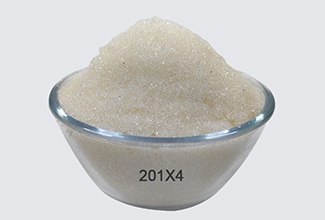
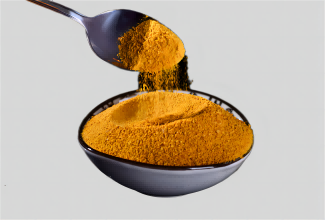
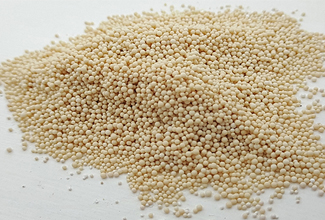
Food-grade macroporous styrene–divinylbenzene adsorbent resin selectively removes limonin and naringin while preserving the juice's natural sugars, acidity and vitamin C.
CHINA — A shipment of golden-brown polymer beads recently left Comcess's warehouse, bound for a juice processing plant in Vietnam. Inside the 25-liter pilot packs is AR600, a food-grade adsorbent resin engineered to solve one deceptively simple problem: orange juice that tastes bitter even when everything else about it is right.
The Vietnamese processor will run pilot-scale trials of AR600 on its orange juice line, evaluating how effectively the resin removes the two compounds responsible for most citrus bitterness — limonin and naringin. It is the kind of quality challenge that quietly costs citrus processors across Southeast Asia export-grade pricing: bitterness develops naturally as fruit matures and as limonin precursors convert after extraction, forcing downgrades, blending or sweetener adjustments that alter the product's label and sugar profile.
Why resin, and why AR600
Adsorbent resin technology takes a different route. As juice passes through a column of AR600, bitter compounds bind selectively to the resin's macroporous surface — a physical, additive-free process that leaves the juice's natural sugar–acid ratio and nutritional value intact.
"AR600 is a macroporous styrene–divinylbenzene copolymer engineered specifically for citrus applications," said Roman, Technical Director at Comcess. "Its optimized pore structure and bead-size distribution give it a strong selective affinity for limonin and naringin, while the mechanical stability of the beads holds up under continuous column operation and repeated acid–base regeneration — typically the decisive factor in a processor's total cost of ownership."
The resin is produced under Comcess's food-grade production system, with strict controls from raw material selection through finished-product testing. Each shipment is accompanied by a full technical data sheet, food-contact documentation, and a recommended pre-use conditioning and rinse protocol.
Built on field-proven application experience
Comcess's application engineering team has long supplied adsorbent and ion exchange resins to juice processors across Asia and beyond, covering orange, grapefruit, lemon, apple and pineapple juice lines ranging from 5 to 100 tonnes per hour. The Vietnamese trial follows the company's standard export workflow: pilot quantities shipped with regulatory documentation, joint on-site testing of column loading and debittering performance against the customer's own quality benchmarks, and process design support — including regeneration schemes and lifecycle cost modeling — before commercial supply.
"Our Vietnamese partner needed a debittering solution that works with cloudy juice containing pulp, without blocking the column or stripping out the juice's fresh character," said Angelina, Sales Manager for Southeast Asia at Comcess. "AR600's larger effective bead size is designed exactly for that operating window. We will stay with the trial team directly, providing laboratory data and process parameters, because resin performance is ultimately proven on the production line, not on paper."
A market where bitterness has a price
Vietnam has become one of Southeast Asia's fastest-growing citrus processing markets, with rising export demand for NFC and concentrated orange juice meeting international sensory standards. Resin-based debittering allows processors to upgrade fruit that would otherwise be downgraded for bitterness — improving yield economics while meeting the taste expectations of export markets in Japan, South Korea, the EU and North America.
About Comcess
Comcess is a manufacturer and exporter of ion exchange and adsorbent resins, serving the food and beverage, water treatment, pharmaceutical and chemical industries. The company operates ISO-certified production facilities, with key food-grade product lines certified to NSF standards. Its food-grade resin portfolio is supported by application engineering, pilot testing and after-sales technical service worldwide.
Email: info@cncomcess.com