In natural plant extract processing, selecting the right adsorption resin is essential for improving target compound recovery, purification performance, and product quality. In February 2026, COMCESS received an inquiry from a customer seeking a suitable macroporous resin for purifying glabridin from licorice root extract.
Through technical communication and sample evaluation, COMCESS worked with the customer to identify a suitable resin for laboratory testing, helping establish a foundation for the next stage of the customer's purification project.
Understanding the Customer's Purification Requirements
The project began in February 2026, when the customer contacted COMCESS to discuss macroporous resin options for glabridin purification.
Glabridin is a valuable bioactive compound found in licorice root extract. Its separation and purification require careful consideration of the extract composition, target purity, adsorption performance, and subsequent desorption and recovery processes.
To better understand the application, the COMCESS team focused on clarifying several key technical questions:
Feed material: What is the composition of the licorice root extract, and what is its initial glabridin concentration?
Purification target: What glabridin purity and recovery rate does the customer aim to achieve?
Process conditions: What are the operating temperature, pH, and solvent composition of the feed solution?
Elution and recovery: Which desorption solvents and regeneration procedures are used or preferred?
Testing and scale-up: What laboratory equipment and evaluation methods are available, and what are the expected requirements for future production?
These details are important for assessing resin compatibility and helping the customer select a suitable material for experimental validation.
March 2026: Resin Samples Provided for Laboratory Evaluation
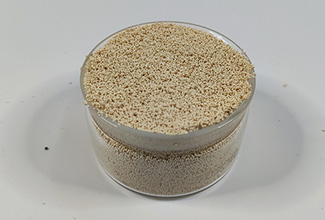
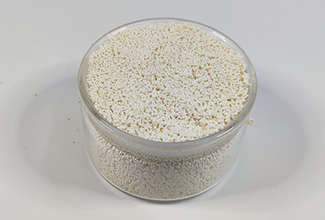
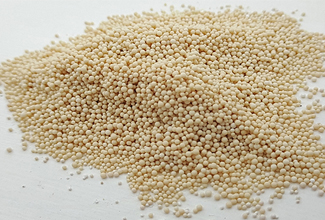
After the initial technical discussions, COMCESS arranged macroporous resin samples for the customer in March 2026.
Rather than relying solely on product specifications, the sample evaluation stage allowed the customer to investigate the resin's performance under actual laboratory conditions. This step is particularly important in natural extract purification, where feed composition and operating parameters can significantly influence separation results.
The evaluation was intended to help assess key performance indicators, including:
Glabridin adsorption capacity and selectivity
Desorption efficiency and target compound recovery
Purification performance and final product quality
Resin stability and suitability for repeated use
By providing samples before bulk procurement, COMCESS supported a more application-oriented selection process, allowing the customer to evaluate resin performance against the requirements of the intended purification process.
From Sample Testing to the Next Stage of the Project
Following sample delivery, laboratory testing became the next important milestone in the customer's resin selection process.
For glabridin purification, the results need to be assessed in the context of the customer's feed material, process conditions, and product specifications. Adsorption capacity alone may not determine the most suitable resin; desorption behavior, recovery rate, solvent consumption, and reproducibility can also influence the overall process.
COMCESS maintains communication with customers throughout the sample evaluation stage to help clarify technical requirements and discuss potential adjustments where necessary.
As the customer progresses through testing and resin selection, the results will provide a basis for determining the suitability of the selected macroporous resin and preparing for potential bulk procurement.
COMCESS: Application-Oriented Ion Exchange and Adsorption Resin Solutions
At COMCESS, we understand that selecting a resin involves more than matching a product to a single application name. Each purification project has its own feed characteristics, separation objectives, and process constraints.
Our approach combines product selection, technical communication, and sample evaluation to help customers identify suitable resin options for their applications.
For natural product extraction and purification projects, including glabridin recovery from licorice root extract, we encourage customers to share their feed composition, target purity, recovery requirements, and operating conditions. These details help our team evaluate potential resin options and support a more informed transition from laboratory testing to production-scale application.
Looking for a macroporous resin for glabridin purification?
Contact COMCESS to discuss your raw material characteristics, purification targets, and process requirements. Our team can help evaluate suitable resin options and arrange samples for application testing.
.png)