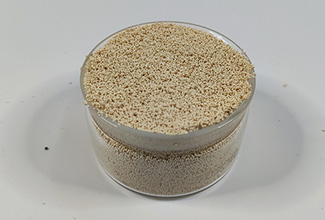
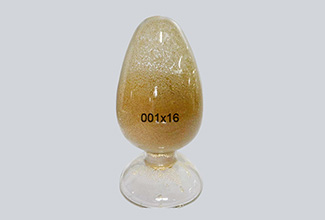
The global nickel market is undergoing structural transformation. Over the past decade, the stainless steel industry has been the primary consumer of nickel; however, with the explosive growth of new energy sectors, the electric vehicle and lithium battery industries are now emerging as the key drivers of nickel demand.
As a critical element in ternary lithium-ion battery cathodes, nickel significantly enhances battery energy density and cycle life. High-nickel content has become a clear direction in power battery technology development, directly driving up global demand for battery-grade nickel.
Meanwhile, the extraction of primary nickel ores is becoming increasingly difficult, and environmental regulations are growing stricter. Traditional nickel production processes are not only energy-intensive and highly polluting but also face risks of resource depletion. Against this backdrop, the importance of nickel recycling technologies is becoming ever more evident.
Conventional nickel recovery methods primarily rely on solvent extraction, which suffers from complex processes, high chemical consumption, and significant metal loss. The emergence of next-generation selective ion exchange resins offers a promising new technological solution for the nickel recycling industry.
Why Nickel Recycling Has Become More Important Than Ever
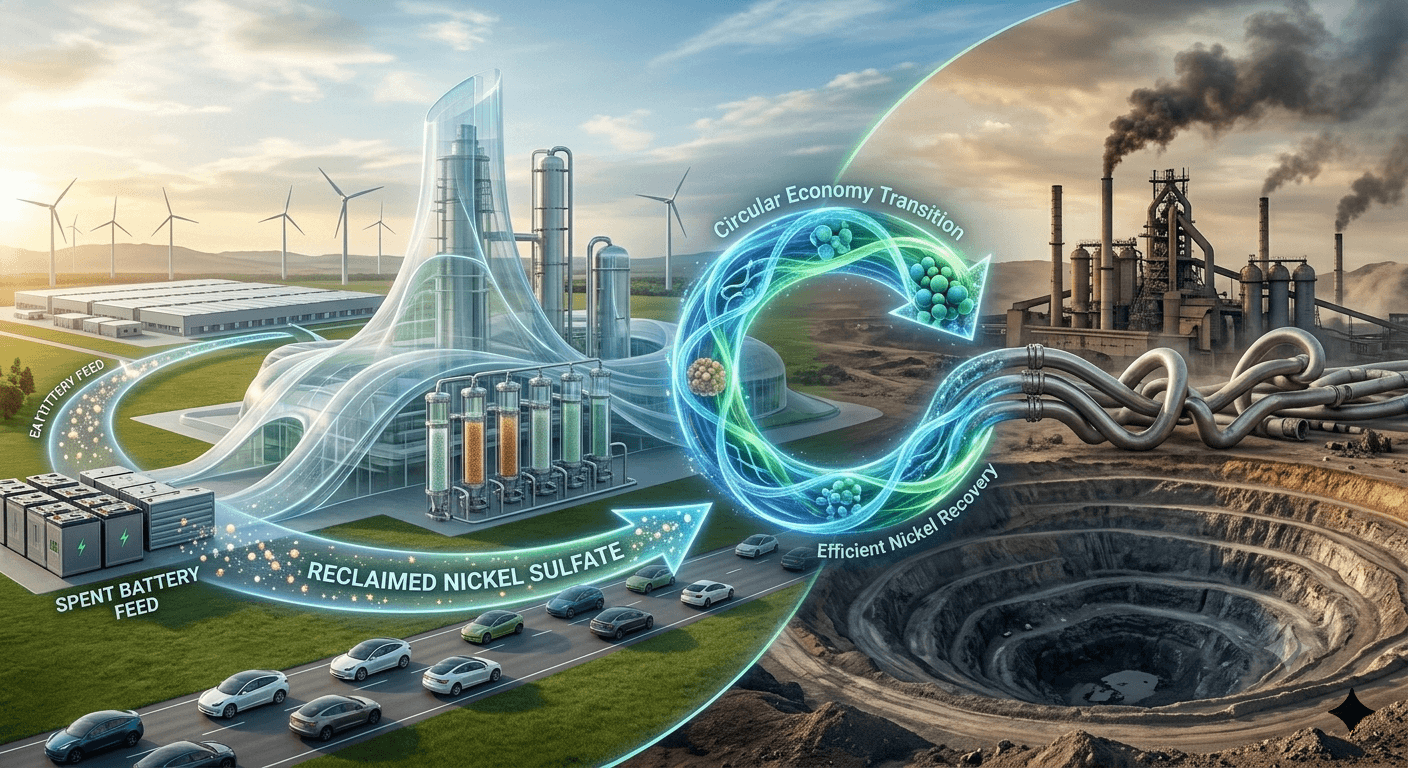
Growing Demand for Nickel in Electric Vehicle Batteries
Ternary lithium-ion batteries are currently one of the most widely used battery types in electric vehicles (EVs). In ternary cathode materials, the role of nickel is to enhance the material's specific capacity, thereby enabling the battery to store a greater amount of electrical energy.
To further extend the driving range of EVs, battery manufacturers are continuously increasing the nickel content within their cathode materials. Evolving from early compositions such as NCM111 and NCM523 to today's mainstream NCM622 and NCM811—and even extending to cobalt-free NCM9-series materials—the proportion of nickel has surged from one-third to over 80%.
According to industry forecasts, by 2030, global demand for nickel from the electric vehicle sector is expected to account for more than 40% of total nickel consumption. The supply deficit for battery-grade nickel sulfate is projected to continue widening, thereby creating vast market opportunities for the nickel recycling industry.
The Environmental and Economic Benefits of Nickel Recycling
Nickel recycling significantly improves resource utilization efficiency. A single spent power battery contains substantial quantities of valuable metals—such as nickel, cobalt, and lithium. Through recycling and reuse, these metals can be reintegrated into the production cycle, thereby reducing reliance on primary mineral resources.
From an environmental perspective, recycling one ton of nickel consumes approximately 60% less energy and generates 70% fewer greenhouse gas emissions compared to mining one ton of primary nickel. Furthermore, nickel recycling helps mitigate soil and water contamination caused by nickel-bearing waste, thereby lowering the costs associated with environmental remediation.
On the economic front, as nickel prices continue their upward trend, the economic benefits of recycling nickel are becoming increasingly evident. For mining and smelting enterprises, improving nickel recovery rates directly boosts product output and enhances the overall profitability of their projects. For battery recycling companies, the mastery of efficient nickel recovery technologies serves as a key indicator of their core competitiveness.
.png)
Traditional Nickel Recycling Methods and Their Limitations
Nickel Recovery via Solvent Extraction
Solvent extraction is currently the most widely adopted industrial method for nickel recovery. Its fundamental principle relies on the selective extraction of nickel ions by specific extractants, thereby separating the nickel from the leaching solution.
A typical solvent extraction process comprises several key steps. The first step involves the pretreatment of the leach liquor; typically, an oxidizing agent is added to oxidize Fe²⁺ to Fe³⁺. Subsequently, the pH is adjusted to induce the precipitation of Fe³⁺ as ferric hydroxide, thereby removing it from the solution.
Next is the saponification of the extractant, wherein sodium hydroxide is used to convert the extractant into its sodium salt form, thereby enhancing its extraction efficiency. The pretreated leach liquor is then thoroughly mixed with the saponified extractant, resulting in the extraction of nickel ions into the organic phase.
Following washing and stripping steps, the nickel ions are transferred from the organic phase back into the aqueous phase, yielding a high-purity nickel sulfate solution. Finally, the extractant undergoes a regeneration process, allowing it to be recycled for reuse.
Challenges Facing Solvent Extraction
Although the solvent extraction method is technologically mature, it presents several issues in practical application. The most prominent challenge is the loss of nickel through co-precipitation during the iron removal stage. During the formation of ferric hydroxide precipitates, a significant quantity of nickel ions is adsorbed onto the solid phase; consequently, nickel losses during this specific step typically hover around 10%, and in some instances, may be even higher.
To regulate pH levels and saponify the extractant, the solvent extraction process consumes substantial quantities of sodium hydroxide. This not only drives up reagent costs but also generates large volumes of sodium-rich wastewater, thereby increasing the complexity and expense associated with subsequent wastewater treatment.
The entire solvent extraction workflow is highly complex, necessitating an extensive array of mixer-settlers, storage tanks, and piping infrastructure. This entails high capital investment in equipment, requires a large physical footprint, and presents significant challenges regarding operational control.
The Impact of Nickel Loss on Plant Profitability
While a 10% nickel loss may not sound substantial, for a nickel smelter with an annual output in the tens of thousands of tons, it translates to the sheer waste of thousands of tons of nickel each year. Based on current nickel market prices, this results in economic losses amounting to hundreds of millions of yuan.
As nickel prices continue their upward trajectory, the economic repercussions of metal losses become further amplified. During periods of high nickel prices, minimizing the nickel loss rate emerges as the most direct and effective strategy for a facility to enhance its profitability.
Furthermore, nickel losses contribute to resource depletion and environmental pollution. The lost nickel ultimately finds its way into tailings and wastewater streams, thereby intensifying the burden on environmental remediation efforts and running counter to the principles of sustainable development.
How Selective Ion Exchange Resins Improve Nickel Recovery
What Are Nickel Extraction Chelating Resins?
Chelating resins are a specialized type of ion exchange resin featuring a polymer backbone grafted with functional groups capable of forming chelates with metal ions. Unlike conventional ion exchange resins, chelating resins exhibit a much higher selectivity toward specific metal ions.
Chelating resins specifically designed for nickel extraction typically contain functional groups such as iminodiacetic acid (IDA) or aminophosphonic acid. These groups are capable of forming stable five- or six-membered ring chelates with Ni²⁺ ions, thereby adsorbing the nickel ions from the solution onto the resin.
This chelating action is highly selective. In mixed solutions containing various metal ions, the resin preferentially adsorbs nickel ions while exhibiting very weak adsorption capabilities toward other impurity ions, such as sodium, calcium, and magnesium.
Selective Adsorption of Nickel in Acidic Solutions
While conventional ion exchange resins typically operate only under neutral or weakly acidic conditions, nickel extraction chelating resins are capable of maintaining excellent adsorption performance even in highly acidic environments.
This is because the chemical bonds formed between the chelating resin and nickel ions are stronger than the ionic bonds found in ordinary ion exchange resins, enabling them to withstand competitive adsorption from high concentrations of hydrogen ions. Within a pH range of 0 to 2, the resin retains a high degree of selectivity for Ni²⁺.
More importantly, this type of resin demonstrates strong resistance to interference from Fe³⁺ ions. Even when the concentration of Fe³⁺ in the solution exceeds 20,000 ppm, the resin continues to preferentially adsorb nickel ions without becoming saturated by the iron ions.
A Typical Nickel Recovery Process Using Ion Exchange Resins
The process for recovering nickel using ion exchange resins is significantly simpler than solvent extraction. First, the filtered nickel leachate is fed directly into a resin column, eliminating the need for pH adjustment or preliminary iron precipitation treatments.
As the solution flows through the resin bed, nickel ions are selectively adsorbed by the resin, while other impurity ions are carried out with the effluent. Once the resin reaches adsorption saturation, the flow of the solution is halted. Next, the resin bed is washed with a small amount of clean water or dilute acid to remove impurity-laden solutions entrapped between the resin particles. Once washing is complete, sulfuric acid or hydrochloric acid of a specific concentration is used as a desorbent to elute the nickel ions adsorbed onto the resin, yielding a high-purity nickel sulfate or nickel chloride solution.
After the desorption process, the resin undergoes a simple regeneration treatment and can then be immediately returned to service; the entire cycle can be operated continuously.
Key Advantages of the Novel Nickel Recovery Resin
Direct Operation in Strong Acid Solutions (pH 0–2)
The most distinctive feature of this novel nickel recovery resin is its ability to operate directly within highly acidic solutions with a pH range of 0 to 2. This means that the leach liquor can be fed directly into the resin system without the need for prior neutralization or pH adjustment.
Eliminating the neutralization step not only simplifies the process workflow but also significantly reduces reagent costs. Facilities no longer need to purchase and store large quantities of sodium hydroxide, nor do they generate the substantial volumes of sodium salt-laden wastewater typically associated with neutralization processes.
Furthermore, foregoing pH adjustment prevents the downstream process disruptions often caused by pH fluctuations, thereby rendering the entire production process more stable and controllable.
Exceptional Performance in High-Iron Solutions
For many nickel ores and secondary resources, the leach liquor frequently contains very high concentrations of iron ions. Traditional processes require a preliminary iron precipitation step; however, this novel resin is capable of directly processing solutions with high iron content.
By eliminating the need for iron pre-precipitation, the risk of nickel co-precipitation losses is fundamentally avoided. This constitutes a critical step in maximizing nickel recovery rates, capable of directly reducing nickel losses from 10% to less than 1%.
Moreover, eliminating the iron precipitation stage reduces both the capital investment and operational costs associated with filter press equipment, while also alleviating the physical labor burden on workers.
High Nickel Loading Capacity Even at Low pH
While many resins exhibit selectivity under low-pH conditions, their adsorption capacity often declines significantly. In contrast, this novel nickel recovery resin maintains a high nickel loading capacity even under highly acidic conditions ranging from pH 0 to 1.
High adsorption capacity implies that a given volume of resin can process a larger volume of solution—or, conversely, that a smaller volume of resin is required to process a specific volume of solution. This allows for a more compact resin system design, thereby reducing equipment investment costs. Furthermore, a high adsorption capacity extends the resin's operational cycle and reduces the frequency of desorption and regeneration, thereby lowering the consumption of regeneration reagents and minimizing wastewater generation.
Reduced Nickel Loss Throughout the Process
By utilizing novel ion exchange resin technology, metal loss throughout the entire nickel recovery process is kept to a minimum. In addition to the resin's inherent selective adsorption of nickel, the subsequent desorption process is exceptionally thorough, leaving virtually no residual nickel on the resin.
Compared to solvent extraction, ion exchange eliminates entrainment losses associated with the organic phase, as well as issues stemming from extractant degradation. The entire system operates within a closed loop, ensuring that nickel ions are not lost through wastewater or solid waste streams.
According to actual operational data, the adoption of resin technology boosts the overall nickel recovery rate from the 85–90% range typical of traditional processes to over 98%.
Lower Capital and Operating Expenditures
Ion exchange resin systems feature a highly compact equipment footprint, consisting primarily of a few resin columns, pumps, and associated piping. Compared to the extensive array of mixer-settlers required for solvent extraction, the physical space required is reduced by over 70%.
Consequently, capital investment costs are also significantly lower—typically amounting to only 50–60% of the cost of a solvent extraction system. Moreover, the installation and commissioning phase for resin systems is considerably shorter, allowing for a much faster transition to full-scale production.
In terms of operating costs, the advantages of resin technology are even more pronounced. By eliminating the need for large-scale sodium hydroxide consumption and the subsequent treatment of vast volumes of wastewater, operating costs can be reduced by 30–50%. Furthermore, the typical service life of the resin ranges from 3 to 5 years, keeping replacement costs within a reasonable and acceptable range.
Comparison: Solvent Extraction vs. Ion Exchange Resin Technology
|
Parameter |
Solvent Extraction |
Selective Nickel Resin |
|
pH Adjustment |
Required |
Not required |
|
Iron Removal Step |
Required |
Not required |
|
Nickel Loss Rate |
High (8%-12%) |
Extremely low (<1%) |
|
NaOH Consumption |
High |
Minimal |
|
System Footprint |
Large |
Compact |
|
Wastewater Generation |
High |
Low |
|
Operating Cost |
Relatively high |
Low |
Applications of Selective Nickel Recovery Resins
Hydrometallurgy of Laterite Nickel Ores
Laterite nickel ores currently constitute the primary global source of nickel production. In the hydrometallurgical processing of laterite nickel ores—whether via sulfuric acid leaching or hydrochloric acid leaching—leach solutions containing substantial concentrations of iron ions are inevitably generated.
Traditional processes typically require an initial neutralization step to remove iron, followed by solvent extraction to recover the nickel. By utilizing novel selective nickel resins, nickel can be adsorbed directly from the leach solution; this eliminates the need for separate iron removal and neutralization steps, thereby significantly boosting nickel recovery rates and lowering production costs.
Production of Battery-Grade Nickel Sulfate
Battery-grade nickel sulfate demands exceptionally high purity, with particularly stringent limits placed on the content of impurities such as iron, cobalt, and copper.
Selective nickel resins are capable of selectively adsorbing nickel from solutions containing a diverse array of impurities. Following desorption, the resulting nickel sulfate solution exhibits a high degree of purity, rendering it suitable for direct use in the production of battery-grade nickel sulfate. This process streamlines subsequent purification stages and enhances overall product quality.
Recycling of Power Batteries
As the first generation of electric vehicle (EV) power batteries reaches the end of its service life, power battery recycling has emerged as a rapidly growing industry. After undergoing disassembly, crushing, and leaching, spent power batteries yield a leach solution containing a mixture of various metals, including nickel, cobalt, lithium, and manganese.
Selective nickel resins enable the efficient separation of nickel from this complex mixed solution, while other specialized resins can subsequently be employed to recover cobalt and lithium. This stepwise recovery methodology yields higher metal recovery rates and superior product purity compared to traditional co-precipitation methods.
Treatment of Electroplating Wastewater
The electroplating industry generates substantial volumes of nickel-bearing wastewater. If discharged directly, this wastewater poses a severe environmental pollution risk; concurrently, the nickel contained within this waste stream represents a valuable resource.
The use of selective nickel resins facilitates the recovery of nickel from electroplating wastewater, allowing the recovered nickel to be recycled back into electroplating production processes. This approach not only resolves environmental compliance issues but also generates tangible economic benefits for the enterprises involved.
Purification of Metallurgical Intermediate Solutions
During the smelting of other metals—such as copper and cobalt—intermediate solutions containing nickel are frequently produced. Although the nickel concentration in these intermediate solutions is typically low, failing to recover it results not only in a waste of valuable resources but also in a potential compromise of the quality of the primary metal product. Selective nickel resins enable the enrichment and recovery of nickel from low-concentration solutions, thereby enhancing the overall utilization efficiency of resources.
Case Study: Enhancing Nickel Recovery Rates Using Selective Resin Technology
Project Background
A nickel smelter employs a sulfuric acid leaching process to treat laterite nickel ore. The resulting leach liquor contains a nickel concentration of approximately 5 g/L, an iron concentration of about 15 g/L, and a pH value of approximately 1.0.
Challenges Faced
The facility originally utilized a traditional solvent extraction process for nickel recovery. The process began by neutralizing the leach liquor with limestone to a pH of approximately 3.5, causing iron ions to precipitate and be removed. Subsequently, the solution's pH was adjusted to 4.0 before being fed into the solvent extraction system.
In actual operation, the loss of nickel due to co-precipitation during the iron removal stage was severe, averaging 11%. Furthermore, the neutralization process consumed substantial quantities of limestone and sodium hydroxide, generating significant volumes of gypsum residue and wastewater.
Solution
The facility decided to undertake a technical upgrade of its nickel recovery system, replacing the original solvent extraction process with a novel selective nickel chelating resin technology.
The revamped process is remarkably simple: after filtration, the leach liquor flows directly into a resin adsorption system, where nickel is selectively adsorbed by the resin while the iron-bearing raffinate is discharged. Once the resin reaches saturation, the adsorbed nickel is eluted using sulfuric acid to yield a high-purity nickel sulfate solution.
Operational Results
Following the completion of the technical upgrade, the facility's nickel recovery rate rose from the original 88% to 98.5%. Based on an annual nickel production capacity of 10,000 tons, this translates to an additional recovery of 1,050 tons of nickel per year, generating increased economic benefits exceeding 100 million RMB.
Concurrently, the consumption of neutralizing agents was reduced by over 90%, wastewater discharge volumes dropped by 70%, and the generation of gypsum residue was significantly curtailed. The overall operating costs of the system were reduced by 42%.
How to Select the Appropriate Nickel Recovery Resin
Key Selection Factors
The operational pH range is the primary factor to consider. Different resins are suited to different pH ranges; therefore, the selection must be based on the actual pH value of the solution being processed. For highly acidic leach liquors, it is imperative to select a resin capable of functioning effectively under low-pH conditions.
Nickel selectivity constitutes the core performance characteristic of the resin. An ideal resin should exhibit high selectivity for nickel ions while demonstrating weak adsorption capabilities for impurity ions such as iron, copper, and cobalt.
Iron tolerance is also a critical factor. Particularly when processing solutions with high iron concentrations, it is essential to select a resin that is insensitive to Fe³⁺ ions.
Adsorption capacity determines a resin's processing throughput. Under identical operating conditions, a higher adsorption capacity translates to a reduced requirement for resin volume and lower system operating costs.
Regeneration performance and service life are two other vital factors requiring careful consideration. The resin should facilitate easy desorption and regeneration, and its performance should not undergo significant degradation after undergoing multiple operational cycles.
Questions to Ask Resin Suppliers
When selecting a resin supplier, consider asking the following specific questions:
What is the maximum nickel loading capacity of the resin at a pH of 1.0?
What is the maximum concentration of Fe³⁺ ions that the resin can tolerate?
Under normal operating conditions, what is the expected service life of the resin?
What is the recommended desorbing agent for the resin, and what desorption efficiency can be achieved?
Is the resin susceptible to fragmentation or pulverization during operation?
Future Trends in Nickel Recovery Technology
The Surge in Power Battery Recycling
Over the coming decade, the world is poised to enter the peak period for the decommissioning of power batteries. Forecasts indicate that by 2030, the global volume of retired power batteries will exceed 1,200 GWh. These spent batteries contain substantial quantities of valuable metals—such as nickel, cobalt, and lithium—effectively constituting a massive "urban mine."
Power battery recycling is set to become the fastest-growing segment within the nickel recovery industry. Efficient and environmentally friendly nickel recovery technologies will play a pivotal role in this sector.
The Advancement of Green Hydrometallurgy
Driven by increasingly stringent environmental regulations, green hydrometallurgy has emerged as an inevitable trend in the metallurgical industry. Traditional production processes—characterized by high energy consumption and significant pollution—will be gradually phased out.
As a green and eco-friendly separation technique, selective ion exchange resin technology offers distinct advantages—including streamlined processes, low energy consumption, and minimal environmental impact—and is therefore expected to find increasingly widespread application within the field of green hydrometallurgy.
Advanced Functional Resins
Resin materials themselves are also undergoing continuous evolution. Future generations of nickel recovery resins will trend toward achieving higher selectivity, greater adsorption capacity, and extended service life. By modifying the functional groups and backbone structures of the resin, both its selectivity toward nickel and its adsorption performance can be further enhanced. Concurrently, novel resin synthesis techniques will help reduce production costs, thereby rendering the resin more competitive in the market.
Conclusion
The rapid expansion of the global electric vehicle and lithium battery industries has driven up the demand for nickel. Traditional solvent extraction nickel recovery processes are no longer suitable for the industry's development needs due to problems such as high nickel loss, high cost, and complex processes.
Novel selective ion-exchange resins enable the efficient recovery of nickel under highly acidic and high-iron conditions; they significantly boost recovery rates, reduce costs, and minimize environmental emissions. Having already been successfully implemented across various sectors, these resins are poised to become a pivotal technological solution within the fields of nickel hydrometallurgy and battery materials.
Are you in search of high-performance nickel recovery resins? Contact our technical team; we can provide customized nickel recovery solutions tailored to your specific water quality and process requirements, and arrange for complimentary resin sample testing to help you validate their performance under actual operating conditions.