What is Direct Lithium Extraction (DLE)?
Direct Lithium Extraction (DLE) encompasses a suite of processes designed to selectively extract lithium ions directly from geothermal fluids—such as salt lake brines and produced water from oilfields. Unlike traditional methods, DLE does not rely on large-scale evaporation ponds; instead, it utilizes functional materials or membranes to selectively separate lithium, with the entire process completed in a timeframe ranging from a few hours to several days.
Traditional salt lake lithium extraction relies on solar evaporation for concentration, a process that takes 12–18 months, requires a vast land footprint, generally yields a lithium recovery rate of less than 50%, and is heavily constrained by climate conditions. Lithium extraction from ore involves multiple stages—including mining, crushing, roasting, and leaching—resulting in high energy consumption and significant tailings generation. The core advantages of DLE lie in its shorter process flow, smaller land footprint, and higher recovery rates, making it well-suited for the large-scale development of low-concentration lithium resources.
Lithium concentrations in brine are generally low; while high-quality South American salt lakes typically range from 500 to 1,500 mg/L, most domestic salt lakes in China range from only a few dozen to 300 mg/L, with the raw brine at Qarhan Salt Lake containing merely 10–191 mg/L. In contrast, the concentrations of impurity ions—such as sodium, magnesium, potassium, and calcium—are tens to thousands of times higher than that of lithium. Precisely separating lithium from such complex, high-salinity systems necessitates the use of highly selective separation materials.
Currently, mainstream DLE technologies fall into four categories: adsorption, which captures lithium using solid adsorbents (via surface or lattice sites) and represents the most industrially mature route; ion exchange, which utilizes resin functional groups to exchange with lithium ions; solvent extraction, which achieves phase transfer through the complexation of lithium with organic extractants; and membrane separation, which relies on pore-size exclusion or charge effects (e.g., nanofiltration and electrodialysis) for separation. In practice, most projects employ a combination of technologies rather than relying on a single process route.
Why Ion Exchange Resins Are Chosen for DLE
The core reasons lie in the low lithium concentration and high abundance of impurity ions in brines. Most raw salt lake brines contain less than a few hundred milligrams of lithium per liter, while oilfield and geothermal brines may contain as little as ten-odd milligrams per liter; consequently, precipitation methods are often unsuitable, necessitating separation materials with strong enrichment capabilities.
Competition from coexisting ions presents an even greater challenge. Taking the Chaerhan Salt Lake as an example, the magnesium-to-lithium ratio is as high as 517, meaning the magnesium ion concentration is more than 500 times that of lithium. Magnesium and lithium occupy diagonal positions on the periodic table and share similar chemical properties, making it difficult for ordinary separation materials to effectively distinguish between them.
While standard strong-acid cation exchange resins can achieve a total exchange capacity exceeding 2.0 eq/L, they lack selectivity among cations; they preferentially adsorb ions with higher valency and larger hydrated radii. Divalent magnesium and calcium ions occupy the majority of exchange sites, resulting in negligible actual lithium adsorption, which renders them unsuitable for direct lithium extraction from high-impurity brines.
The core value of ion exchange materials in DLE lies in their ability to preferentially capture lithium ions amidst a multitude of interfering ions. Selectivity directly determines the lithium purity of the eluate and influences downstream purification costs. For DLE projects, selectivity is more critical than mere exchange capacity: insufficient capacity can be compensated for by increasing resin volume or shortening operating cycles, whereas poor selectivity leads to a sharp rise in impurity removal costs and can even compromise the economic viability of the process.
.png)
Working Principles of Ion Exchange Resins for Lithium Extraction
Lithium Ion Capture
Brine flows through the resin adsorption column at a set rate; lithium ions diffuse into the resin particles, undergo ion exchange with the exchangeable ions at active sites, and become immobilized on the resin.
Capture mechanisms vary depending on the material. Traditional cation resins rely on electrostatic interactions, preferentially adsorbing ions with higher valency and smaller hydrated radii. In contrast, selective resins or ion sieves identify lithium ions based on pore size, coordination environments, or lattice memory effects; for instance, the cavities remaining in a spinel-type manganese-based ion sieve after lithium extraction match the radius of the lithium ion, effectively excluding other ions and enabling selective capture. In actual brine, various cations compete for limited adsorption sites. Magnesium ions, due to their high charge, exhibit strong competitiveness on standard resins, while sodium ions—owing to their high concentration—occupy a significant number of sites through sheer numerical advantage. This is the primary reason why the working adsorption capacity in real brine is far lower than the equilibrium capacity observed in pure lithium chloride solutions.
Lithium Elution and Resin Regeneration
Once the resin reaches adsorption saturation, elution is required to release the lithium and restore adsorption capacity; dilute hydrochloric acid is the most commonly used regenerating agent. High concentrations of hydrogen ions displace the lithium ions on the resin, yielding a lithium-rich eluate and converting the resin from the lithium form to the hydrogen form, thereby completing regeneration.
The lithium chloride solution obtained through elution typically has a concentration several to dozens of times higher than that of the original brine, effectively concentrating the lithium. Industrial production often employs a mode involving multiple columns connected in series with alternating adsorption and regeneration cycles to ensure continuous production. The lithium-rich solution subsequently undergoes impurity removal, concentration, and lithium precipitation processes to ultimately produce lithium carbonate or lithium hydroxide.
Common Ion-Exchange and Adsorption Materials for DLE
In the industry, ion-exchange resins are often confused with lithium-ion sieves; however, they belong to distinct material systems—organic polymers versus inorganic materials—and operate via fundamentally different mechanisms.
Conventional Cation-Exchange Resins
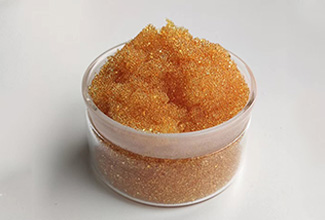
Strongly acidic cation-exchange resins—typically featuring a styrene-divinylbenzene polymer backbone grafted with sulfonic acid functional groups—are the most common type. They offer high exchange capacity, good mechanical strength, and low cost, making them widely used in water treatment.
However, they exhibit significant limitations when applied to DLE: they lack selectivity for lithium ions, resulting in the co-adsorption of large amounts of magnesium, calcium, and sodium, and producing low-purity eluate. Consequently, they are suitable only for brines with high lithium concentrations and low impurity levels, or serve merely as a preliminary rough separation unit; they are rarely used as the core material for lithium extraction on their own.
Lithium-Selective Ion-Sieve Materials
Manganese-based lithium-ion sieves are exemplified by spinel-type lithium manganate. A lithium-containing spinel structure is first synthesized; subsequent acid elution removes the lithium, leaving behind vacancies that match the size of lithium ions, allowing for the re-intercalation and selective adsorption of lithium. While they possess high theoretical adsorption capacity, manganese tends to leach out under acidic conditions, leading to significant capacity decay over repeated cycles.
Titanium-based lithium-ion sieves offer superior chemical stability compared to manganese-based ones, exhibiting resistance to acids and alkalis and low dissolution loss rates (public data indicates loss rates can be kept below 15%). However, they are difficult to granulate and have long adsorption cycles—approximately 1.5 to 2 times longer than those of aluminum-based systems—which limits their large-scale application.
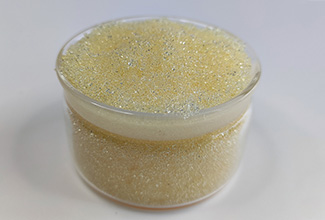
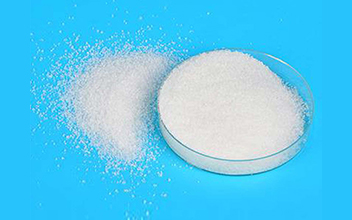
Aluminum-based lithium adsorbents (typically composed of LiCl·2Al(OH)₃·nH₂O) selectively bind lithium chloride through interlayer intercalation. This is currently the only adsorption system to have achieved large-scale industrial application; for instance, Blue Lithium (Lanke Lithium) employs this process at the Chaerhan Salt Lake. Industrial-grade aluminum-based adsorbents can achieve volumetric capacities exceeding 5 g/L, offer excellent magnesium-lithium separation, and are well-suited for brines with high magnesium-to-lithium ratios.
The high selectivity of inorganic ion sieves stems primarily from the size effects and coordination environments within their crystal structures; effectively, they provide binding sites tailored specifically for lithium ions, rather than relying on simple charge-based ion exchange.
Functionalized and Hybrid Materials
To combine the molding advantages of organic resins with the selectivity of inorganic materials, the industry has developed functionalized resins and polymer-inorganic composite materials. One approach involves introducing functional groups—such as crown ethers or chelating ligands—into the resin backbone to enhance selectivity through the specific complexation of ligands with lithium ions. Another approach involves granulating inorganic ion-sieve powders within a polymer matrix; this retains high selectivity while resolving issues associated with powders, such as high pressure drop and difficult packing. Some composite adsorbents achieve an annual dissolution loss rate of less than 1% and a desorption rate exceeding 95%.
Ion-Exchange DLE Process Flow
A typical ion-exchange/adsorption DLE process flow is as follows: raw brine → pretreatment → adsorption → water washing → elution and regeneration → lithium-rich solution collection → downstream refining.
Brine pretreatment is an essential step. Suspended solids, organic matter, oils, and scale-forming components in the raw brine can clog the resin bed and contaminate the resin. Pretreatment typically includes processes such as filtration, oil removal, pH adjustment, and softening (hardness removal), with the specific configuration determined by water quality.
The adsorption unit generally employs fixed-bed adsorption columns operated in series. As brine passes through the resin layer, lithium ions are gradually captured; the lithium concentration in the effluent is monitored, and the system switches to regeneration once the breakthrough point is reached.
Water washing takes place between adsorption and elution. Fresh water or dilute brine is used to displace raw brine remaining in the resin interstices, thereby reducing impurity carryover into the eluate and increasing the purity of the lithium-rich solution; the wash water can be recovered and reused.
Regeneration and elution typically employ a counter-current flow pattern—where the regenerant flows in the opposite direction to the adsorption flow—to enhance regeneration efficiency and reduce chemical consumption. The eluate is collected in fractions: the high-concentration fraction is sent for refining, while the low-concentration fraction can be reused as the initial displacement fluid for the next regeneration cycle.
The collected lithium-rich lithium chloride solution requires further processing—including impurity removal, concentration, and lithium precipitation—to yield lithium salt products; DLE performs only the extraction and enrichment of lithium and does not directly produce the final product.
Key Performance Parameters of DLE Resins
Selecting the right resin requires a comprehensive evaluation of multiple parameters; relying solely on nominal capacity is insufficient.
Lithium Adsorption Capacity: The amount of lithium adsorbed per unit mass or volume of resin. A distinction must be made between laboratory equilibrium capacity and actual working capacity; in industrial settings, working capacity is typically lower than equilibrium capacity. Lithium-Ion Selectivity: Characterized by separation coefficients (e.g., Li/Mg or Li/Na), this is a core metric for DLE materials; higher values indicate a preference for lithium adsorption, with Li/Mg selectivity being a critical focus. Adsorption Kinetics: Refers to the adsorption rate; superior kinetics allow for shorter contact times and higher equipment utilization, whereas poor kinetics limit processing capacity. Regeneration Efficiency: The proportion of adsorption capacity recovered after a single regeneration cycle; this directly impacts reagent consumption and operating costs. Cyclic Stability: The capacity retention rate after repeated adsorption-regeneration cycles; industrial projects generally require >80% retention after thousands of cycles, a factor that determines the resin replacement interval.
Additional parameters—such as chemical stability, mechanical strength, and abrasion resistance—also influence resin service life and operational stability. It is important to note that high capacity does not equate to high lithium extraction efficiency. Some materials exhibit high capacity in pure solutions but suffer from low working capacity in actual brines due to impurity ions occupying adsorption sites; alternatively, poor selectivity can result in low eluate purity, where the cost of subsequent impurity removal negates the advantage of high capacity.
Impact of Brine Chemical Composition on Resin Performance
Magnesium-to-Lithium (Mg/Li) Ratio
Magnesium ions are the primary interfering ions in DLE processes. Due to similarities in chemical properties and hydrated radii, most separation materials struggle to distinguish between lithium and magnesium. The higher the Mg/Li ratio, the greater the difficulty of lithium extraction.
The Atacama Salt Lake in South America has an Mg/Li ratio of only 6.4, offering broad process compatibility. In contrast, the Chaerhan Salt Lake in China has a ratio exceeding 500, while the Yiliping Salt Lake exceeds 2,000, necessitating the use of highly selective materials. Under conditions of high Mg/Li ratios, standard cation-exchange resins are essentially ineffective; even selective adsorbents may suffer reduced lithium adsorption efficiency due to the co-adsorption of magnesium, thereby increasing the burden of downstream impurity removal.
Co-existing ions such as sodium and calcium
Sodium ions are the most abundant cations in brine, often reaching concentrations of tens to over a hundred grams per liter. Although their individual competitive ability is weaker than that of divalent ions, their high concentration leads them to occupy a significant number of exchange sites.
Calcium ions are also strong competitors among divalent ions; furthermore, they readily form scale with sulfate and carbonate ions, depositing on the resin surface and within the bed voids, thereby causing blockages. Ions such as potassium, boron, and sulfate also affect the adsorption process and product purity to varying degrees.pH, Total Dissolved Solids (TDS), and temperature
pH alters the ion exchange equilibrium. At low pH, hydrogen ions compete for exchange sites, reducing adsorption capacity; at high pH, metal ions are prone to hydrolysis and precipitation, which fouls the resin. Different materials have their own optimal pH ranges.
Brines with high Total Dissolved Solids (TDS) exhibit high ionic strength, which alters ion activity and affects the resin's electrical double-layer structure, leading to performance degradation. Data obtained in the laboratory under low ionic strength conditions often show a significant drop in performance when applied to high-salinity brines.
Temperature influences ion diffusion rates and adsorption equilibrium. Increasing the temperature generally accelerates adsorption kinetics, though the equilibrium capacity may rise or fall depending on the heat of adsorption. While moderate heating during regeneration can improve efficiency, the material's thermal stability limits must be considered. Given the vast differences in lithium concentration, TDS, and ionic composition among various brines, resin selection cannot be based solely on lithium content.
Resin regeneration in DLE
Regeneration serves both as the stage for lithium product recovery and as a critical step for restoring the resin's adsorption capacity.
Acid-based regeneration is the prevailing process; the high concentration of hydrogen ions in dilute hydrochloric acid—far exceeding that of lithium ions—drives the exchange equilibrium toward desorption. Regenerant concentrations are typically in the range of a few percent, adjusted according to the specific resin type and process requirements.
Regeneration efficiency is a key performance indicator; counter-current regeneration generally yields higher efficiency than co-current regeneration, with the specific consumption of regenerant controllable within the 1.0–1.2 range. Regenerant consumption directly determines operating costs; excessive acid usage not only raises chemical costs but also increases the expense of wastewater neutralization. Acid consumption can be reduced through measures such as optimizing flow rates, employing multi-stage counter-current flow, and fractionated reuse of the eluate. Resin performance gradually degrades over long-term cycling due to functional group loss, backbone degradation, and the accumulation of irreversible fouling; inorganic ion sieves also suffer from the leaching of active components. Mitigating this degradation requires a two-pronged approach: selecting materials with high chemical stability and implementing effective brine pretreatment, controlled regeneration conditions, and protection against extreme operating shocks.
Common Challenges in DLE Applications of Ion Exchange Resins
Materials that perform excellently in the laboratory often encounter various issues in industrial settings. The core challenges can be categorized by problem, cause, and improvement strategy as follows:
Insufficient Lithium Selectivity: Manifests as high impurity levels and low lithium purity in the eluate, stemming from the material's weak ion-recognition capability—a problem particularly pronounced with standard cation exchange resins. Improvements can be achieved by using chelating resins or inorganic ion sieve systems, optimizing adsorption conditions, and incorporating a water-washing step.
Interference from Competitive Ions: Impurities in high-magnesium, high-sodium brines occupy a large number of binding sites, drastically reducing the lithium working capacity. Impacts can be mitigated by adjusting flow rates, controlling breakthrough points, and optimizing pH, though the fundamental solution is to switch to highly selective materials.
Resin Fouling and Scaling: Organic matter, colloids, and oils can adhere to and clog resin pores, while calcium and magnesium salts tend to crystallize and deposit, leading to reduced capacity and increased column pressure. Pretreatment units must be strengthened; fouled resins may be restored via acid-base washing, while scaling can be prevented through upstream softening and periodic acid washing.
Capacity Decay and Regeneration Difficulties: Continuous capacity loss after cycling may result from chemical degradation or the accumulation of irreversibly adsorbed species, or from insufficient regenerant dosage or excessive flow rates. Regeneration conditions must be controlled, materials with high acid/alkali resistance and stability selected, and process parameters optimized when necessary.
Mechanical Attrition and Brine Fluctuations: Resins are prone to breakage from fluid scouring and osmotic pressure shocks, leading to increased pressure differentials; fluctuations in brine concentration, composition, and temperature also cause performance instability. Material selection should prioritize abrasion resistance, and operations should avoid drastic concentration changes. Additionally, buffer tanks and online monitoring systems should be installed to dynamically adjust process parameters based on water quality and to maintain a performance safety margin.
Comparison of Ion Exchange with Other DLE Technologies
No single DLE technology is suitable for all types of brine; each has its own specific application scenarios. A core comparison is provided below:
|
Technology Route |
Core Mechanism |
Li⁺ Selectivity |
Regeneration Method |
Key Challenges |
|
Ion Exchange |
Functional group ion-exchange reaction |
Potentially high, depending on functional design (practical separation factor α(Mg/Li) < 50) |
Acid/Alkali regeneration |
Insufficient selectivity of conventional resins; resin degradation; high Ca²⁺/Mg²⁺ pretreatment cost |
|
Inorganic Adsorption (Ion Sieve) |
Surface adsorption & lattice intercalation |
High (separation factor α(Mg/Li) up to 500–2,000) |
Water rinsing or chemical elution (acid stripping) |
Trade-off between capacity and stability; Mn/Ti dissolution loss (2–5%/cycle); pelletizing with binder reduces capacity significantly (~40 mg/g powder → ~5 mg/g granule) |
|
Solvent Extraction |
Chemical complexation with extractants |
High (efficient for Co/Ni/Mn separation) |
Stripping (back-extraction) |
Solvent volatilization and entrainment; severe equipment corrosion; third-phase emulsification (stable run < 72 h in high-Na brines) |
|
Membrane Separation |
Size sieving & charge repulsion (Donnan effect) |
Depends on membrane type (NF/RO/ED) |
Chemical cleaning |
Membrane fouling; concentration polarization; high osmotic pressure limit (unsuitable for TDS > 12%); high capital cost |
|
Electrochemical Method |
Electric-field-driven Li⁺ intercalation/deintercalation |
High potential (separation factor α(Mg/Li) > 2,000 for EIX) |
Electrical regeneration / reverse deintercalation (acid-free for EIX) |
High energy consumption (~10–15 kWh/kg Li₂CO₃); short electrode lifespan; membrane resistance and short-circuit risks for EIX |
Practical industrial projects often employ combined process schemes—such as using adsorption or ion exchange for initial enrichment, followed by membrane-based deep concentration and impurity removal, and finally lithium precipitation to yield the product. The specific combination and prioritization of these technical steps are determined entirely by the brine composition and project objectives.
Resin Selection Methodology for Lithium Extraction Projects
Resin selection is a systematic process requiring a comprehensive evaluation based on brine quality, operating conditions, and costs.
First, establish the brine quality parameters—such as lithium concentration, magnesium-to-lithium ratio, sodium-to-lithium ratio, calcium ion concentration, pH, TDS, and operating temperature—as these form the basis for selection. Brines with high magnesium-to-lithium ratios rule out standard cation exchange resins, necessitating a preference for high-selectivity adsorption systems; for low-lithium brines, a balance between capacity and selectivity is required.
Second, define the process requirements: target adsorption capacity, selectivity metrics, regenerant type, expected number of cycles, and resin lifespan. These must be weighed against investment and operating costs; higher performance is not always better, as optimizing the total life-cycle cost is the primary objective.
The complete selection process follows a standardized workflow: comprehensive brine analysis → laboratory-scale static screening → dynamic column experiments → pilot-scale validation → final selection. Small-scale tests narrow down the candidate pool, column experiments simulate industrial operating conditions, and pilot-scale trials validate stability over hundreds of cycles, ultimately determining the specific resin grade and loading quantity.
Conclusion
The core requirement for separation materials used in direct lithium extraction has never been merely high exchange capacity; rather, it is lithium-ion selectivity within complex ionic environments. Even with high capacity, if the material primarily captures impurities, it holds no practical value for the extraction process.
A material's actual performance depends heavily on the brine composition. Factors such as the magnesium-to-lithium ratio, sodium-to-lithium ratio, pH, and total salt content significantly influence performance; discussing performance without reference to specific water quality is of limited value, as the same material may perform vastly differently in different brines.
Combining laboratory screening with column experiments using actual brine is an essential step in material selection. Only by integrating static preliminary screening, dynamic column simulation, multi-cycle stability verification, and full-process testing with actual brine can one select a material solution suited to the specific project. There is no "universal" product for lithium extraction; respecting variations in water quality and relying on experimental data are the only ways to ensure process stability and economic viability.