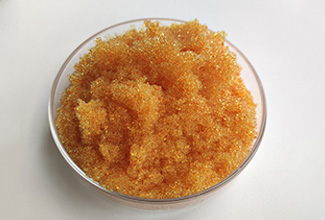
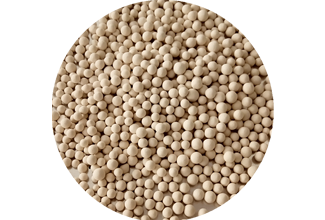
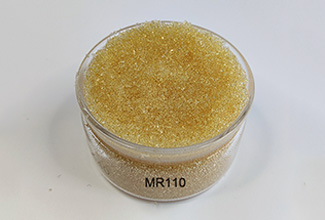
.jpg)
In industrial applications such as water treatment, ultrapure water production, industrial fluid purification, and heavy metal removal, ion exchange resins serve as the core filtration and purification media. The precision of resin selection directly determines the effluent quality, operational stability, chemical consumption costs, and service life of the entire water treatment system.
Understanding the Core Classifications of Ion Exchange Resins
There is a wide variety of ion-exchange resins available on the market; significant differences in exchange mechanisms, suitable applications, and operational tolerances across resin types serve as the primary basis for selection. Based on function and structure, they can be classified into four core categories that cover the vast majority of industrial applications.
Cation Exchange Resins
Cation resins are primarily used to adsorb cations such as calcium, magnesium, sodium, and iron from water; they are categorized into strong-acid and weak-acid types. Strong-acid cation resins utilize sulfonic acid groups as functional groups, operate across a wide pH range, and are capable of removing cations from various water qualities. Weak-acid cation resins primarily feature carboxylic acid groups; they specifically target carbonate hardness, offer higher regeneration efficiency, and require lower chemical consumption.
Anion Exchange Resins
Anion resins are used to remove anions such as sulfates, nitrates, chlorides, and silica; they include strong-base and weak-base types. Strong-base anion resins are classified into Type I and Type II; they can deeply remove weakly acidic anions (such as silicates) and are suitable for ultrapure water production. Weak-base anion resins remove only strongly acidic anions but possess superior resistance to organic fouling, making them ideal for water sources with high organic content.
Mixed Bed Resins
Mixed-bed resins are composite resins formed by blending cation and anion resins in precise proportions. They enable single-stage desalination without the need for multi-stage equipment in series, yielding water of extremely high purity. They are widely used in the electronics, semiconductor, and pharmaceutical industries for ultrapure water polishing and condensate polishing.
Specialty Functional Resins
To address specific water quality issues that conventional resins cannot handle, the industry has developed specialty products such as chelating resins, selective resins, and adsorption resins. Chelating resins focus on the adsorption of heavy metal ions, while nitrate-selective resins precisely remove nitrates from water, making them suitable for industrial wastewater treatment and advanced drinking water purification.
Structural Differences: Gel-type vs. Macroporous Resins
Based on the resin matrix structure, the mainstream types are classified as gel-type and macroporous. Gel-type resins feature uniform porosity, high exchange capacity, and lower costs, making them suitable for standard demineralization and softening of clear water; macroporous resins offer high mechanical strength, fouling resistance, and tolerance to osmotic shock, making them ideal for complex water environments characterized by high organic content, high turbidity, and the presence of oxidizing agents.
Water Quality Testing: A Key Preliminary Step in Resin Selection
Resin selection must always be based on actual feedwater quality parameters; selecting a resin without analyzing the water quality is a primary cause of equipment operational failures. Before determining the specific resin type, it is essential to conduct comprehensive feedwater quality testing and identify the key parameters that influence performance.
Identify The Specific Types of Ions to be Removed
Purification requirements vary significantly depending on operating conditions; therefore, the specific ions targeted for removal must be precisely identified. Water softening requires the removal of calcium and magnesium ions; desalination requires the removal of all anions and cations; and wastewater treatment necessitates the targeted removal of specific ions such as heavy metals, nitrates, and boron. Clearly defining treatment objectives allows for the selection of the appropriate resin type, avoiding either functional redundancy or insufficient performance.
Measure Total Dissolved Solids (Tds) and Ionic Balance
The Total Dissolved Solids (TDS) content of the water directly determines the resin's operational load. Higher TDS levels result in greater ion adsorption per working cycle, thereby altering the required resin volume and regeneration frequency. Additionally, the balance between anions and cations affects ion exchange efficiency and serves as fundamental data for calculating exchange capacity.
Monitor Ph, Alkalinity, and Acidity
Resin exchange activity is effective only within specific pH ranges. Weakly acidic and weakly basic resins exhibit optimal exchange capacity only within narrow pH intervals, whereas strongly acidic and strongly basic resins tolerate a wider pH range. Water alkalinity and acidity directly impact the resin's salt-splitting capability and regeneration efficiency; for instance, high-alkalinity water is best treated with weakly acidic cation exchange resins to minimize the consumption of regeneration chemicals.
Screen for Waterborne Contaminants and Scale-Forming Impurities
Organic matter, iron and manganese ions, residual chlorine, and suspended solids are primary contaminants that affect resins. Residual chlorine can oxidize and damage the resin's structural framework; organic matter can adhere to the resin surface, clogging micropores; and iron and manganese ions can cause resin poisoning and failure. Identifying these contaminants beforehand enables the selection of fouling-resistant and oxidation-resistant resin grades, thereby extending the resin's service life.
Precisely Match The Resin Type Based on Water Treatment Objectives
Core requirements, water quality standards, and operating conditions vary significantly across different industrial water treatment scenarios; therefore, tailored resin solutions must be matched to specific applications to strike a balance between cost-effectiveness and treatment performance.
Water Softening Applications
For the softening of industrial circulating water, boiler make-up water, and municipal water supplies, the primary requirement is the removal of calcium and magnesium hardness; sodium-form strong-acid cation exchange resins are the preferred choice. These resins offer rapid exchange kinetics, stable operation, and simple regeneration processes, effectively reducing water hardness and preventing scale formation in pipelines and equipment.
Industrial Desalination Applications
Conventional industrial water desalination employs a dual-bed process—combining a cation bed and an anion bed with strong-acid cation resin and strong-base anion resin—to remove the majority of dissolved salts and meet general industrial production standards. For high-salinity feed water, multi-stage bed configurations can be used to enhance the desalination rate.
Ultrapure Water Polishing Applications
In the production of ultrapure water for electronics, semiconductors, and laboratories, high-precision mixed-bed resins are essential for the final polishing stage. Mixed-bed resins can deeply remove trace residual ions, raising water resistivity to 18.25 MΩ·cm and meeting the purity standards required for high-end, precision manufacturing.
Condensate Polishing Applications
For condensate recovery in power plants and industrial boilers—characterized by high flow velocities and significant pressure fluctuations—specialized resins are required. These resins must feature low pressure drop, high mechanical strength, and resistance to high-velocity flow impact to prevent resin breakage or loss, thereby ensuring long-term system stability.
3.5 Selective Ion Removal Applications
Standard general-purpose resins are often inadequate for specialized needs such as nitrate removal from drinking water, heavy metal removal from industrial wastewater, or boron removal from water bodies; instead, specific selective resins must be used. These resins precisely target specific ions without interference from other impurity ions, offering superior treatment precision.
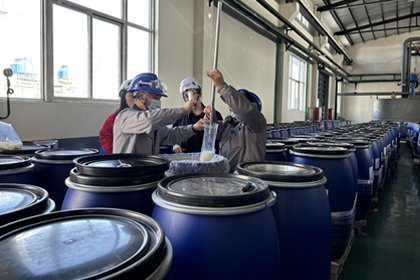
Comparison of Strong Acid and Weak Acid Cation Exchange Resins for Selection
Cation exchange resins are the most widely used type in water treatment; the performance differences between strong-acid and weak-acid resins directly impact operating costs and treatment outcomes, necessitating precise selection based on specific water quality and operating conditions.
Ion Exchange Mechanisms and Differences in Ion Affinity
Strong-acid cation resins facilitate the exchange and adsorption of various cations across the entire pH range, maintaining stable ion affinity; in contrast, weak-acid cation resins exhibit high adsorption capacity primarily for ions associated with carbonate hardness—showing poor removal efficiency for non-carbonate hardness—and are thus suited for more specific applications.
Distinctions Between Total Capacity and Effective Working Capacity
Strong-acid resins possess higher total exchange capacity, making them suitable for high-hardness and complex water qualities; while weak-acid resins have lower total capacity, they offer high effective working capacity utilization. In high-alkalinity water, they incur less loss from unproductive ion exchange, resulting in superior operational efficiency.
Comparison of Regeneration Efficiency and Chemical Consumption
Weak-acid cation resins require lower regeneration ratios and achieve higher chemical utilization rates; their consumption of acids and bases is far lower than that of strong-acid resins, leading to reduced operating costs. Strong-acid resins entail higher chemical consumption for regeneration but accommodate a wider range of water qualities without strict limitations on influent alkalinity.
Suitability for Operating Conditions
Weak-acid cation resins are the preferred choice for water characterized by high alkalinity and high carbonate hardness; strong-acid cation resins are preferred for applications involving complex water composition, high non-carbonate hardness, or significant fluctuations in water quality.
Comparison of Strong Base and Weak Base Anion Exchange Resins for Selection
Anion exchange resins are primarily used to remove anionic impurities and reduce the conductivity of water; understanding the performance differences between strong-base and weak-base resins—as well as among various types of strong-base resins—is crucial for selecting the right resin for high-precision water treatment applications.
Differences Between Type i And Type Ii Strong-Base Anion Exchange Resins
Type I strong-base resins possess higher basicity and exceptional capacity for removing weakly acidic anions such as silica and carbonates, resulting in extremely low residual ion levels in the effluent; they also offer superior thermal and chemical stability, making them suitable for high-standard applications like ultrapure water production. Type II strong-base resins offer higher regeneration efficiency and lower chemical consumption but have weaker deep silica removal capabilities, making them suitable for standard industrial demineralization applications.
Performance Characteristics of Weak Base Anion Exchange Resins
Weak-base anion exchange resins can only remove strongly acidic anions from water; they cannot remove weakly acidic impurities such as silicic acid or carbon dioxide and thus cannot be used alone for water demineralization. However, they exhibit outstanding resistance to organic fouling, making them suitable for the pretreatment of industrial wastewater with high organic content and for the purification of acidic water.
Comparison of High-Temperature and Fouling Resistance
Type I strong-base resins offer the best high-temperature resistance, making them suitable for treating high-temperature condensate; macroporous weak-base resins demonstrate superior resistance to organic fouling and oxidation, making them suitable for harsh operating conditions involving complex water quality and high impurity levels.
Precise Calculation Method for Resin Capacity and Loading Volume
Equipment selection involves more than just choosing a model; it requires precise calculation of the resin loading quantity and operating cycle to avoid substandard effluent quality due to under-loading or resource wastage caused by over-loading.
Distinction between Total Exchange Capacity and Effective Working Capacity
The nominal total exchange capacity of a resin represents a theoretical maximum; in actual operation, the effective working capacity is lower than this theoretical value due to factors such as water quality, flow rate, and regeneration efficiency. Calculations for system selection must be based on the effective working capacity to ensure long-term, stable operation.
Calculation of Operating Cycle and Water Treatment Volume
The maximum water treatment volume per cycle—and consequently the regeneration frequency—can be calculated based on the influent ion load, target effluent standards, and the resin's effective capacity. Additionally, the system design must account for the average daily water throughput and include a margin for peak demand to prevent effluent quality from exceeding limits during periods of high usage.
Control of Flow Rate and Empty Bed Contact Time (EBCT)
Standard industry parameters include Empty Bed Contact Time (EBCT) and flow rate expressed in bed volumes per hour (BV/h). Excessive flow rates result in incomplete ion exchange and reduced treatment performance, while excessively low flow rates lower operational efficiency. Different resins have specific optimal flow rate ranges that must be strictly adhered to.
Matching Resin Bed Height with Pressure Drop Parameters
Resin bed height directly affects exchange performance and system pressure drop; an insufficient bed height leads to incomplete exchange, whereas an excessive bed height increases operating pressure drop and energy consumption. The optimal bed height must be determined based on resin particle size and equipment dimensions.
Requirements for Matching Resin Physical Properties with Operating Conditions
The physical properties of a resin determine its stability and service life under complex operating conditions; these are crucial parameters that are easily overlooked during the selection process.
Impact of Particle Size and Uniformity
Smaller resin particle sizes provide a larger contact area for ion exchange and faster reaction rates, though this results in a higher operating pressure drop across the equipment. Higher particle size uniformity ensures more even water flow distribution, reducing the risk of channeling or short-circuiting and enhancing treatment stability.
Temperature and Ph Tolerance
All resin types have a maximum operating temperature limit; exceeding this can cause the loss of functional groups and damage the resin matrix. Strict adherence to the specified pH operating range is also required, as operating outside these limits significantly reduces exchange capacity and accelerates resin aging and failure.
Mechanical Strength and Resistance to Osmotic Shock
Resins experience osmotic pressure fluctuations during regeneration, backwashing, and operational switching; frequent shocks can cause the resin beads to fracture or pulverize. For continuous industrial operations, resins with high mechanical strength and excellent resistance to osmotic shock should be selected to minimize resin loss.
Remanufacturing Processes and Lifecycle Cost Control
The core operating costs of resins stem from regeneration chemicals, water and electricity charges, and replacement expenses; therefore, when selecting a resin, one should not focus solely on the purchase price but must comprehensively evaluate the total lifecycle cost.
Selection and Matching of Regenerants
Cationic resins are typically regenerated using sodium chloride, hydrochloric acid, or sulfuric acid, while anionic resins generally use sodium hydroxide. As different resins require specific regenerant concentrations and dosages, precisely matching the regeneration scheme can significantly reduce chemical consumption.
Impact of Regeneration Methods on Efficiency
Co-current regeneration systems feature simple structures and ease of operation but suffer from lower regeneration efficiency and high chemical consumption. In contrast, counter-current regeneration ensures more thorough contact, achieves a higher degree of resin regeneration, and offers superior chemical utilization, making it ideal for industrial applications requiring high precision and continuous operation.
Balancing Total Lifecycle Costs
While high-end, premium resins come with a higher initial purchase price, they offer greater capacity, fouling resistance, and longevity, along with lower regeneration costs. Standard resins have a lower unit price but are prone to fouling, require frequent replacement, and entail higher long-term operation and maintenance costs. Selection should take into account the project's operational lifespan and the complexity of working conditions to strike a balance between initial investment and long-term operating costs.
Avoiding Common Pitfalls in Ion Exchange Resin Selection
Most equipment operational failures stem from errors in model selection; avoiding common mistakes can significantly enhance system stability and reduce operations and maintenance costs.
Over-specification and Wasteful Performance Redundancy
Some users indiscriminately select high-end, high-precision resins for routine softening or pretreatment applications, resulting in wasted procurement costs. Standard-grade resins are fully capable of meeting operational requirements under normal conditions.
Overlooking Risks from Water Contaminants
Selecting standard gel resins while ignoring contaminants such as organic matter, residual chlorine, and heavy metals can lead to rapid resin fouling and clogging; this causes premature failure and significantly shortens the resin's service life.
Ignoring Seasonal Water Quality Fluctuations
Surface and groundwater quality fluctuates seasonally, with significant changes in turbidity, organic matter, and ion concentrations during flood seasons. Selecting resins based solely on standard water quality parameters can result in effluent failing to meet standards during flood seasons; therefore, sufficient performance margins must be factored in.
Conclusion
Selecting an ion exchange resin is a systematic and meticulous technical process; it is not a matter of making arbitrary choices based merely on the application scenario. Every step—from water quality analysis, resin type matching, and parameter calculation to operational compatibility and cost control—directly impacts the performance of the entire water treatment system. By adhering to a standardized selection methodology and precisely matching the resin model to actual operating conditions, one can ensure consistently compliant effluent quality while minimizing equipment energy consumption and O&M costs, thereby providing a fundamental guarantee for the long-term, stable operation of industrial water treatment systems.