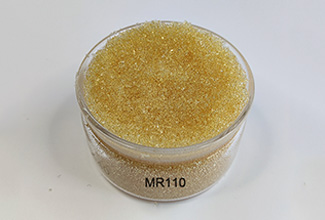
What Is a Catalyst Resin?
Catalyst resins are essentially a class of ion exchange resins used as catalysts for chemical reactions, and they are often called ion exchange resin catalysts in the industry.Unlike conventional ion exchange resins used in water treatment and material purification, its core role is not to adsorb and exchange ions, but to use the active sites on its skeleton to speed up the rate of chemical reactions, and it will not be consumed like reactants during the reaction process.
According to the nature of the active site provided, catalyst resins are mainly divided into two categories.One type is an acidic catalyst resin, which is an H-type cation exchange resin with acidic functional groups such as sulfonic acid groups and carboxyl groups on the surface, which can provide acidic active sites.The other type is alkaline catalyst resin, which belongs to anion exchange resin. Depending on the type of functional group and the operating environment, it can release hydroxide ions or directly provide alkaline active sites.
Judging from the catalytic effect, the resin catalyst can achieve a catalytic effect similar to that of traditional homogeneous acid-base catalysts such as sulfuric acid, hydrochloric acid, and sodium hydroxide.The difference is that the resin is a solid particle and belongs to a multiphase catalyst. There are obvious differences from liquid homogeneous catalysts in terms of separation and recovery, equipment corrosion, and waste treatment.
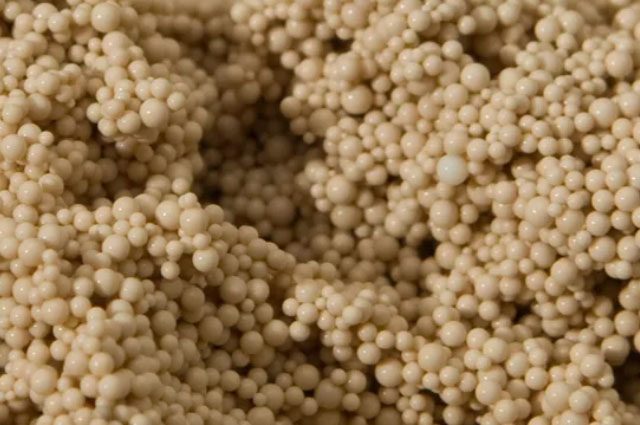
Working Principle of Catalyst Resin
Acid Catalysis and Alkali Catalysis Mechanism
The catalytic effect of acidic catalyst resin mainly comes from the acidic functional groups grafted on the surface.Taking the most commonly used sulfonic acid cationic resin as an example, the sulfonic acid group (-SOHH) on the skeleton can release protons, protonating the reactant molecules to form a more reactive intermediate, thereby reducing the activation energy of the reaction and allowing the reaction to proceed at a lower temperature.After the reaction is completed, the protons will return to the resin functional group and wait for the next reaction cycle.
The principle of alkaline catalyst resin is similar, relying on the alkaline site provided by alkaline functional groups such as quaternary ammonium groups to capture the protons in the reactant molecule, or trigger the reaction through nucleophilic attack.Such resins are commonly used in organic reactions that require alkali catalysis such as saponification and condensation.
In addition to the acid-base strength of the functional group, the physical structure of the resin itself will also directly affect the catalytic performance.For example, the macroporous resin has rich pore channels inside, and the macromolecular reactants can more easily come into contact with the internal active sites; the gel resin has a small pore size and is more suitable for small molecule reactions.The size of the specific surface area also determines the number of active sites. Usually, the higher the specific surface area, the stronger the catalytic activity of the resin per unit volume.
Types of Core Chemical Reactions That Resin Can Catalyze
The application of catalyst resins covers a variety of common organic reaction types, among which the industrial application of acid-catalyzed reactions is the most mature.
Condensation reactions are the most common type, which refers to the combination of two or more small molecules to form larger molecules, while removing small molecules such as water and alcohol.For example, esterification reactions and aldehyde-ketone condensation reactions can be catalyzed by acidic or alkaline resins.
Addition reaction is also the main application scenario of resin catalyst.The double or triple bonds in the reactant molecule are opened and new atoms or functional groups are connected. For example, the hydration of olefins to make alcohol, the addition of olefins and carboxylic acids to form esters belong to this type of reaction.
The elimination reaction is the opposite of addition, which is to remove small molecules from the molecule and form a new chemical bond (usually a double bond).For example, the reaction of dehydration of alcohol to produce olefins can be catalyzed by acidic resins.
Molecular rearrangement reaction is the reorganization of the molecular structure of the reactant to generate isomers.Partial isomerization and rearrangement reactions can be carried out under resin catalysis to obtain the product of the target structure.
Advantages Of Catalyst Resin
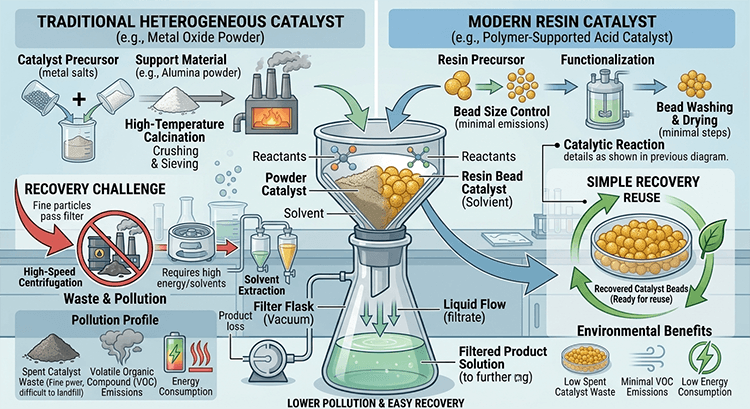
Lower Pollution And Easier Catalyst Recovery
As a solid catalyst, the biggest feature of the resin is that it is in a different phase state from the reaction solution, and it is much simpler to separate than a homogeneous catalyst.Traditional liquid acid-base catalysts need to be neutralized with alkali or acid after the reaction, which will produce a large amount of saline wastewater.For example, when concentrated sulfuric acid is used to catalyze the esterification reaction, 3-5 tons of high-salt wastewater will be produced per ton of product, and the COD concentration generally exceeds 8000mg/L, and the subsequent treatment cost is very high.
After replacing with a resin catalyst, no neutralization step is required, and the catalyst can be separated directly through filtration or fixed bed discharge, and the amount of wastewater and waste residue will be significantly reduced.Of course, the actual environmental benefits depend on the specific process and waste treatment requirements. The resin itself also produces recycled waste liquid, but the total amount is much lower than that of the homogeneous catalytic process.
Simplification Of Separation And Purification Process
The homogeneous catalyst and the product are mixed in the same liquid phase. In addition to neutralization and desalination, multiple washing and liquid separation are often required to remove the residual catalyst. There are many steps and the material loss is also large.Moreover, some acid catalysts will form an azeotropic or emulsified layer with the product, further increasing the difficulty of separation.
The resin catalyst is a solid particle, which can be separated from the crude product by simple filtration, and the catalyst residue in the crude product is very low.This also reduces the load on subsequent distillation and purification, and there is no need to increase the number of trays to separate the impurities caused by the catalyst, which can simplify the downstream purification process to a certain extent.
The Reaction Conditions Are Mild And The Equipment Requirements Are Simple
In suitable application scenarios, the reaction conditions catalyzed by resin are usually milder than traditional processes.For example, the most mature MTBE synthesis reaction only requires a temperature of 55-65℃ and a pressure of about 1MPa to achieve a high conversion rate and selectivity.
At the same time, because there is no free strong acid and alkali in the system, the degree of corrosion to the equipment is lower, and there is no need to use expensive special corrosion-resistant materials. Most ordinary stainless steel equipment can meet the requirements, reducing the initial equipment investment.However, this does not mean that all resin catalytic reactions are mild. The specific temperature and pressure requirements are still determined by the reaction itself and the tolerance limit of the resin. The long-term operating temperature of ordinary sulfonic acid resins is generally not recommended to exceed 120℃.
The Catalyst Can Be Reused To Improve Process Efficiency
Most of the homogeneous acid-base catalysts are consumed at once, and after the reaction, they become waste salts and cannot be recycled for reuse.The resin catalyst can be regenerated in a suitable way and reused for a long time.
According to industrial operation data, the normal service life of acidic resin catalysts commonly used in esterification reactions is 3-5 years; the life of macroporous cationic resins in etherization scenarios can reach 5-7 years.Under standardized operation, the resin can complete more than 100 regeneration cycles. After each regeneration, the catalytic activity can be restored to 90%-95% of the initial value, and the activity decreases by about 1%-2% per cycle. Usually, when the reaction conversion rate drops below 80% of the initial value, the resin replacement is considered.
Of course, the actual life of the resin is greatly affected by operating conditions, material impurities, fouling conditions, and chemical stability.Heavy metals and alkaline impurities in the raw materials can cause catalyst poisoning, and easy-to-polymerize components such as diolefins can easily clog the pores, which will shorten the service cycle of the resin.
Industrial Application Of Catalyst Resin
After decades of technological iteration, resin catalysts have been industrialized in many chemical segments, and they have very mature process packages and operating experience.
Etherization Reaction And Fuel Additive Production
Etherization is the most widely used and technically mature field of resin catalysts, the most representative of which is the synthesis of methyl tert-butyl ether (MTBE).Industrially, methanol and isobutylene in carbon four fractions are used as raw materials, and the addition reaction occurs under the catalysis of macroporous sulfonic acid cation exchange resin to generate MTBE, which is used as a gasoline octane number improver.
Under conventional processes, the reaction temperature is controlled at 55-65℃, the reaction pressure is about 1.0MPa, and the molar ratio of alkenes is maintained between 1.0-1.2.The conversion rate of isobutene in the single-stage main reactor can reach more than 92%. If combined with the catalytic distillation process, the total conversion rate can be increased to more than 99%, and the selectivity of MTBE can be stabilized at more than 98%.
In addition to MTBE, etherization of light gasoline is also an important application of resin catalysts.The active olefins in catalytic cracking light gasoline are reacted with methanol and converted into high-octane ether components, which can not only increase the octane number of gasoline, but also reduce the olefin content in gasoline to meet the requirements of oil upgrading.
Ester Synthesis And Alcohol Production
In the production of ester solvents, resin catalysts are gradually replacing the traditional sulfuric acid catalysis process.For example, the synthesis of sec-butyl acetate uses the direct addition of n-butene and acetic acid catalyzed by an acidic resin. Compared with the traditional alkyd esterification method, the cost of raw materials is lower, and the problem of waste acid treatment is avoided.
Alcohol production is also an important application direction of resin catalysts.Among them, the hydration of propylene to isopropanol (IPA) is a typical process, using a strong acid cation exchange resin as a catalyst, and the reaction is carried out in a fixed bed device.According to domestic process research data, when using DA330 resin, under the conditions of 140℃, 8Mpa, and airspeed of 0.5h⁻1, the one-way conversion rate of propylene can reach 45.46%, and the selectivity of isopropanol is maintained at 95.97%.
A similar process is the hydration of butene to produce secondary butanol, and then methyl ethyl ketone (MEK) is obtained through the dehydrogenation process.The product separation of the resin catalytic hydration step is simple, the equipment corrosion is small, and it has stable industrial applications.
One-Step Synthesis Of Methyl Isobutyl Ketone (Mibk) By Acetone
Methyl isobutyl ketone (MIBK) is a medium-boiling solvent with excellent performance. The traditional production process requires a three-step reaction of acetone condensation, dehydration, and hydrogenation. The process is long and there are many equipment.After using the modified resin catalyst, the one-step synthesis of MIBK by acetone can be realized, greatly simplifying the process flow.
Such catalysts are usually loaded with a small amount of hydrogenation active components such as palladium on an acidic cation exchange resin, so that the resin has both acid catalysis and hydrogenation catalysis capabilities.During the reaction, two molecules of acetone first condense at the acidic site to generate diacetone alcohol, then dehydrate to generate isopropyl fork acetone, and finally generate MIBK at the hydrogenation site. The three-step reaction is completed in the same reactor.Compared with the traditional three-step method, the one-step method has lower equipment investment and easier operation.
How to Choose The Right Catalyst Resin
There is no general standard answer for choosing a catalyst resin. The core is to match the specific reaction system and process conditions, and it can usually be comprehensively evaluated from multiple dimensions.
The reaction type is the basic prerequisite for selection.First confirm whether the process requires acid catalysis or alkali catalysis, and the specific reaction path.For example, reactions such as etherization, esterification, and hydration give priority to acidic cationic resins; saponification and partial condensation reactions require alkaline anionic resins.Different reactions have different requirements for acid strength. Strong acid resins have a wider range of applications, while weak acid resins have better selectivity in specific reactions.
The type and functional group characteristics of the resin itself directly determine the catalytic effect.Cationic resins are divided into gel type and macroporous type, and macroporous type is preferred for macromolecular reactants to ensure that the internal active site can come into contact with the material.The type of functional group and the exchange capacity directly determine the level of catalytic activity, but it is not that the higher the capacity, the better. Excessive exchange capacity may affect the mechanical strength and thermal stability of the resin.
Operating conditions are the key constraints of selection.Temperature, pressure, feed composition, and solvent type all affect the life and performance of the resin.For example, the long-term use temperature of ordinary sulfonic acid resin is best not to exceed 120℃. If the reaction temperature is higher, it is necessary to choose a resin model with high temperature resistance modification.If there are alkaline impurities and heavy metal ions in the raw materials, the risk of poisoning should be assessed in advance, and the pretreatment process of the raw materials should be increased if necessary.
The physical and chemical properties of the resin cannot be ignored.The fixed bed process should consider the particle size distribution and porosity of the resin to avoid excessive bed lamination; the stirring kettle process should focus on mechanical strength and wear resistance to reduce crushing losses in operation.In terms of chemical stability, it is necessary to confirm that the resin will not undergo skeleton degradation or functional group shedding in the reaction solvent and reaction temperature.
The service life and regeneration capacity directly affect the long-term operating costs.It is necessary to understand the common causes of catalyst inactivation, determine whether the activity can be restored through online or offline regeneration, and what is the cost and cycle of regeneration.Combine the replacement frequency and resin procurement cost to calculate the comprehensive operating cost, rather than just looking at the initial purchase price.
The supplier's technical service capabilities are also factors that cannot be ignored when selecting models.Suppliers with application cases in the same industry can provide more accurate selection suggestions and process parameters, and some can also provide small test certificate services to help reduce the risk of process amplification.
Catalyst Resin VS Traditional Homogeneous Catalyst
Many customers in the selection stage will ask which resin catalyst is better than the traditional liquid acid-base catalyst.In fact, the two have no absolute advantages or disadvantages, and each has a suitable scenario. Let's compare them from several core dimensions.
|
Comparison Dimension |
Catalyst Resin |
Traditional Homogeneous Acid/Base Catalyst |
|
Catalyst Form |
Solid resin particles |
Acid or base dissolved in the reaction liquid |
|
Separation Difficulty |
Easy to separate; direct discharge via filtration or fixed bed |
Difficult to separate; usually requires multiple steps such as neutralization and water washing |
|
Recovery and Reuse |
Can be regenerated and reused multiple times |
Mostly cannot be directly recovered; discharged with waste liquid after reaction |
|
Corrosion and Waste |
Less equipment corrosion; less waste generation |
Strong equipment corrosion; neutralization produces large amounts of high-salinity wastewater |
|
Operating Conditions |
Limited by resin thermal stability and chemical stability |
Wider range of applicable conditions; suitable for high-temperature and high-concentration scenarios |
It should be clear that the catalyst resin is not better in all scenarios.For example, for systems with extremely high reaction rate requirements and extremely polar reactants, the mass transfer advantages of homogeneous catalysts are more obvious; for some ultra-high temperature reactions, the resin skeleton cannot withstand it, and only homogeneous or other solid catalysts can be used.The final selection should be based on the comprehensive judgment of reaction dynamics, product purity requirements, process design and total operating cost.
Conclusion
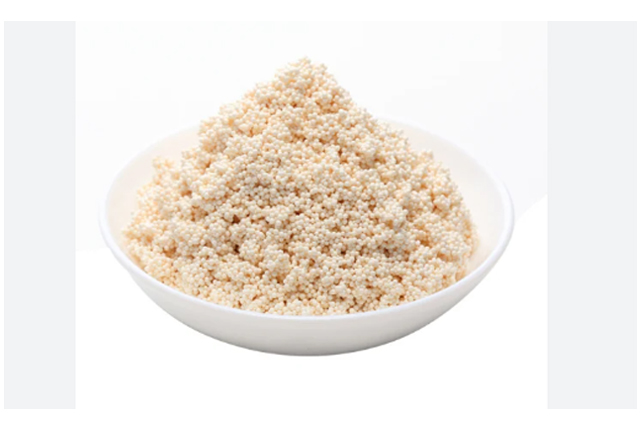
Catalyst resins are a class of ion exchange resins with catalytic functions, which rely on acidic or alkaline active sites on the surface to drive acid-base chemical reactions.Compared with traditional homogeneous catalysts, it has its own characteristics in catalyst recovery, product separation, pollution reduction, and process simplification. At present, it has achieved mature industrial applications in many chemical fields such as etherization reaction, alcohol production, ester synthesis, and MIBK manufacturing.
In the actual selection, there is no general "best" catalyst resin.Only by accurately matching the catalytic properties and operating limits of the resin with the reaction characteristics and operating conditions of the target chemical process can the advantages of resin catalysis be realized.For newly developed processes, it is recommended to pass small tests to prove adaptability, and then gradually scale up to industrial production.
.png)