Hard water is a very common challenge in water treatment. Issues such as scale accumulation, clogged pipes, damage to heating equipment, and reduced effectiveness of cleaning or personal care products all stem from excessive levels of calcium and magnesium ions—the components that define water hardness. In most ion-exchange water softening systems, the core functional medium is water-softening resin.
What is water-softening resin?
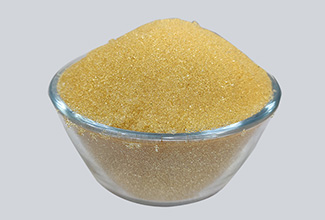
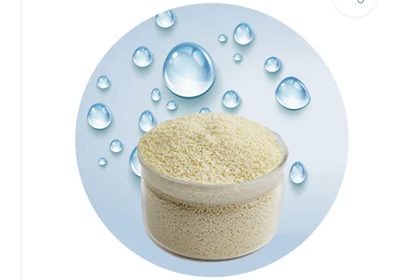
Water-softening resin is, in essence, a strongly acidic cation-exchange resin specifically designed to remove water hardness; it serves as the core filter medium within a water softener.
Base Material and Structure
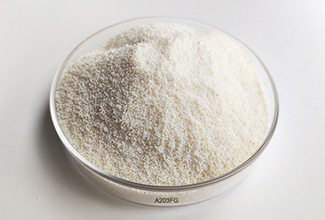
The matrix of water-softening resin typically consists of styrene-divinylbenzene copolymer beads, with sulfonic acid functional groups grafted onto their surfaces. These resins appear as uniform, spherical particles. This spherical structure ensures stable water flow and controllable pressure drop, while providing an ample surface area for ion-exchange contact.
Distinctions Between Water-Softening Resins and Other Ion-Exchange Resins
There is a wide variety of ion-exchange resins—such as anion-exchange resins, mixed-bed resins, and chelating resins—each designed for specific applications. Water-softening resins are classified as strongly acidic cation-exchange resins, primarily intended to selectively capture calcium and magnesium cations. In contrast, anion-exchange resins are used to remove anions, mixed-bed resins are employed for deep demineralization, and chelating resins are generally used for the selective removal of heavy metals; these types are not interchangeable.
How Water-Softening Resins Achieve Softening Through Ion Exchange
Ion exchange is the fundamental principle behind water-softening resins. The entire softening process is a reversible chemical reaction, consisting of an operational adsorption phase and a regeneration phase.
Fundamental Principles of Cation Exchange
The functional groups on the resin carry exchangeable sodium ions. As hard water flows through the resin bed, electrostatic forces cause calcium and magnesium ions in the water to bind firmly to the resin beads, while the sodium ions originally present on the resin are displaced into the water, thereby reducing water hardness.
Core Concept: Conservation of Equivalents in Ion Exchange
Ion exchange follows the principle of the conservation of equivalents: ions are exchanged based on an equivalent number of electrical charges. Specifically, two monovalent sodium ions are required to displace one divalent calcium or magnesium ion. This principle serves as the fundamental logic for understanding exchange capacity, salt consumption during regeneration, and residual hardness; it also forms the basis for calculating parameters for water-softening systems.
Resin Selectivity for Hardness-Causing Ions
Under typical raw water conditions, water-softening resins exhibit a higher affinity for calcium and magnesium ions than for sodium ions, allowing them to effectively capture hardness-causing ions during the adsorption phase. When the concentration of sodium ions in the water increases significantly, the reaction proceeds in the reverse direction—a process known as regeneration.
Types of Water-Softening Resins Suited to Different Water Quality Conditions
Water-softening resins are categorized into various specifications based on their pore structure, degree of cross-linking, and particle size; different types are suited to different influent water quality conditions.
Gel-Type Cation Exchange Resins for Water Softening
Gel-type resins lack permanent pores, relying instead on the spaces between polymer chains to facilitate ion exchange. They offer high exchange capacity and a clear cost advantage, making them well-suited for softening surface water or municipal tap water that is relatively clean and low in residual chlorine, iron, and manganese.
Macroporous Cation Exchange Resins for Water Softening
Macroporous resins feature permanent physical pores, providing superior resistance to fouling and oxidation compared to gel-type resins. They are ideal for water sources with higher organic content or greater fluctuations in water quality.
Classification by Particle Size: Standard-Size vs. Fine-Size Resins
Fine-size resins offer a larger contact surface area, resulting in faster hardness-removal kinetics; they are frequently used for well water with high iron content. Their drawbacks include higher resistance to water flow, which leads to a greater pressure drop across the system. Standard-size resins, by contrast, offer lower pressure drops and better flow compatibility, making them the conventional choice for most commercial and residential water softening systems.
Classification by Degree of Cross-linking: 8% vs. 10% Cross-linked Resins
The degree of cross-linking indicates the structural integrity of the resin’s polymer backbone. 8% cross-linked resins provide a higher exchange capacity but exhibit a greater degree of swelling. 10% cross-linked resins possess a more stable structure and greater resistance to oxidation by residual chlorine, making them the preferred choice for influent water that contains residual chlorine.
A Detailed Explanation of the Regeneration Mechanism for Water-Softening Resins
Resins have a limited number of exchange sites; after continuously adsorbing calcium and magnesium for a period of time, they reach saturation and lose their softening capacity, requiring regeneration to restore their adsorption performance.
Characteristics of Resin After Saturation
Once saturated, the resin can no longer capture calcium and magnesium ions, leading to hardness levels in the treated water that exceed specified limits—a phenomenon known as "hardness breakthrough." At this stage, the regeneration process must be initiated.
The Complete Brine Regeneration Process
A standard regeneration cycle consists of five steps: backwashing, brine draw (brine soaking), slow rinse, fast rinse, and displacement. Backwashing loosens the compacted resin bed and flushes out suspended impurities; the brine then comes into full contact with the resin, driving the ion-exchange reaction in the reverse direction; subsequent rinsing steps wash away the displaced calcium and magnesium ions along with any excess brine.
Regeneration Agents: Sodium Chloride vs. Potassium Chloride
Sodium chloride is the most common and cost-effective regeneration agent. Potassium chloride serves as an alternative, suitable for specific applications where sodium content in the treated water must be controlled, though it entails higher procurement costs.
Key Considerations: Salt Consumption, Regeneration Dosage, and Residual Hardness
The amount of salt used for regeneration directly determines the resin's operational exchange capacity and the residual hardness of the treated water. Insufficient salt dosage results in incomplete resin regeneration and a reduction in effective exchange capacity, often causing the treated water to exceed hardness limits. Conversely, excessive salt usage increases operating costs and lowers salt utilization efficiency. Every water-softening system requires finding an optimal balance between treated water quality standards and the cost of regeneration chemicals.
Key Performance Indicators for Water-Softening Resins
When procuring and evaluating water-softening resins, it is necessary to refer to a set of standardized performance parameters to ensure they align with system design requirements.
- Total Exchange Capacity vs. Operating Exchange Capacity: Total exchange capacity represents the theoretical maximum adsorption capacity of the resin, while operating exchange capacity refers to the capacity that can be reliably utilized under actual operating conditions—a key factor for determining the design of the system’s resin tanks.
- Particle Uniformity and Hydraulic Characteristics: The uniformity coefficient influences water distribution across the resin bed; poor uniformity can lead to flow channeling, causing some resin to reach exhaustion prematurely.
- Operating Pressure Drop: This is closely related to resin particle size, bed depth, and flow velocity, and it influences the selection of water pumps.
- Moisture Content and Swelling Rate: Resins expand in volume upon absorbing water; therefore, sufficient space must be reserved within the tank to accommodate this expansion.
- Chemical and Thermal Stability: These parameters define the permissible ranges for water temperature and pH; operating outside these limits will accelerate resin degradation.
Common Causes of Degradation and Failure in Water-Softening Resins
Resin is not a permanent consumable; improper exposure to water or inadequate maintenance and operation can lead to irreversible damage, contamination, or clogging of the resin.
Oxidative Degradation by Free Chlorine
Residual chlorine is the most common cause of damage to gel-type water-softening resins. Oxidation breaks the polymer backbone, causing the resin beads to become brittle and fragment, which leads to a permanent loss of ion-exchange capacity.
Iron and Manganese Fouling
Once dissolved iron and manganese in the raw water are oxidized, they precipitate as hydroxides and coat the surface of the resin, blocking the ion-exchange sites—a condition known as "iron poisoning." Once iron fouling occurs, standard brine regeneration cannot restore the resin's performance.
Organic Matter and Suspended Solids Contamination
Organic substances, such as humic acids, can adhere to the resin surface, forming an organic layer that hinders ion contact and makes regeneration more difficult. The long-term accumulation of suspended solids can cause the resin bed to become compacted and lead to flow channeling.
Mechanical Damage and Thermal Degradation
Excessive flow rates or overly intense backwashing can cause resin beads to collide and fragment. Similarly, prolonged exposure to high-temperature influent water can damage the resin's internal structure.
Visible Signs of Resin Failure
Persistent hardness leakage in the treated water, an abnormal increase in system pressure drop, a higher frequency of required regeneration, and a noticeable decline in softening efficiency despite consistent salt consumption.
Core Criteria for Selecting Water-Softening Resins
Selection should not be based on price alone; the resin specifications must be determined according to the raw water quality report.
*Select the resin type based on the influent water quality report: gel-type resins are preferred for clean, low-chlorine water sources, while macroporous-type resins are preferred for water sources with high organic content.
*For water sources containing residual chlorine, prioritize high-crosslink-density resins and incorporate a pre-treatment stage—such as an activated carbon filter—to remove the chlorine.
*For well water with high iron and manganese levels, evaluate the suitability of fine-mesh (small-particle-size) resins and include a pre-treatment unit for iron removal.
*Resin specifications must be compatible with the hydraulic parameters of the water softening tank and the multi-port control valve.
*For drinking water applications, ensure that the resin holds the appropriate certifications for water-contact materials and complies with relevant standards for substances in contact with drinking water.
Best Practices for Operation and Maintenance to Extend the Service Life of Water-Softening Resins
Best Practices for Operation and Maintenance to Extend the Service Life of Water-Softening Resins
Pre-treatment Configuration
Configure filtration systems based on water quality: use sediment filters to remove suspended solids, activated carbon to eliminate free chlorine, and iron-removal equipment to manage iron content in the raw water—thereby mitigating contamination risks at the source.
Standardized Regeneration Settings
Establish appropriate regeneration cycles, brine concentrations, and brine-draw durations to avoid both overly frequent regeneration and prolonged periods of saturation without regeneration.
Backwash Flow Rate Control
Maintain an optimal backwash flow rate; an excessive rate can cause resin loss or particle fragmentation, while an insufficient rate fails to adequately flush out impurities.
Regular Monitoring of Effluent Hardness
Continuously monitor the hardness of the treated water to detect early signs of resin performance degradation, rather than waiting until the system has suffered severe failure before taking action.
Conclusion
Water-softening resin serves as the core functional medium in ion-exchange water-softening systems, removing water hardness through reversible cation-exchange reactions. Available in various structural configurations and cross-linking specifications, the selection of an appropriate resin requires a comprehensive assessment based on raw water quality, target effluent standards, and system equipment parameters. The performance of the resin is highly dependent on standardized regeneration procedures, effective pre-treatment, and routine water quality monitoring. Prior to purchasing water-softening resin, conducting a thorough analysis of the raw water quality—followed by the selection of a resin grade that matches those specific requirements—is essential to ensuring the long-term, stable operation of the water-softening system.