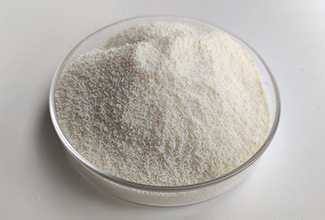
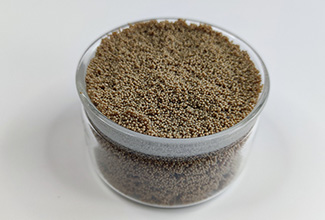
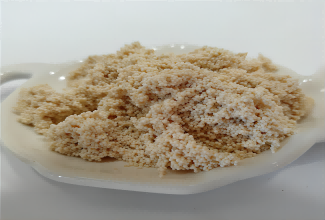
1. Why Uranium Extraction Resin is Crucial in In-Situ Leaching (ISR) Process
In-Situ leaching (ISR) is currently the most widely used uranium mining technology internationally, with over 40% of countries worldwide employing it. Unlike traditional mining methods, ISR eliminates the need for ore extraction and surface stripping. Instead, leachate is injected into suitable uranium deposits, such as sandstone-type deposits, through boreholes. The uranium is then leached from the underground deposits, and the uranium-bearing leachate is pumped to the surface for separation and purification, significantly reducing environmental disturbance and production costs.
In the ISR production process, uranium extraction resin (also commonly known as uranium removal resin) plays a central role. The core of the entire ISR process is the efficient separation and enrichment of trace amounts of uranium from uranium-containing leachate. Resin is the key medium for achieving this—the uranium content in the leachate is usually low, making direct smelting impossible. The uranium must be separated from the complex aqueous solution through resin adsorption to obtain a uranium-enriched solution suitable for further processing.
The performance of the resin directly determines the success or failure of an in-situ uranium leaching project. The resin's adsorption efficiency, selectivity, and stability directly affect the uranium recovery rate—even small fluctuations in the recovery rate can impact the project's resource utilization. Simultaneously, the resin's lifespan and regeneration difficulty are directly related to operating costs such as reagent consumption and equipment wear and tear. If the resin performance is substandard, it can lead to process interruptions and excessive wastewater discharge, directly affecting the project's feasibility and economic benefits. This is why the selection and application of uranium extraction resin is always a key focus in the ISR uranium extraction process.
2. Basic Understanding of Uranium Extraction Resins in In-situ Leaching (ISR)
Many people confuse uranium extraction resins with uranium removal resins. In fact, their core functions are clearly distinct, although they are often used together in ISR processes. Uranium extraction resins are mainly used to adsorb and enrich uranium from uranium-containing leachates (rich ore solutions) to obtain high-concentration uranium solutions, laying the foundation for subsequent smelting and preparation of "yellowcake." Uranium removal resins, on the other hand, are mainly used to treat process tailings, further removing trace amounts of residual uranium to ensure that the tailings meet discharge standards or are recycled.
In in-situ uranium leaching processes, two main types of resins are commonly used, each suited to different process scenarios. There is no absolute superiority or inferiority; the key is matching the resin to the on-site conditions.
The first type is strongly basic anion exchange resin, which is currently the most widely used type of resin in ISR processes. Its core advantage is its strong adaptability; it can work stably in acidic, neutral, and even weakly basic systems, making it particularly suitable for sulfuric acid in-situ leaching processes. The first type works by chelating uranium-selective resins. Uranium in the leachate forms uranyl anion complexes, which the resin adsorbs onto its framework via ion exchange, thus separating uranium from the aqueous solution.
The second type is chelating uranium-selective resins, which are more targeted. They form stable chelates with uranium ions through specific functional groups on the resin framework, achieving selective adsorption of uranium. Compared to strongly basic anion exchange resins, they offer higher selectivity for uranium and can precisely adsorb uranium in systems with many impurity ions, making them suitable for in-situ leaching projects treating groundwater with high mineralization and complex impurities.
The type of functional groups in the resin directly determines its complexation mechanism with uranium ions. Strongly basic anion exchange resins often have quaternary ammonium groups, which mainly bind to uranyl anion complexes via electrostatic interactions. Chelating resins, on the other hand, often have weakly acidic groups containing oxygen donor atoms, which form multidentate chelates with uranium ions through lone pairs of electrons, resulting in a more stable and selective bond.
Besides chemical properties, the physical properties of the resin also significantly affect the operating efficiency of the in-situ leaching process. Particle size needs to be controlled within a reasonable range; typically, over 95% of the particles are between 0.3-1.2 mm in size. Particles that are too large result in a slow adsorption rate, affecting treatment efficiency, while particles that are too small increase the flow resistance of the leachate and may even lead to resin loss. Porosity determines the specific surface area of the resin; higher porosity means more active sites, resulting in higher adsorption capacity and adsorption rate. Mechanical strength relates to the resin's service life. In the in-situ leaching process, the resin undergoes repeated adsorption, elution, and regeneration cycles, and is also subjected to scouring by the leachate. Insufficient mechanical strength can lead to resin breakage and pulverization, increasing replacement costs.
3. Practical Application of Uranium Extraction Resin in In-situ Leaching (ISR) Processes
The application of uranium extraction resins is integrated throughout the core stages of the in-situ uranium leaching process. From uranium recovery from rich ore solutions to the adaptation of different leaching systems and the integration of the entire process flow, each stage requires the stable support of the resin. Its application effect directly impacts the efficiency of ISR uranium recovery and is a manifestation of the core value of uranium adsorption resins.
3.1 Uranium Recovery from Pregnant Leach Solutions (PLS)
Pregnant ore solutions (PLS) are uranium-containing leach solutions pumped to the surface after being injected into the underground deposit through boreholes in the in-situ leaching process. They are also the primary target for uranium extraction resins. The form of uranium in rich ore solutions is not singular and varies depending on the leaching system—in sulfuric acid leaching, uranium mainly exists as uranyl sulfate complex anions; in carbonate leaching, uranium mainly exists as uranyl carbonate complex anions.
The adsorption behavior of resins varies significantly depending on the type of rich mineral solution system. In sulfate systems, strongly basic anion exchange resins exhibit superior adsorption performance because uranyl sulfate complex anions bind more strongly to the resin functional groups, resulting in a faster adsorption rate. In carbonate systems, chelating uranium-selective resins or weakly basic anion exchange resins are more suitable, better adapting to the alkaline environment of the system, preventing the destruction of resin functional groups, and ensuring adsorption capacity.
Under field conditions, the dynamic loading capacity of the resin is a key indicator. Dynamic loading capacity refers to the maximum amount of uranium that the resin can adsorb per unit volume or per unit mass under actual process flow rate, temperature, and solution composition conditions. It differs from the static adsorption capacity under ideal laboratory conditions. In the field, the flow rate, temperature, and impurity content of the leachate all affect the dynamic loading capacity. For example, an excessively high flow rate results in insufficient contact time between the leachate and the resin, leading to a decrease in dynamic loading capacity; excessively low temperatures slow down the adsorption reaction rate, also affecting the loading effect.
3.2 Application Differences in Acidic and Alkaline In-situ Leaching (ISR) Systems
In-situ leaching processes are mainly divided into two categories: acidic and alkaline. Sulfuric acid leaching and carbonate alkaline leaching are currently the two most mainstream processes. The performance of uranium extraction resins differs significantly between these two systems, requiring strict matching during selection.
Sulfuric acid leaching is the most widely used process. Its advantages include high leaching efficiency and low cost, making it suitable for most sandstone-type uranium deposits. In this system, the pH of the leachate is typically between 1 and 2. Strongly basic anion exchange resins can operate stably, exhibiting high adsorption capacity and fast adsorption rate, and are relatively inexpensive, making them the preferred resin for this type of system. However, the acidic environment can also cause some corrosion to the resin, and long-term use will accelerate the aging of resin functional groups, requiring periodic regeneration to maintain performance.
Carbonate alkaline leaching is mainly used for uranium deposits suitable for alkaline leaching, such as some uranium deposits with high carbonate content, or projects with higher environmental requirements. The pH of alkaline systems is typically between 9 and 11. Under these conditions, the functional group stability of strongly basic anion exchange resins decreases, and their adsorption capacity also drops significantly. Therefore, chelating uranium-selective resins or weakly basic anion exchange resins are more suitable.
The core criterion for resin selection is matching the leaching chemical system. Besides considering the system's acidity or alkalinity, factors such as the impurity content of the leachate, uranium concentration, and process flow rate must also be taken into account. For example, in acidic systems with a high number of impurity ions, chelating resins with slightly higher selectivity can be selected; in alkaline systems with a low uranium concentration, resins with faster adsorption rates are needed to ensure uranium recovery.
3.3 Integration of Resin with In-situ Leaching (ISR) Process
Uranium extraction resins do not work alone but need to be deeply integrated with other stages of the in-situ leaching process to form a complete closed-loop process. Currently, fixed-bed and moving-bed resin columns are mainly used in the field, each with its own suitable application scenarios.
Fixed-bed resin columns are the most common type. Resin is filled in a fixed column, and the rich ore solution flows through the resin bed from top to bottom or bottom to top, completing uranium adsorption. The advantages of this type are its simple structure, convenient operation, and stable operation, making it suitable for small to medium-sized in-situ leaching projects or conditions with relatively stable uranium concentrations. However, its disadvantage is that when the resin becomes saturated, feeding needs to be stopped for elution and regeneration, affecting the continuity of the process.
Moving-bed resin columns offer a continuous operation. The resin moves slowly within the column, with the rich ore solution contacting the resin countercurrently. Saturated resin is continuously discharged from the bottom of the column and enters the elution and regeneration system, while regenerated resin is replenished from the top. The advantages of this type are continuous production and high processing efficiency, making it suitable for large-scale in-situ leaching projects or conditions with large fluctuations in uranium concentration. However, the structure is more complex, and the operation is more difficult and the equipment cost is relatively higher.
On-site resin loading, elution, and regeneration are the core steps to ensure resin recycling. The loading process involves passing the rich ore solution through a resin column, where uranium is adsorbed by the resin. The key is controlling the flow rate and temperature to ensure sufficient uranium adsorption. The elution process uses a specific eluent (such as nitric acid or hydrochloric acid) to pass through the resin column, eluting the adsorbed uranium and obtaining a high-concentration uranium eluent. The regeneration process, after elution, treats the resin with a regenerant to restore its adsorption capacity, allowing it to be reused. This process requires strict control of the regenerant concentration and dosage to avoid waste and resin damage.
Downstream uranium recovery after resin elution is also a crucial part of the entire process. The eluent has a high uranium concentration and can be processed through precipitation, filtration, and drying to obtain bright yellow diuranate or uranate, commonly known as "yellowcake." Further calcination of the yellowcake yields uranium octaoxide (UO3), providing raw materials for subsequent uranium conversion and enrichment processes.
4.Key Performance Requirements for Uranium Extraction Resins in In-situ Leaching (ISR)
The in-situ leaching process involves complex operating conditions, with variable compositions of rich ore solutions, low uranium concentrations, and long operating cycles. This places stringent requirements on the performance of uranium extraction resins. These performance indicators not only determine the resin's application effectiveness but also serve as the core basis for ISR resin selection, directly affecting the stability of uranium resin performance.
First and foremost is uranium selectivity, one of the most critical requirements. Groundwater used in in-situ leaching typically has high mineralization (high TDS) and contains large amounts of anions such as sulfates, bicarbonates, chlorides, and nitrates, as well as cations such as calcium, magnesium, iron, and aluminum. These impurity ions compete with uranium ions for adsorption sites on the resin. If the resin's selectivity is insufficient, it will adsorb a large number of impurity ions, leading to a decrease in uranium adsorption capacity, increased elution difficulty, and even affecting the purity of the uranium product. Therefore, the resin must be able to preferentially adsorb uranium ions in a complex ion system, reducing interference from impurity ions.
Secondly, dynamic exchange capacity and breakthrough behavior are also crucial. The dynamic exchange capacity directly determines the processing capacity and regeneration cycle of the resin column. A higher dynamic exchange capacity means that a unit volume of resin can process more rich ore solution, resulting in a longer regeneration cycle and lower operating costs. Breakthrough behavior refers to the point at which unadsorbed uranium ions in the rich ore solution begin to appear at the resin column outlet when the resin approaches saturation during uranium adsorption. This point is called the breakthrough point. The resin's breakthrough behavior needs to be stable, and the timing of the breakthrough point needs to be predictable to allow on-site operators to switch resin columns promptly and prevent uranium loss.
Furthermore, there is the kinetic performance under low uranium concentration conditions. The uranium concentration in in-situ leaching solutions is typically low, generally ranging from tens to hundreds of milligrams per liter, or even lower. Under these low concentration conditions, the resin's adsorption rate is crucial—if the adsorption rate is too slow, the contact time between the rich ore solution and the resin will be too long, affecting process efficiency and increasing equipment investment. Therefore, the resin in low uranium concentration systems needs to have a fast adsorption rate to quickly capture uranium ions in the solution.
Finally, there is the stability during long-term operation. In-situ leaching projects typically have long operating cycles, lasting several years or even decades. The resin needs to undergo repeated adsorption, elution, and regeneration cycles under complex operating conditions, thus requiring excellent stability. This stability includes chemical and physical stability. Chemical stability refers to the resin's ability to withstand the acidity and alkalinity of the leachate, the corrosion of impurity ions, and the effects of regenerators, preventing functional group degradation. Physical stability refers to the resin's resistance to breakage and pulverization during long-term scouring and circulation, maintaining a good particle morphology.
5.Operational and Economic Considerations
One of the core objectives of in-situ leaching (ISR) uranium projects is to achieve economic benefits. Uranium extraction resin, as a core consumable in the process, is directly affected by various operational factors, impacting project cost control and profitability. ISR operating cost and uranium resin lifecycle cost are key considerations.
The lifespan and replacement frequency of the resin are the primary factors influencing costs. Different types and qualities of resin have significantly different lifespans. Generally, strongly basic anion exchange resins have a lifespan of 1-3 years, while chelating uranium-selective resins have a lifespan of 2-4 years. Higher resin replacement frequencies not only require greater resin procurement costs but also increase downtime, labor costs, and equipment wear and tear, indirectly raising operating costs.
Unit uranium recovery cost is a core indicator for measuring the economic viability of the resin. It refers to the resin-related costs consumed to recover 1 kilogram of uranium, including resin procurement costs, regeneration reagent costs, labor costs, and equipment operating costs. The higher the resin's adsorption capacity and regeneration efficiency, the lower the unit uranium recovery cost. Conversely, if the resin has a low adsorption capacity and is difficult to regenerate, the unit uranium recovery cost will increase significantly, affecting the project's profitability.
In actual selection and operation, a balance needs to be struck between resin cost and operational stability. High-quality resins have higher procurement costs but longer service life and stable performance, reducing the number of regeneration cycles and secondary waste generation, making them more economical in the long run. Inexpensive resins have lower procurement costs but unstable performance, shorter service life, and are prone to failure, leading to process interruptions and decreased uranium recovery rates, thus increasing long-term operating costs. Therefore, simply pursuing the lowest price is not advisable; the resin with the highest cost-effectiveness should be selected based on site conditions.
Logistics and resin management at the in-situ leaching site also affect the project's operational efficiency and costs. In-situ leaching projects are mostly located in remote areas, making resin transportation and storage difficult and resulting in higher logistics costs. At the same time, on-site resin loading, unloading, regeneration, and replacement operations require specialized equipment and personnel. Improper management can lead to resin loss and incomplete regeneration, further increasing costs. Therefore, a comprehensive resin management system needs to be established on-site to optimize logistics and operational processes, reducing resin loss and cost waste.
6. Best Practices for Resin Selection in In-situ Leaching (ISR) Uranium Extraction
Resin selection is crucial to the success of ISR projects. Inappropriate selection can not only affect uranium recovery rates and operating costs but also lead to process failures. Based on years of field experience, the following are best practices for resin selection to help projects mitigate risks and choose the most suitable uranium extraction resin.
When evaluating resin suppliers, several key issues need to be clarified. First, does the supplier have practical application cases of ISR resins, especially those similar to the project's operating conditions (such as acidic/alkaline systems, high mineralization, etc.)? Case experience directly reflects the resin's suitability. Second, can the supplier provide detailed performance parameters and test reports for the resin, including key indicators such as dynamic adsorption capacity, selectivity, and stability? Finally, can the supplier provide comprehensive technical support, including resin selection guidance, on-site operation training, regeneration process optimization, and timely resolution of on-site problems?
Pilot testing under on-site conditions is a core and indispensable part of the selection process. Laboratory-level resin performance testing cannot fully simulate the complex conditions of on-site operations. Therefore, pilot-scale testing is essential before formal procurement and application. Pilot-scale testing requires using on-site rich mineral solutions to simulate parameters such as flow rate, temperature, and regeneration frequency. It tests the resin's adsorption capacity, selectivity, elution efficiency, and stability to verify its suitability for on-site conditions and avoid risks arising from improper selection.
The chemical properties of the resin must match the composition of the groundwater. Before selection, a comprehensive analysis of the on-site groundwater composition is necessary, including pH value, uranium concentration, sulfate, bicarbonate, and the content of impurity ions such as calcium, magnesium, iron, and aluminum, as well as mineralization. Based on the groundwater composition, a suitable resin type should be selected—for acidic systems with fewer impurities, strongly basic anion exchange resins can be used; for alkaline systems with more impurities, chelating uranium-selective resins can be used.
Avoiding common selection errors can effectively reduce project risks. For example, avoid simply pursuing the lowest resin price while neglecting resin performance and lifespan, which can lead to increased long-term operating costs; avoid blindly choosing highly selective resins, as their advantages may not be realized if there are few impurity ions on-site, and they may even increase procurement costs; avoid ignoring the physical properties of the resin, such as particle size and mechanical strength, which can lead to resin loss and bed blockage during on-site operation.
7.Conclusion
Uranium extraction resin is an indispensable core medium in in-situ leaching (ISR) processes. Its application spans the entire core stage of uranium recovery, from the adsorption and enrichment of uranium in rich ore solutions to the purification of tailings. The performance of the resin directly determines the uranium recovery rate, operating costs, and project feasibility. Strongly basic anion exchange resins and chelating uranium-selective resins are currently the two most widely used types of resins, each suited to different process scenarios, and should be selected rationally based on on-site conditions.