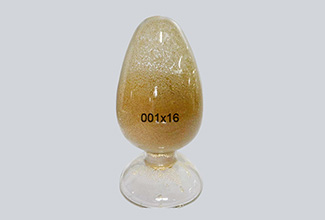
Thanks to their tunable pore structures and adsorption selectivity, macroporous adsorption resins are widely used in fields such as pharmaceutical purification, natural product extraction, food and beverage refining, water treatment, and chemical separation. Operators new to these resins often assume that, because the material appears clean upon delivery, it can be packed into a column and used immediately.
In reality, during the production process of new resin, unreacted monomers, porogens, organic solvents, and other small molecule impurities will remain. If the resin is used without pretreatment, these substances can leach into the product and occupy adsorption sites, causing the actual adsorption capacity to fall far below the nominal value.
Proper pretreatment allows the resin to achieve its full adsorption capacity and enhances selectivity for the target substance; it also minimizes the risk of product contamination by impurities and extends the resin's overall service life. For long-term production operations, this step offers a high return on investment.
[With proven resin expertise and application-focused solutions, we help industries maximize adsorption performance while improving process efficiency and product consistency.]
.png)
What is Macroporous Adsorption Resin Pretreatment?
Simply put, pretreatment refers to a series of cleaning, activation, and conditioning operations performed on new resin before it is put into actual industrial use.
The entire process includes multiple steps such as water washing, solvent extraction, acid and alkali treatment, rinsing, and functional adjustment. The ultimate goal is to switch the resin from its factory storage state to a working state suitable for the adsorption process.
Different industries have varying requirements for resins, and the rigor of pretreatment differs accordingly. The pharmaceutical and food industries demand high purity and minimal residues, necessitating more complex procedures and stricter standards; conversely, for general water treatment or chemical separation applications, the process can be simplified based on specific needs.
Why Is Pretreatment Necessary?
Removing Residual Chemicals
During the resin polymerization process, residues such as organic solvents (e.g., toluene, ethanol) and unreacted monomer molecules are inevitably left behind. Most of these substances have unpleasant odors, and some pose toxicity risks.
If the resin is used without pretreatment, these residues can gradually leach into the product. In mild cases, this results in off-odors or abnormal coloration; in severe cases, it causes impurity levels to exceed limits, failing to meet industry compliance standards. In the food and pharmaceutical sectors specifically, such issues can lead to the scrapping of entire batches.
Activating the Resin's Pore Structure
The adsorption capacity of macroporous resin stems primarily from its abundant internal pores and vast specific surface area. The pores of new resin are often filled with small molecule substances left over from production, which means that some of the pores are blocked, and the adsorption sites cannot come into contact with the target substances in the feed liquid.
Pretreatment involves gradually washing out these pore-blocking impurities, fully opening the internal channels, and exposing the adsorption sites on the resin surface. Only when the pores are unobstructed can the resin's adsorption efficiency reach its theoretical design value.
Enhancing Product Quality and Process Stability
Production lines for pharmaceutical intermediates, plant extracts, or food-grade refined products require high batch-to-batch consistency. If new resin is loaded directly into columns without pretreatment, variations in residual levels will directly impact adsorption performance, leading to inconsistent yields and impurity profiles across batches. Through standardized pretreatment, the initial state of each resin batch is essentially uniform, leading to more stable process operations; this minimizes batch-to-batch variation and reduces product losses and downstream processing complications caused by resin impurities.
Step-by-Step Pretreatment Procedure
The standard industry pretreatment process generally follows this sequence: alkali treatment, water washing, acid treatment, water washing, alcohol treatment, and a final water wash. Water washing steps are interspersed between chemical treatments to prevent direct acid-base neutralization, which would generate excessive salt. The following outlines the most common operating parameters; these may be adjusted as needed based on the specific resin model.
Alkali Treatment
Prepare a 4%–6% sodium hydroxide solution and pass it slowly through the resin column at a volume of 2–3 times the resin bed volume (2–3 BV). This step primarily removes acidic impurities and certain organic residues from the resin, performs an initial cleaning of the resin surface, and dissolves some polar impurities.
After the alkali solution has passed through, continuously rinse the resin column with purified water until the pH of the effluent drops below 9. It is not necessary to rinse until the pH is completely neutral; the goal is simply to prevent a large amount of residual alkali from carrying over to the next step and reacting with the acid to form excessive salt deposits.
Acid Treatment
Next, prepare a 4% hydrochloric acid solution and pass it through the column, again using a volume of 2–3 BV. Acid treatment removes inorganic impurities and metal ions from the resin, neutralizes residual alkaline substances, and adjusts the surface charge properties of the resin, making it better suited for the subsequent adsorption process.
After acid treatment, continue rinsing with purified water until the effluent is nearly neutral. This step requires thorough rinsing to prevent residual acid from affecting the pH environment during the subsequent adsorption stage.
Alcohol Treatment
Pass ethanol (with a concentration of over 90%) slowly through the column at a volume of 2–3 BV. If specific application requirements dictate, other solvents such as methanol or acetone may be used instead. This is a critical step for removing hydrophobic organic impurities, such as porogens and residual monomers. It leverages the dissolving power of organic solvents to extract water-insoluble residues from deep within the pores, effectively opening up the resin's internal pore structure.
For applications in the food and pharmaceutical industries, solvents of the appropriate grade must be used; industrial-grade solvents are prohibited to avoid introducing new, unsafe impurities.
Final Water Wash
Once alcohol treatment is complete, switch to purified water and continue rinsing the resin. Initially, the effluent may appear cloudy due to the mixture of alcohol and water; this is a normal phenomenon. Pre-treatment is essentially complete once the effluent runs clear and transparent and no distinct smell of alcohol is detectable. The treated resin can then be converted to the required ionic form or simply soaked in solution for future use.
In some cases, an initial water wash is performed prior to acid-base treatment to remove dust and water-soluble impurities from the resin surface; this step can be adjusted based on the initial cleanliness of the resin.
Please note that the above describes a standard, general procedure provided for reference only. Requirements for treatment and the final operational form of the resin may vary depending on the specific resin grade and application conditions. Adjustments should be made based on actual circumstances, and if you are unsure, it is advisable to consult the resin manufacturer's technical staff.
Key Focus Areas for Pre-treating Different Resin Types
Non-polar Macroporous Adsorption Resins
Common examples include aromatic polymer resins, which possess a highly hydrophobic backbone and a strong affinity for hydrophobic compounds. Since these resins often retain significant amounts of organic porogens within their pores, the pre-treatment focus should be on washing with organic solvents. Alcohol treatment times or volumes can be increased to ensure the thorough elution of hydrophobic residues. Acid and alkali treatments are performed at standard concentrations, serving primarily to clean the resin and assist in conditioning its state.
Polar Macroporous Adsorption Resins
Polar resins feature polar functional groups on their surfaces, making them better suited for adsorbing polar compounds. These resins tend to contain more water-soluble impurities; therefore, thorough water washing is essential during pre-treatment to flush out impurities from both the surface and the pores. Acid and alkali treatments play a more critical role here, serving to adjust the surface charge state and remove polar impurities. Organic solvent treatment can be carried out using standard quantities without the need for extended processing times.
Food- and Pharmaceutical-Grade Resins
For these resins, safety and regulatory compliance are paramount, and cleanliness requirements far exceed those for industrial-grade resins. Beyond standard cleaning steps, strict control over residual solvent limits is required to ensure the treated resin meets industry-specific purity standards. All solvents, acids, and alkalis used must meet food- or pharmaceutical-grade specifications. Thorough water washing is mandatory after treatment to eliminate any off-odors or detectable toxic residues.
Common Pitfalls in Pre-treatment
Incomplete washing is the most frequent issue. Examples include proceeding to the next step after only a cursory rinse following acid/alkali treatment, or introducing the feed stream before alcohol residues have been fully washed away. Residual impurities may release slowly during production; while issues might not be apparent initially, prolonged operation can lead to abnormal product color or impurity levels exceeding limits. Over time, these impurities can clog the pores, causing an irreversible decline in the resin's adsorption capacity.
A second common mistake is the improper use of chemical agents. Some operators mistakenly believe that higher concentrations yield better results, leading them to use excessively strong acids or alkalis, or unsuitable organic solvents. Different resin frameworks vary in their resistance to acids, alkalis, and solvents; indiscriminately increasing concentrations can easily damage the resin structure, leading to fragmentation and a permanent loss of adsorption capacity.
Many people skip the pretreatment step to save time and chemicals. While this may save a day or two and reduce reagent costs in the short term, actual production suffers: adsorption efficiency remains low, products require reworking, and resins fail and need replacement after only a few months. Ultimately, the total cost is much higher, and production schedules are disrupted.
How Do You Adjust Pretreatment Conditions To Suit Your Specific Process?
First, consider the resin's inherent properties. Resins differ in polarity and cross-linking density, meaning they have different tolerances for acid/alkali concentrations and require different types of solvents. Highly cross-linked resins have more stable structures, allowing for higher treatment solution concentrations or longer contact times; conversely, resins with low cross-linking density require milder conditions to prevent deformation or fragmentation.
Next, consider the target substance to be adsorbed. For instance, when extracting plant polyphenols, pretreatment might focus on alcohol washing and weak acid treatment to optimize the resin surface for phenolic hydroxyl group adsorption. When processing antibiotics, hygiene and low residue levels are critical, necessitating stricter cleanliness standards during pretreatment. For organic pollutants in wastewater, the priority is opening up pore channels and ensuring adsorption capacity, so extreme cleanliness is not required.
Operational conditions also influence the outcome. Moderately increasing the treatment solution's temperature can accelerate impurity dissolution and shorten the overall process time, but the temperature must not exceed the resin's tolerance limit, or damage will occur. Similarly, higher contact times or solvent concentrations are not always better; the ideal approach is to find a balance that ensures effective cleaning without damaging the resin.
The Value of Properly Pretreated Resins in Industrial Applications
In the pharmaceutical industry, resins that have undergone standardized pretreatment yield more consistent impurity profiles and stable recovery rates when used for purifying antibiotics or extracting active pharmaceutical ingredients; they also facilitate compliance with regulatory inspections. Many pharmaceutical manufacturers have faced significant financial losses due to inadequate resin pretreatment, resulting in excessive extractables and the need to rework entire batches.
In the food industry, in processes such as sugar refining and plant extract decolorization and impurity removal, pre-treated resins will not introduce off-odors or toxic residues, ensuring better product taste and safety, and meeting relevant standards for food contact materials. Pretreatment is an essential step, particularly for export-oriented production lines that enforce strict requirements regarding resin residues.
In environmental water treatment, resins that have been thoroughly pretreated offer more stable adsorption capacities, longer service lives when treating organic wastewater, and more predictable regeneration cycles. Eliminating the need for frequent resin replacement or constant process parameter adjustments helps reduce overall operation and maintenance costs.
How to Choose a Reliable Macroporous Adsorption Resin Supplier
[Choosing the right resin partner is not only about product supply, but also about receiving reliable technical support throughout the entire application process.]
When selecting a resin supplier, one should look beyond price and prioritize product quality consistency. Reputable manufacturers maintain comprehensive quality control systems, providing test data for the performance parameters of every resin batch and ensuring minimal batch-to-batch variation. If the resin itself exhibits significant batch inconsistency, even meticulous pretreatment cannot guarantee the long-term stability of the production line.
Secondly, consider whether the supplier offers customized services. Pretreatment methods vary widely depending on the industry and the materials involved, so standardized procedures often fail to yield optimal results. A professional resin manufacturer will provide tailored pretreatment recommendations and process parameters based on your specific application and the properties of the target substances, rather than simply handing over a generic instruction manual.
Technical support capabilities are also crucial. Unexpected issues inevitably arise during actual production; having a professional technical team available to respond promptly and provide adjustment strategies saves a great deal of time and reduces the costs associated with trial-and-error.
Reliable suppliers typically possess sufficient production capacity and offer stable delivery schedules. They can also provide product upgrades or customized solutions to meet specific client needs, making them ideal partners for long-term production operations.
Conclusion
The pretreatment of macroporous adsorption resins is by no means a mere formality; it is fundamental to ensuring the resin performs optimally. Proper pretreatment can maximize the adsorption efficiency of the resin, reduce the risk of product contamination, and extend the service life of the resin, resulting in real cost reduction in the long run.
No single pretreatment protocol suits every resin type or application scenario; parameters must be adjusted based on the specific resin, target material, and process requirements to achieve the best results. Blindly adopting a generic procedure risks either inadequate cleaning or damage to the resin.
If you are uncertain about the pretreatment parameters for a specific resin model or wish to optimize the process for your particular materials, You can contact us to obtain tailored solutions.
.png)