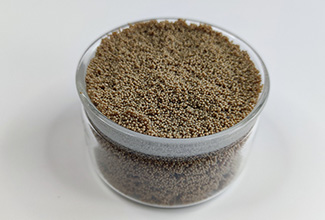
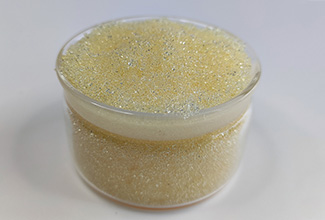
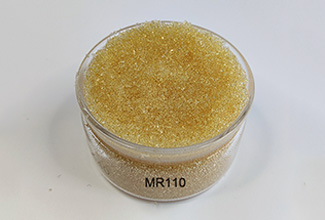
In the world of ion exchange resins, the physical structure of the resin—particularly its pore structure—is a core factor determining its performance, lifespan, and suitability. Gel-type and macroporous-type resins are the two main structures on the market. Understanding their advantages and disadvantages is crucial for ensuring the efficient operation of your water treatment or separation system.
This article will provide a detailed analysis of the differences between these two types of resins in terms of exchange kinetics, fouling resistance, and strength, from a professional perspective, and offer selection recommendations based on practical application experience.
1. Gel Type Resins: The High-Capacity Workhorse
1.1.Structure and Mechanism (Expertise)
Gel type resins (such as Comcess 001x7 or 201x7 series) possess a dense, highly uniform structure with no visible permanent pores. When swollen in water, the polymer matrix forms tiny, molecular-level "gel networks," and the ion exchange reaction occurs solely within these microscopic channels.
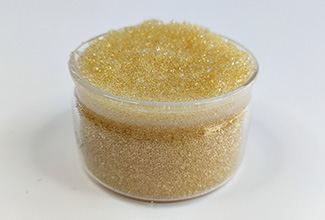
1.2. Core Performance and Advantages
|
Advantage |
Gel Type Performance |
Application Insight |
|
High Exchange Capacity |
Contains the highest number of functional groups, offering the maximum theoretical exchange capacity per unit volume. |
Ideal for treating water with low ionic concentration or applications demanding extremely high water purity (e.g., ultrapure water), maximizing economic return. |
|
High Mechanical Strength |
The dense structure generally provides superior mechanical strength and resistance to attrition. |
In applications involving frequent backwashing and regeneration (like domestic water softeners), they exhibit a low bead breakage rate and a longer service life. |
|
High Regeneration Efficiency |
Short ion diffusion path leads to high utilization of regeneration chemicals. |
Contributes to lower overall Operating Expenditure (OPEX). |
1.3. Key Drawbacks and Limitations
Poor Resistance to Osmotic Shock: Susceptible to cracking or fracturing when subjected to rapid flow rate changes or high osmotic pressure differences.
Weak Fouling Resistance: The dense gel matrix can easily entrap large organic molecules, leading to the blockage of functional groups ("poisoning"), making regeneration difficult.
2. Macroporous Resins: The Fouling-Resistant Pioneer
2.1. Structure and Mechanism (Expertise)
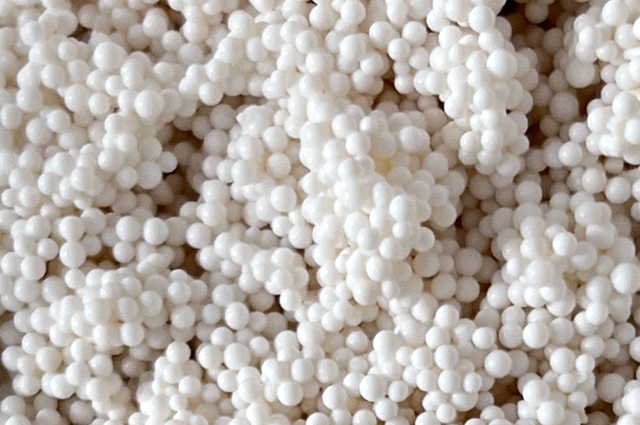
The defining feature of Macroporous resins (such as Comcess D001 or D201 series) is their dual-pore structure. Besides the microscopic gel networks, they contain visible, permanent macro-pores. These macro-pores significantly increase the resin's internal surface area, regardless of the level of swelling.
2.2. Core Performance and Advantages
|
Advantage |
Macroporous Type Performance |
Application Insight |
|
Excellent Fouling Resistance |
The macro-pores allow large organic molecules and colloidal particles to pass through quickly, preventing blockage. |
Essential for processing highly polluted industrial wastewater, high-color liquids (e.g., sugar decolorization), or highly turbid feeds, where Gel resins fail. |
|
Faster Exchange Kinetics |
Macro-pores provide rapid diffusion channels, resulting in quicker exchange rates, even when handling larger molecules. |
Suitable for processes requiring high flow rates or short contact times, such as adsorption, catalysis, and large molecule separation. |
|
Strong Osmotic Shock Resistance |
The rigid, highly cross-linked structure is more stable and better able to withstand stresses from expansion and contraction. |
Used in severe operating conditions involving high-concentration regenerants, non-aqueous solvents, or frequent media switching. |
2.3. Key Drawbacks and Limitations
Lower Exchange Capacity: Since macro-pores occupy some volume, fewer functional groups are available, resulting in a theoretical exchange capacity lower than Gel resins.
Slightly Lower Mechanical Strength: The internal porous nature might make them slightly more prone to fragmentation under extreme pressure compared to a highly cross-linked Gel resin.
3. Professional Application Guide and Selection
Choosing the right resin depends on your water quality, process requirements, and cost considerations. Here is a selection guide based on our extensive international service experience:
|
Key Consideration |
Gel Type Resin |
Macroporous Type Resin |
|
Feed Water Quality |
Suitable for clean, low-fouling feeds (e.g., potable water, pre-treated pure water). |
Essential for treating feeds with high organic content, high color, high turbidity, or complex chemical waste streams. |
|
Core Applications |
High-purity water production (deionization, ultrapure water), domestic/boiler water softening. |
Solvent decolorization, sugar processing, antibiotic purification, heavy metal adsorption, catalysis. |
|
Economics |
Lower initial cost, high volume capacity, but poor anti-fouling resistance may lead to more frequent maintenance. |
Higher initial cost, but longer service life and low maintenance frequency, resulting in stability in aggressive environments. |
|
Flow Rate |
Suitable for medium to low flow rates. |
Suitable for high flow rates and large molecule handling. |
Comcess Expert Recommendation: If your system requires a balance between high capacity and fouling resistance, consider using a layered bed system or dual-bed system to combine the advantages of both resin types, achieving optimal treatment efficiency and operating costs.
4. Why Choose Comcess
As an experienced manufacturer of ion exchange resins with global supply capabilities, Henan Comcess Industry Co., Ltd. adheres to the following principles to ensure the trustworthiness of your procurement process:
Quality Traceability: Our products are manufactured under the strict ISO9001 international quality management system. All outgoing batches are provided with a detailed Certificate of Analysis (COA), ensuring the accuracy of critical technical parameters (e.g., exchange capacity, moisture content, particle size).
Free Sample Testing: We offer 1L free samples for customers to test under their actual operating conditions. This is the most reliable way to verify the performance of Gel vs. Macroporous resins.
Professional Technical Support: Our senior engineering team is available to review your specific water analysis and process flow, providing expert resin selection plans and regeneration guidance.
Whether you are facing challenging chemical purification tasks or dealing with ultra-pure water systems, selecting the right resin is the first step to success.
Contact our technical team today to receive a free, tailored resin selection consultation and request your sample test!
Email: info@bidragon.com
Tel/Whatsapp/Wechat: +86 13373703313