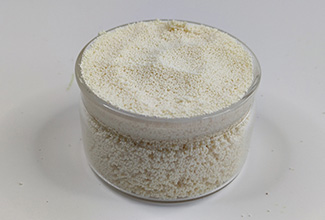
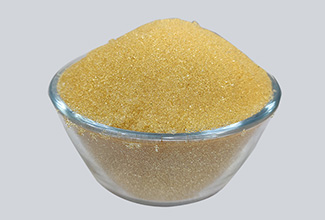
Ion exchange resins are a class of critical functional materials that utilize a water-containing polymer network structure to perform ion exchange functions. During transportation, storage, or periods of prolonged system shutdown, if management measures are inadequate, the resin is highly susceptible to varying degrees of dehydration.
Once dehydration occurs, improper handling—especially directly immersing dry resin in water—can easily lead to resin particle cracking and pulverization. This not only reduces the resin's exchange capacity but may also cause operational failures in the entire system.
Given the significant impact of dehydration on resin performance and system operation, mastering scientific dehydration assessment, standardized rehydration procedures, and effective storage and protection techniques is crucial for ensuring the reliability and economic efficiency of water treatment systems.
What is Ion Exchange Resin Dehydration?
Ion exchange resins have a large number of microporous structures. Under normal operating conditions, these pores are filled with water. The presence of water is fundamental to the resin's core function and maintenance of a stable state. Its specific functions include:
- Supporting the resin's three-dimensional spatial structure
- Creating effective channels for ion migration
- Ensuring the resin's mechanical strength and elasticity
When the resin is exposed to dry air or high-temperature environments for extended periods, or when the storage container is not properly sealed, the internal water will gradually evaporate. This process triggers a series of structural changes in the resin:
- Overall volume shrinkage of the resin
- Collapse of internal pores
- Significant decrease in elasticity
- Significant reduction in mechanical strength
It is important to emphasize that dehydration is not equivalent to complete drying. The resin should absolutely be prevented from drying to a completely water-free state, otherwise, irreversible structural damage will occur, and the ion exchange function will be completely lost.
Why Dehydrated Resin Cannot Be Directly Placed in Water
After dehydration, the resin is in a highly contracted state. If it comes into direct contact with water at this point, a violent physical change will occur, specifically as follows:
- Water rapidly penetrates the interior of the resin in a short period of time.
- The volume of the resin particles expands dramatically.
- The difference in water penetration rate between the inside and outside of the resin is extremely large, generating enormous internal stress.
- The internal stress exceeds the structural limit of the resin, leading to cracking, shattering, or pulverization of the resin.
This improper handling method will lead to a series of serious consequences:
- The ion exchange capacity of the resin will significantly decrease.
- The fine resin powder produced by the breakage will clog the system's water distributors and filters.
- This leads to increased system pressure drop and increased energy consumption.
- The resin layer is prone to clumping, affecting water flow distribution and causing operational instability.
- The service life of the resin is significantly shortened, increasing operation and maintenance costs.
Therefore, dehydrated resin is strictly prohibited from being directly immersed in water for rehydration.
Correct Rehydration Method for Dehydrated Resin
Once dehydration of the resin is detected, the following steps must be strictly followed for rehydration to ensure that the resin structure is not damaged.
Step 1: Assess the Degree of Dehydration
The degree of resin dehydration can be initially assessed through the following visual characteristics:
The overall volume of the resin is significantly reduced.
The surface of the resin particles is dry and hard, and lacks elasticity when pressed.
The resin's fluidity in the container is reduced.
Significant bubbling occurs when a small amount of water is added.
Note that the more severe the dehydration, the slower the rehydration process should be to avoid structural damage caused by rapid water absorption.
Step 2: Prepare a 10% Salt Solution
It is recommended to prepare a sodium chloride solution with a mass fraction of 8%–12%, i.e., common salt water.
The core reasons for using salt water instead of pure water for rehydration are:
To reduce the rate of water absorption by the resin, preventing rapid water penetration.
To reduce the osmotic pressure difference between the inside and outside of the resin.
To precisely control the expansion rate of the resin.
To effectively protect the polymer network structure of the resin and prevent cracking.
Step 3: Slowly Add Salt Water for Soaking
The following operating procedures must be strictly followed in this step:
Do not pour pure water directly into the dry resin.
The dehydrated resin should be placed in a container first, and then the prepared salt water should be slowly poured in.
Avoid vigorous stirring or rinsing of the resin.
Ensure that all resin particles are evenly immersed in the salt water, with no exposed parts.
Step 4: Soak for Several Hours
A soaking time of 4–12 hours is recommended. The specific duration can be adjusted appropriately according to the degree of dehydration: for severe dehydration, it can be extended to 12 hours; for mild dehydration, 4 hours is sufficient.
The core purpose of prolonged soaking is:
To allow water to slowly and evenly penetrate into the resin.
To allow the resin to gradually restore its original volume.
To help the polymer network structure of the resin gradually regain its elasticity.
Step 5: Gradually Dilute the Salt Concentration
After soaking, the resin should not be rinsed directly with pure water. The salt solution concentration should be gradually reduced in stages. The recommended dilution sequence is as follows: 10% saline solution → 5% saline solution → 2% saline solution → pure water
Each concentration stage requires soaking for 1–3 hours to ensure the resin adapts to the changes in osmotic pressure. This process effectively avoids secondary swelling damage caused by sudden changes in osmotic pressure, further protecting the resin structure.
Step Six: Cleaning and Resuming Operation
After completing the rehydration process, the following finishing operations are required to ensure stable system operation:
Thoroughly rinse the resin with clean water until the effluent water quality is stable.
Drain the air from the resin bed to ensure the resin bed is compacted and prevent water flow short-circuiting during operation.
When starting the system, the flow rate should be increased slowly to avoid hydraulic shock damage to the resin.
Technical Principles of Rehydration Control
The core technical principle of the rehydration process for dehydrated resin is to achieve osmotic pressure balance control through artificial intervention.
From the perspective of osmotic pressure, dehydrated resin is in a hypertonic state due to water loss; while pure water is a hypotonic environment. When the hypertonic dehydrated resin directly contacts hypotonic pure water, a violent migration of water will occur, causing rapid swelling of the resin.
The introduction of saline solution effectively reduces the osmotic pressure difference between the inside and outside of the resin. By gradually reducing the salt concentration, the osmotic pressure gradient can be precisely controlled, allowing the resin to gradually absorb water within a safe expansion range, and finally return to a normal state smoothly, thus completely avoiding structural damage.
How to Prevent Resin Dehydration During Storage
To prevent resin dehydration from the source and extend the service life of the resin, it is recommended to take the following targeted measures during storage. The corresponding technical reasons for each measure are shown in the table below:
|
Preventive Measure |
Technical Reason |
|
Ensure the resin is in a water-saturated state before storage. |
To maintain the stability of the internal microporous structure of the resin. |
|
Use sealed containers for storage. |
To isolate dry air and prevent internal moisture evaporation. |
|
Avoid storing resin in ventilated or dry environments. |
To reduce the rate of water loss in the resin caused by environmental factors. |
|
Control the storage temperature within the range of 5–40°C. |
Low temperatures prevent freezing and cracking; high temperatures prevent resin aging and water loss. |
|
For amine-type resins, adopt a nitrogen-purging protection method for storage. |
To prevent oxidative degradation of amine-type resins and reduce moisture loss. |
After ion exchange resins undergo dehydration, they must be rehydrated using a scientific and standardized method: dehydrated resins should not be directly immersed in pure water. Instead, they should be rehydrated slowly using approximately 10% saline solution, and the salt concentration should be gradually diluted in stages to avoid osmotic shock. Incorrect operation will cause irreversible damage to the resin.
Standardized rehydration procedures and proper storage management can not only extend the service life of the resin but also ensure the long-term stable operation of the water treatment system.
.jpg)