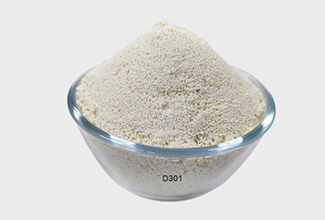
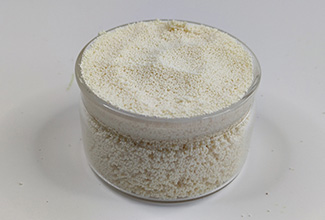
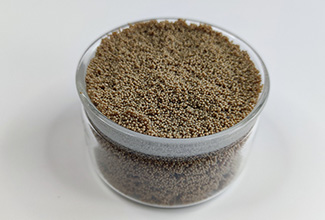
1. Why are The Differences In Uranium Ore Process Flows So Important?
There is no universal process for uranium ore mining and extraction; the natural properties of the ore deposit directly determine the choice of the uranium extraction route.
The rationality of process selection directly affects three core dimensions: control of uranium extraction costs, uranium resource recovery rate, and the selection direction and service life of ion exchange resins.
This leads to the core point: choosing the right process is essential for choosing the right resin. Only by accurately matching the ore deposit type with the process route can ion exchange resins fully play their role, achieving economical, efficient, and large-scale uranium extraction.
2. Three Mainstream Technological Routes for Uranium Ore Processing
Three mature technological routes have been developed for uranium extraction globally. Different routes have different applicable scenarios and core processes, but all rely on the support of key processes.
2.1 Mining + Leaching + Solid-Liquid Separation + Resin Uranium Extraction
This is a traditional and widely used technological route, suitable for most conventional uranium ores. After obtaining ore through mining operations, uranium is dissolved from the ore through a leaching process, and then a uranium-containing solution is obtained through solid-liquid separation. Finally, ion exchange resins are used to extract and concentrate the uranium.
2.2 In-Situ Leaching (ISR/ISL) Direct Uranium Extraction
As the mainstream choice for modern new projects, this route does not require large-scale mining and ore transportation. Leaching solution is injected into the underground ore body through injection wells to dissolve the uranium minerals, and then the uranium-containing solution is extracted from production wells, directly entering the subsequent uranium extraction process. The process is simpler and has less environmental impact.
2.3 Enhanced Leaching Process for Special Ore Deposits
For high-grade or complex uranium ores, conventional leaching methods are inefficient, requiring enhanced methods such as pressure leaching or special chemical leaching. By improving leaching conditions or optimizing the chemical system, efficient dissolution of uranium is achieved, followed by fine separation processes for extraction.
It is worth noting that in all three routes, ion exchange resins occupy a core position in the intermediate process. More than 80% of modern new projects rely on ion exchange resins in their core processes, and resin uranium extraction is currently the most economical, mature, and scalable intermediate process.
3. Process Flow for Sandstone-Type Uranium Deposits (Most Widely Used Globally)
3.1 Characteristics of Sandstone-Type Uranium Deposits
Sandstone-type uranium deposits are the most common type of uranium deposit globally and the most suitable type for ion exchange resin applications. Their core characteristics are high porosity and good permeability, which allows them to be compatible with in-situ leaching (ISL) processes, laying the foundation for efficient uranium extraction.
3.2 Complete Process Flow for In-Situ Leaching (ISL) Uranium Extraction
The mainstream process flow for sandstone-type uranium deposits has been standardized, with clear and orderly core steps:
Injection well → Injection of leaching solution → Underground dissolution of uranium minerals → Extraction of uranium-containing solution from production well → Ion exchange resin adsorption of uranium → Resin elution (using NaCl, (NH4)2SO4, or carbonate systems) → Precipitation to form yellowcake (U3O8).
3.3 Key Points of Resin Application in In-Situ Leaching Systems
In this process, the ion exchange resin precisely adsorbs uranium elements from the uranium-containing solution, making it a core step in uranium enrichment. The selected resin must be a strongly basic anion exchange resin and meet three core requirements:
First, high selectivity, effectively resisting the interference of Ca²⁺, Mg²⁺, and other ions; second, excellent wear resistance and permeability, adapting to the flow environment of the underground leaching solution; and third, good oxidation resistance to extend the resin's service life.
This is currently the uranium extraction process with the largest global usage of ion exchange resins and the most mature technology.
4. Process Flow for Volcanic Rock/Granite-Type Uranium Deposits
4.1 Typical Characteristics of Hard Rock Uranium Deposits
Volcanic rock and granite-type uranium deposits often exhibit dense ore bodies, with uranium elements tightly bound to silicates and iron minerals. This structure makes them unsuitable for in-situ leaching processes, requiring a combination of "mining + crushing + agitated leaching."
4.2 Mining + Acid Leaching Uranium Extraction Process Flow
The core process flow for this type of uranium ore is: Mining → Crushing & Grinding → Acid Leaching (using H₂SO₄ + oxidant system) → Solid-Liquid Separation → Ion Exchange Resin Uranium Extraction → Elution → Precipitation → Calcination.
Crushing and grinding increase the contact area between the ore and the leaching solution; the acid leaching process breaks the bond between uranium and other minerals, allowing the uranium to dissolve into the solution; after solid-liquid separation, ion exchange resin is used to extract and concentrate the uranium.
4.3 Challenges of this Process for Ion Exchange Resins
The leachate in this process has high concentrations of Fe³⁺ and Al³⁺, and contains many organic substances and colloids, which can easily contaminate the resin, affecting adsorption efficiency and service life.
Therefore, this process places extremely high demands on the anti-fouling capabilities of the ion exchange resin. At the same time, the application methods of the resin are more flexible, and can adopt resin column, RIP (Resin-in-Pulp) or RIL (Resin-in-Leach) modes to adapt to different production scenarios.
5. Uranium Extraction Process Flow for Carbonate-Type Uranium Ore
5.1 Why Are Carbonate-Type Uranium Ores Unsuitable for Acid Leaching?
The defining characteristic of carbonate-type uranium ores is their high carbonate content. Conventional acid leaching processes cause carbonate minerals to react violently with acids, resulting in extremely high acid consumption and significantly increased production costs, rendering the process economically unviable. Therefore, an alkaline leaching process must be employed to match the deposit's characteristics.
5.2 Introduction to the Alkaline Leaching Process Flow
The mainstream process flow for this type of uranium ore is: Crushing/In-situ Leaching → Na₂CO₃ + NaHCO₃ Leaching → Formation of Uranium Carbonate Complex → Anion Exchange Resin Adsorption → Salt Water or Acid Stripping.
Through the alkaline leaching system, uranium forms stable carbonate complexes that enter the solution. Uranium is then adsorbed by anion exchange resins, and finally enriched via the stripping process.
5.3 Key Considerations for Resin Selection in Alkaline Systems
Alkaline leaching systems impose extremely high compatibility demands on resins. Two core selection criteria are paramount: First, the resin must be compatible with the carbonate complexation system to ensure efficient adsorption of uranium carbonate complexes. Second, it must possess excellent resistance to competitive adsorption, effectively countering interference from ions such as SO₄²⁻ and Cl⁻ in the solution to guarantee uranium adsorption selectivity.
6. Processing Technology for Complex Uranium Ore (Organic Matter-Bearing, Sulfur-Bearing Ore)
6.1 Key Process Challenges in Complex Uranium Ore
Processing uranium ores containing organic matter or sulfides presents significant difficulties, with core challenges manifesting in two aspects: First, organic compounds encapsulate uranium atoms, hindering contact with the leaching solution and impairing dissolution efficiency. Second, sulfides readily react with oxidizing agents during leaching, consuming large amounts of oxidant and reducing leaching effectiveness.
6.2 Enhanced Pretreatment + Leaching Process Approach
To address these challenges, a “pre-oxidation + acid leaching + resin adsorption” process approach is required. Pre-oxidation methods such as roasting or chemical oxidation break the organic encapsulation of uranium while removing some sulfides. Acid leaching then dissolves uranium into solution, followed by ion exchange resin adsorption for uranium enrichment.
6.3 Special Requirements for Resin Performance
Leachate from such uranium ores contains significant organic matter, which readily contaminates resins. Therefore, the resin's resistance to organic contamination is critical to uranium recovery success. Additionally, the resin must possess excellent regenerative properties, enabling restoration of adsorption capacity through regeneration processes to extend service life and ensure continuous, economical production.
7. From a Process Perspective: When Does Ion Exchange Resin Offer the Greatest Advantage?
The effectiveness of ion exchange resin is closely tied to the solution characteristics of the uranium extraction process. Its advantages are most pronounced in scenarios involving low-concentration, high-volume uranium-bearing solutions.
Whether in in-situ leaching systems for sandstone-type uranium deposits or heap leaching systems for low-grade uranium ores, the resulting uranium-bearing solutions exhibit low concentrations and large volumes. Ion exchange resins enable efficient adsorption and enrichment under these conditions, offering controllable costs and scalability for widespread adoption.
Compared to solvent extraction processes, solvent extraction is more suitable for treating high-concentration uranium-containing solutions. However, for low-concentration, large-volume solutions, ion exchange resins offer greater advantages in terms of economic viability and operational convenience.
8. Comparison of Core Requirements for Uranium Adsorption Resins Across Different Uranium Extraction Processes
Different uranium extraction processes involve distinct solution systems and impurity types, leading to varying core requirements for uranium adsorption resins. Specific comparisons are as follows:
|
Uranium Extraction Process |
Resin Core Requirements |
|
In-situ Leaching |
High selectivity, long service life, excellent mechanical strength |
|
Acid Leach Pulp |
Strong anti-fouling capacity, wear resistance, good regeneration performance |
|
Alkaline System |
Compatibility with carbonate complexation systems, resistance to SO₄²⁻/Cl⁻ competitive adsorption |
|
High Impurity System |
Resistance to Fe³⁺/Al³⁺ interference, strong anti-organic fouling capacity |
9.Conclusion
Uranium extraction is a complex systems engineering process. The leaching process must be determined based on the characteristics of the ore deposit, and the resin properties must be precisely matched to achieve the optimal balance between cost and recovery rate. Therefore, the core value of a professional supplier lies not only in providing high-quality resins, but also in providing customized selection solutions and technical support tailored to specific process flows, ensuring the efficient progress of uranium extraction projects.