The Global Strategic Value and Core Distribution of Uranium Mines
Uranium is the core fuel for nuclear power, supplying approximately 10% of the world's electricity. Whether it's household appliances or the electricity demands of industrial production, nuclear power may be the underlying technology. The distribution of uranium resources directly determines the stability of the global nuclear power supply chain.
Globally, while proven uranium resources are scattered across continents, not all resources are economically viable for mining. Large-scale uranium mines capable of achieving scalable production and supporting global nuclear power demand are highly concentrated in a few countries.
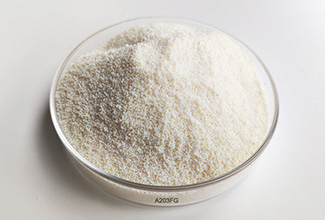
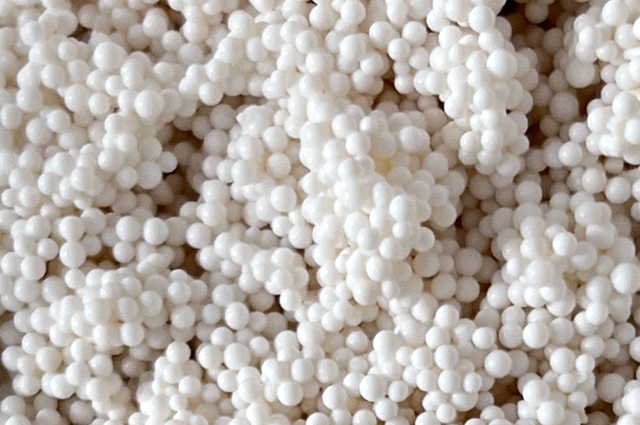
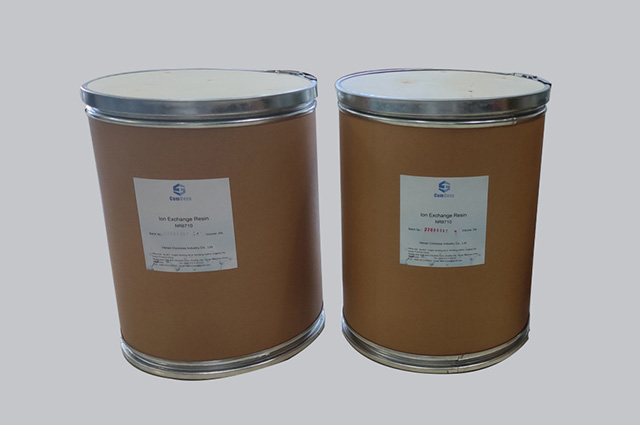
In the uranium mining process, extraction and purification are crucial steps, directly impacting resource utilization and mining costs. Complete uranium extraction resin is a commonly used core auxiliary material in the industry. Its adsorption and separation properties help mining companies recover uranium more efficiently from ore or leachate, allowing for the rational utilization of uranium resources of different grades.
Global Uranium Mine Distribution Overview: A Centralized Resource Pattern
According to GlobalData, there are currently 97 operational uranium mines worldwide, varying significantly in size and output. In 2023, the top ten uranium mines globally accounted for 38,160 tons of total production, representing a substantial portion of global uranium output.
This distribution exhibits a clear pattern of "high concentration and regional differentiation." Core producing regions are concentrated in four countries: Kazakhstan, Canada, Namibia, and Australia. These four countries' large-scale uranium mines support the majority of the global uranium supply.
Besides these four core countries, countries like Niger also possess uranium resources of a certain scale, serving as an important supplement to the global uranium supply. Uranium mines in other countries are mostly small to medium-sized deposits, or have lower ore grades and higher mining costs, making it difficult to achieve large-scale production and thus having a relatively limited impact on the global uranium supply.
.png)
Kazakhstan: World's Largest Uranium Producer and Core User of ISL Technology
Kazakhstan is currently the world's largest uranium producer, a fact clearly demonstrated by its data—four of the world's top ten uranium mines are located in the country: Akdala Mine, Karatau Mine, Tortkuduk Mine, and Inkai Mine.
These uranium mines are mainly distributed in South Kazakhstan Province and the Chu-Sarysu Basin. The ore type is predominantly sedimentary, and while the grade isn't particularly high, its low extraction cost is a major advantage. The country primarily uses in-situ leaching (ISL) for mining. This method avoids large-scale surface excavation, resulting in a relatively small environmental impact and effectively controlling extraction costs.
The core of ISL mining involves injecting leachate underground to dissolve the uranium in the ore, then pumping the uranium-bearing leachate back to the surface for separation and purification. This process requires materials capable of precisely adsorbing uranium ions, with completion uranium adsorption resin being a preferred choice.
It can selectively adsorb uranium ions from the leachate, reducing uranium loss and simplifying separation and purification. This helps local mining companies control costs while improving uranium recovery efficiency, a key reason why Kazakhstan has long maintained its position as the world's leading uranium producer.
Canada: A Hub of High-Grade Uranium Deposits and a Benchmark for Underground Mining Technology
Canada is the world's second-largest uranium producer, characterized by its extremely high-grade uranium resources. The world's two largest uranium mines—Cigar Lake Project and McArthur River Mine—are both located in the Athabasca Basin of Saskatchewan, Canada.
The ore grades at these two mines average 8%-15.6%, approximately 100 times that of ordinary uranium ore. Such high grades mean that the same scale of mining yields significantly more uranium products, resulting in substantial economic benefits.
Due to the deep burial and high grade of these uranium deposits, Canada primarily employs underground mining methods. Underground mining presents numerous challenges, including deep radiation protection, groundwater control, and safety under complex geological conditions, demanding advanced technology.
After extraction, the ore undergoes meticulous separation and purification to meet nuclear power standards. Complete uranium extraction resin plays a crucial role in this process, effectively separating uranium from other impurities in the ore to ensure the purity of the final product, perfectly suited to the refined mining requirements of high-grade uranium mines in Canada.
Namibia: The Core of African Uranium Mining, a Typical Example of Sino-Foreign Joint Ventures
Namibia is Africa's largest uranium producer, home to two of the world's top ten uranium mines—Husab Uranium Mine and Rossing Mine—both concentrated in the Erongo region.
Unlike Canada's high-grade uranium mines, Namibia's uranium deposits are predominantly granite-type, with lower ore grades, approximately 0.03%-0.035%. However, abundant reserves and relatively favorable mining conditions allow for stable production capacity through large-scale mining.
Uranium mining in Namibia largely follows a Sino-foreign joint venture model, with companies from China, France, and other countries deeply involved. This has created a complete industrial chain from ore extraction to processing and refining, boosting local economic development and ensuring the stability of global uranium supply.
Due to the low grade of the ore, acid leaching is the primary mining method. This method results in a low concentration of uranium in the leachate, easily leading to resource waste. Complete Uranium Adsorption Resin can efficiently adsorb low concentrations of uranium ions, significantly improving uranium recovery rates and helping mining companies fully utilize resources to achieve stable profits in low-grade ore mining.
Australia: Polymetallic Uranium Deposits, a Model of By-product Mining
Australia is a major global uranium resource country, and its uranium resources have a significant characteristic—polymetallic coexistence. The most representative example is the Olympic Dam Mine, one of the world's largest polymetallic deposits.
The primary mining target of this mine is copper, with uranium being a by-product generated during copper mining. In 2023, the mine produced 3,410 tons of uranium, while its uranium reserves reached a staggering 2.1 million tons of uranium oxide, indicating immense resource potential.
Australia's uranium mines are primarily concentrated in South Australia, leveraging the polymetallic symbiotic nature of its deposits to create a unique mining model of "primarily copper, secondarily uranium." This model's advantage lies in the shared mining infrastructure, significantly reducing additional costs associated with uranium extraction.
However, this model also presents a challenge: uranium separation and purification must consider other metals such as copper and gold, ensuring the recovery of these primary products is not compromised. Complete Uranium Extraction Resin possesses excellent compatibility and selectivity, accurately separating uranium from complex mineral solutions without interfering with the recovery of other metals, making it perfectly suited for the development of such polymetallic symbiotic deposits.
Other Important Uranium-Producing Countries: Supplementary Resource Supply
Besides the four core countries, Niger is also an important supplement to the global uranium supply. The country boasts the world's tenth largest uranium mine—SOMAIR Mines—located in the Allit region. This open-pit mine is one of Africa's oldest uranium mines.
SOMAIR Mines, a joint venture between the French company Orano and the Nigerien government, produced 2,390 tons in 2023. This mine has low-grade ore and primarily uses acid leaching for processing, also requiring uranium adsorption and extraction resin.
The completion uranium adsorption resin improves the mine's uranium leaching recovery rate, helping it achieve stable production output under low-grade resource conditions and supporting global uranium supply.
In addition, Russia, Uzbekistan, and other countries also possess small-scale uranium mines. Uranium mining in these countries also utilizes uranium adsorption and extraction resin to optimize production efficiency and improve resource utilization, becoming an indispensable part of the global uranium supply chain.
The Core Influencing Factors Of Global Uranium Deposit Distribution
The distribution of uranium deposits is not random; the most crucial influencing factor is geological conditions. Different countries have different geological structures, resulting in different types of uranium deposits.
Kazakhstan's sedimentary deposits, Canada's high-grade magmatic deposits, and Namibia's granite deposits are all the result of unique geological evolution. These geological conditions directly determine the grade, reserves, and suitable mining methods of uranium deposits in each country.
Besides geological conditions, investment and policy also play a crucial role. Uranium mining requires huge capital investment and has a long operating cycle, typically lasting decades. Joint ventures and state-led development models, such as Kazatomprom in Kazakhstan and the participation of Chinese state-owned enterprises in Namibian uranium development, directly influence the scale and speed of uranium mining development.
Furthermore, technological compatibility is also important. Different mining methods require different uranium extraction technologies. The compatibility of completion uranium adsorption resin helps mining companies in different countries improve efficiency and control costs according to their own mining methods, which is also an important factor influencing the global distribution of uranium deposits.
Core Technological Support in Uranium Mining: The Key Role of Adsorption and Extraction Resins
Regardless of the mining method or ore grade, uranium separation and purification are crucial steps in uranium mining. Inadequate separation and purification technologies can lead to either wasted uranium resources or increased mining costs, impacting the economic efficiency of mining companies.
The success of completion uranium extraction resin as a core supporting material in the industry lies in its performance adaptability. It possesses excellent selectivity and adsorption capacity, is easily regenerable, and can be reused repeatedly, reducing operating costs.
For low-concentration leaching solutions from ISL mining in Kazakhstan, it can precisely adsorb uranium ions; for the fine purification of high-grade ore in Canada, it can effectively separate impurities; for low-grade or polymetallic ores in Namibia and Australia, it can improve recovery rates and facilitate the recovery of other metals.
In short, the application of this resin supports the efficient development of various types of uranium mines globally, enabling more uranium resources to be converted into usable nuclear power fuel, thus connecting uranium resources with the nuclear power industry.
Conclusion
Analyzing the global uranium mine distribution pattern, we can clearly see that Kazakhstan, Canada, Namibia, and Australia are the core uranium-producing regions globally. Their resource advantages and mining technologies directly determine the stability of the global nuclear power supply chain.
The importance of technological adaptation in uranium mining is self-evident. Efficient uranium extraction and adsorption technologies can maximize the value of uranium resources, helping mining companies reduce costs and improve efficiency.
Complete uranium extraction resin, as a core material adaptable to various uranium mining scenarios worldwide, directly impacts the production efficiency and economic benefits of mining companies. It is not only an auxiliary material in the uranium mining process but also a crucial link connecting uranium resources and the nuclear power industry, providing vital support for the stable development of the global nuclear power industry.