Uranium, as a core raw material for global nuclear energy development, occupies an irreplaceable position in the clean energy transition. With the continuous rise in global demand for low-carbon energy, efficient and environmentally friendly uranium mining has become a key issue for the industry. In uranium mining operations, how to efficiently recover uranium from leaching solutions is a core challenge restricting mining efficiency and controlling production costs.

What are ion exchange resins? How do they play a role in uranium extraction?
Basic Definition of Ion Exchange Resin
Ion exchange resins are porous polymer microspheres with exchangeable functional groups on their surface. These functional groups can undergo reversible exchange reactions with ions in solution, thereby achieving selective adsorption and separation of specific ions. In uranium mining, the core function of ion exchange resins is to precisely capture uranium ions from uranium leachate through ion exchange reactions, achieving the enrichment and recovery of uranium.
The Core Principle of Uranium Extraction: Selective Adsorption
Uranium ore leaching solutions contain a variety of ions, and ion exchange resins, due to the specificity of their functional groups, preferentially adsorb uranium ions (commonly in the forms UO₂²⁺, (UO₂(CO₃)₃)⁴⁻, while ignoring other interfering ions in the solution (such as calcium, magnesium, and iron ions). This selective adsorption capacity is the key to the efficient uranium recovery of ion exchange resins.
Interactions between Resin and Uranium: Ion Exchange and Chelation
In uranium recovery, the interaction between resin and uranium ions mainly takes two forms: ion exchange and chelation. Ion exchange refers to the exchange between functional ions (such as chloride and sodium ions) on the resin surface and uranium ions in the leachate, adsorbing the uranium ions onto the resin surface. Chelation, on the other hand, refers to the formation of stable chelates between functional groups (such as amino and carboxyl groups) in the resin and uranium ions, further enhancing the stability and selectivity of adsorption. These two mechanisms complement each other, ensuring the high efficiency of uranium recovery.
Reusability of Ion Exchange Resins: Elution and Regeneration
Ion exchange resins are not disposable materials. After uranium ion adsorption reaches saturation, the uranium ions can be released from the resin surface through an elution process. Subsequently, through regeneration, the resin's ion exchange capacity is restored, achieving recycling. This reusable characteristic significantly reduces the operating costs of uranium mining and also improves the environmental friendliness of the process.
Types of Ion Exchange Resins Commonly Used in Uranium Mining
Strongly Basic Anion Exchange Resin
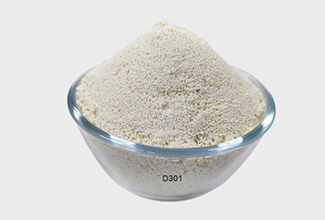
Strongly basic anion exchange resins are the most widely used type of resin in uranium mining. Their surfaces are covered with strongly basic functional groups (such as quaternary ammonium groups), enabling them to efficiently adsorb uranium ions (e.g., (UO₂(CO₃)₃)⁴⁻) present in the leachate in anionic form. This type of resin has advantages such as large adsorption capacity, high selectivity, and high mechanical strength, making it suitable for most uranium ore leachate treatment scenarios.
Chelating Resin
Chelating resins are a class of resins with special chelating functional groups, commonly including iminodiacetic acid type and phosphonic acid type. These resins exhibit extremely high selectivity for uranium ions, accurately capturing them even when the concentration of interfering ions in the leachate is high. They are suitable for the recovery of low-concentration uranium leachates or in scenarios requiring high purity.
Cation Exchange Resin
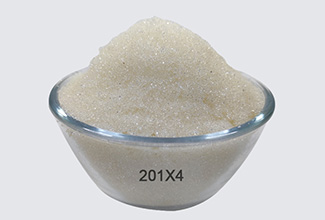
Cation exchange resins, with acidic functional groups (such as sulfonic acid and carboxyl groups) on their surface, are mainly used for uranium recovery from acidic leaching solutions. Under acidic conditions, uranium ions exist primarily as UO₂²⁺ (cations). In this case, cation exchange resins can efficiently adsorb uranium ions through ion exchange reactions, filling the application gap of strongly basic anion exchange resins in acidic systems.
The Core Differences Between Different Resin Types
The three types of resins differ significantly in selectivity, durability, and applicable scenarios: strongly basic anion exchange resins balance efficiency and cost, making them suitable for general applications; chelating resins offer the best selectivity but are relatively expensive, making them suitable for special, demanding applications; and cation exchange resins are only suitable for acidic leaching systems, making them highly specific. In practical applications, the appropriate resin type must be selected based on the chemical properties of the leachate.
Pretreatment: Prepare a suitable leachate for the ion exchange resin
Common Leaching Methods and Leachate Characteristics of Uranium Ore
Leaching methods commonly used in uranium mining are mainly divided into two types: acid leaching and alkaline leaching. Acid leaching typically uses sulfuric acid as the leaching agent, resulting in an acidic leachate where uranium ions mainly exist in the form of UO₂²⁺. Alkaline leaching uses sodium carbonate, sodium bicarbonate, etc., as leaching agents, resulting in an alkaline leachate where uranium ions mainly exist in the form of (UO₂(CO₃)₃)⁴⁻. The leachates obtained from different leaching methods have significantly different chemical properties, directly affecting the subsequent treatment effect of ion exchange resins.
The Necessity of Preprocessing: to Remove Interfering Factors
Untreated uranium leaching solutions contain a large amount of suspended solids, organic pollutants, and interfering ions (such as molybdenum, zirconium, and phosphates). These impurities can cause resin fouling and poisoning, reduce the resin's adsorption capacity and lifespan, and even affect the purity of uranium recovery. Therefore, pretreatment of the leaching solution is a prerequisite for ensuring the efficient operation of ion exchange resins.
Key Steps in Preprocessing
The pretreatment of uranium leaching solution mainly includes three core steps: clarification, filtration, and pH adjustment. Clarification removes suspended solids from the leaching solution through gravity sedimentation or centrifugation; filtration further removes fine solid particles to prevent clogging of the resin bed; pH adjustment involves adjusting the pH value of the leaching solution to a suitable range according to the type of resin used, ensuring that the resin can efficiently adsorb uranium ions (e.g., the pH of strongly basic anion exchange resins needs to be adjusted to 8-10).
The Effect of Pretreatment on Resin Efficiency and Lifespan
High-quality pretreatment can significantly improve resin operating efficiency, reduce the probability of resin contamination and poisoning, and extend resin lifespan. Conversely, if pretreatment is incomplete, the resin will quickly lose its adsorption capacity, requiring frequent regeneration, which not only increases operating costs but also affects the stability of the entire uranium recovery process.
Step-By-Step Process: The Complete Process of Uranium Recovery Using Ion Exchange Resin
Step 1: Resin Loading (Adsorption of Uranium Ions)
The pretreated uranium leaching solution is passed through a resin bed (or the resin is thoroughly mixed with the leaching solution). Uranium ions in the leaching solution undergo ion exchange or chelation reactions with functional groups on the resin surface, and are adsorbed onto the resin surface. This process is called resin loading. During loading, the flow rate, temperature, and pH of the leaching solution must be controlled to ensure sufficient adsorption of uranium ions and improve adsorption efficiency.
Step 2: Resin Washing (to Remove Impurities)
After resin loading is complete, a small amount of unadsorbed leachate and interfering ions will remain on its surface. At this point, the resin needs to be rinsed with clean water or a specific washing solution to remove these residual impurities and prevent them from affecting subsequent elution efficiency and the purity of the uranium product. The flow rate and volume of the washing solution must be controlled during the washing process to ensure effective washing while minimizing the loss of uranium ions.
Step 3: Elution (Releasing Uranium Ions)
Elution is the process of releasing uranium ions adsorbed on the resin surface into the solution, and it is one of the core steps in uranium recovery. Commonly used eluents include sulfuric acid and sodium chloride solution. These eluents react with the uranium ions on the resin surface, breaking the bond between the resin and the uranium ions, allowing the uranium ions to dissolve into the eluent and obtain a high-concentration uranium eluent. The elution process requires optimization of the eluent concentration, temperature, and flow rate to ensure sufficient release of uranium ions.
Step 4: Resin Regeneration (Restoring Exchange Capacity)
After elution, the functional groups on the resin surface lose their exchange capacity and need to be regenerated to restore their ion exchange capacity. The regeneration process is usually carried out simultaneously with the elution process, or as a supplementary treatment after elution. By adjusting the concentration of the eluent or replacing the regenerator, the functional groups of the resin are restored to their initial state so that they can be used again for the adsorption of uranium ions.
Step 5: Uranium Enrichment and Precipitation (Downstream Processing)
The high-concentration uranium eluent obtained from elution still needs to undergo downstream processing to obtain qualified uranium products. Specific steps include enrichment (increasing uranium concentration through evaporation, crystallization, etc.) and precipitation (adding a precipitant to form a solid precipitate of uranium ions), ultimately yielding uranium oxides or other uranium compounds for subsequent nuclear energy production.
Common Challenges And Solutions In The Use of Ion Exchange Resins in Uranium Mining
Challenge 1: Resin Pollution and Poisoning
Resin contamination and poisoning are among the most common problems encountered by ion exchange resins in uranium mining. The main reason is that interfering ions such as molybdenum, zirconium, and phosphates, as well as organic contaminants in the leachate, adsorb onto the resin surface, clogging its porous structure or undergoing irreversible reactions with the resin's functional groups, causing the resin to lose its exchange capacity.
Solutions: Strengthen the pretreatment of the leachate through filtration and clarification to remove interfering ions and organic contaminants; regularly clean the resin using specific cleaning solutions (such as dilute acids or alkalis) to remove contaminants from the resin surface; select resins with higher selectivity (such as chelating resins) to reduce the adsorption of interfering ions.
Challenge 2: Resin Capacity Decreases Over Time
With increased usage, the adsorption capacity of ion exchange resins gradually decreases. This is primarily due to the aging and loss of functional groups in the resin, or the inability to completely remove contaminants from the resin surface. Decreased resin capacity leads to reduced adsorption efficiency, increased regeneration frequency, and higher operating costs.
Solutions: Optimize the resin regeneration process, ensuring appropriate concentration, temperature, and contact time of the regenerant to maximize resin exchange capacity recovery; regularly test the resin and replace it promptly when its capacity falls below a specified value; strengthen pretreatment to reduce resin contamination and extend its service life.
Challenge 3: The Impact of Harsh Mining Environment
Uranium mining sites often present harsh conditions such as high temperatures, extreme pH values (strong acids or alkalis), and high salinity. These conditions accelerate resin aging and damage, reducing the resin's mechanical strength and exchange capacity, and affecting its service life.
Solutions: Select specialized resins suitable for harsh environments, such as those resistant to high temperatures, acids and alkalis, and high salt concentrations; optimize operating parameters, controlling the temperature and pH of the leachate to reduce resin corrosion; strengthen daily resin maintenance to prevent damage during transportation and handling.
Challenge 4: Uranium Loss During Elution
During the elution process, improper elution parameters can prevent some uranium ions from being released from the resin surface, or cause released uranium ions to be lost with the washing liquid, reducing uranium recovery efficiency and wasting resources.
Solutions: Optimize the elution process by adjusting the concentration, temperature, and flow rate of the eluent to ensure full release of uranium ions; rationally control the amount and flow rate of the washing liquid to reduce uranium ion loss; and perform secondary recovery treatment of the eluent to recover uranium ions, thereby improving resource utilization.
Key Considerations for Selecting Ion Exchange Resins for Uranium Mining
Uranium Loading Capacity
Uranium loading capacity refers to the total amount of uranium ions that a unit mass of resin can adsorb, and it is one of the core indicators for evaluating resin performance. A higher loading capacity means higher resin adsorption efficiency, less resin required, and lower operating costs. When selecting resin, it is necessary to choose a resin with an appropriate loading capacity based on the uranium concentration of the leachate to ensure that the recovery requirements are met.
Selective
Selectivity refers to the resin's ability to preferentially adsorb uranium ions in a leaching solution where multiple ions coexist. The stronger the selectivity, the less interfering ions the resin adsorbs, resulting in higher purity uranium products and simpler subsequent purification steps. For leaching solutions with a large number of interfering ions, highly selective chelating resins or specialized resins should be preferred.
Mechanical Strength
The mechanical strength of the resin directly affects its service life and operational stability. During uranium recovery, the resin undergoes multiple adsorption, elution, regeneration, and backwashing processes. Insufficient mechanical strength can easily lead to breakage and pulverization, resulting in resin loss and increased operating costs. Therefore, resins with high mechanical strength and good wear resistance must be selected, especially in fluidized bed and RIP configurations where the mechanical strength requirements are even higher.
Compatibility with Leachate Chemistry
The performance of resins is greatly affected by the chemical properties of the leachate (such as pH, temperature, and salinity). Therefore, when selecting resins, it is necessary to ensure that the resin is compatible with the chemical properties of the leachate. For example, cation exchange resins or anion exchange resins with strong acid resistance should be selected for acidic leachates, while strongly basic anion exchange resins should be selected for alkaline leachates to avoid aging and damage of the resin in unsuitable environments.
Regeneration Efficiency
Regeneration efficiency refers to the degree to which resin recovers its initial exchange capacity after regeneration. Higher regeneration efficiency means the resin can be reused more times, resulting in lower operating costs. When selecting resin, it is crucial to focus on its regeneration efficiency, prioritizing resins with simple regeneration processes and high regeneration efficiency. Simultaneously, optimizing the regeneration process can further enhance the resin's regeneration effect.
Conclusion
Ion exchange resins, with their advantages of high selectivity, reusability, environmental friendliness, high efficiency, and controllable cost, have become a core technology for uranium recovery in modern uranium mining, providing a reliable solution for the efficient development of uranium resources. From resin type selection and pretreatment processes to specific operational procedures and challenges, optimization at every stage can further improve uranium recovery efficiency, reduce operating costs, and minimize environmental impact.
Compared to traditional solvent extraction methods, ion exchange resin methods offer greater advantages in applicability, environmental friendliness, and cost control, meeting the needs of uranium mining at different scales and in different scenarios. They are widely used in major uranium-producing regions worldwide, including North America, Australia, and Kazakhstan.
For uranium mining professionals, the rational selection of ion exchange resins and optimization of operational processes are key to improving mining efficiency and achieving sustainable development. In the future, with continuous upgrades in resin technology, the application of ion exchange resins in uranium mining will become even more widespread, providing stronger support for the development of the global nuclear energy industry.
.png)