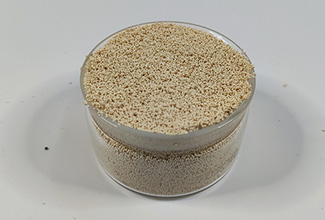
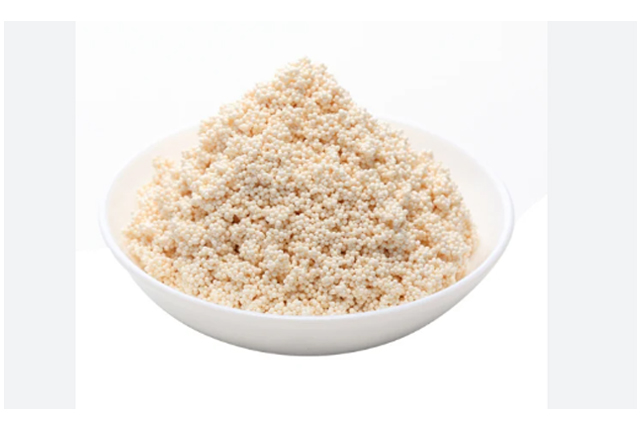
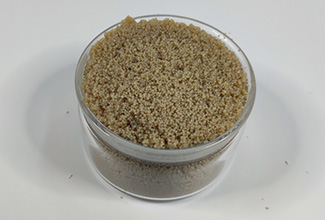
Water treatment is a core link to ensure drinking water safety and compliant industrial production. As a high-efficiency water purification material, ion exchange resins are widely used in drinking water softening, industrial water desalination, wastewater treatment and other scenarios. Understanding the working principle of ion exchange resins can not only help practitioners optimize water treatment processes, but also accurately solve various problems in water purification. This paper comprehensively dissects the working logic of ion exchange resins in water treatment from basic definitions, core mechanisms, resin types, specific applications to regeneration processes, helping readers quickly master core knowledge.
What Are Ion Exchange Resins
Basic Definition of Ion Exchange Resins
Ion exchange resins are insoluble polymer materials with a porous structure. Their core feature is that they carry exchangeable functional groups on the surface, which can undergo reversible exchange reactions with ions in aqueous solutions. This material retains the stability of polymers and possesses ion exchange activity, making it the core medium for ion separation and water purification in water treatment.
Core Characteristics of Ion Exchange Resins
The key characteristics affecting the water treatment performance of ion exchange resins mainly include three points: first, porosity, the porous structure inside the resin expands the specific surface area and provides sufficient contact space for ion exchange; second, particle size distribution, a reasonable particle size can balance water flow resistance and ion exchange efficiency; third, ion exchange capacity, that is, the total amount of ions exchangeable per unit mass of resin, which directly determines the treatment capacity and service life of the resin.
Basic Classification of Ion Exchange Resins
According to the type of exchangeable ions, ion exchange resins are mainly divided into three categories: cation exchange resins, anion exchange resins and mixed bed resins. Among them, cation exchange resins focus on capturing cations in aqueous solutions, anion exchange resins are responsible for removing anions, and mixed bed resins are a combination of the two, which can achieve deeper water purification.
Core Principle of Ion Exchange in Water Treatment
Core Mechanism of Ion Exchange
The core working principle of ion exchange resins is the "reversible ion exchange reaction": the functional groups on the resin surface actively adsorb ions with the same charge in the aqueous solution, and release their own exchangeable ions into the solution at the same time until ion exchange equilibrium is reached. For example, the functional groups of cation exchange resins (such as sulfonic acid group -SO₃H) release H⁺ and adsorb cations such as Ca²⁺ and Mg²⁺ in water at the same time to realize directional ion replacement.
Key Influencing Factors of Ion Exchange Equilibrium
The equilibrium state of ion exchange reaction directly determines the treatment effect, which is mainly affected by three factors: first, ion concentration, the higher the target ion concentration in the aqueous solution, the easier the exchange reaction occurs; second, temperature, an appropriate temperature (usually 20-40℃) can accelerate the ion diffusion rate and improve exchange efficiency; third, pH value, different types of resins have specific requirements for pH value, for example, strong acid cation resins have higher activity under acidic conditions, and weak base anion resins are more suitable for neutral or alkaline water bodies.
Core Difference Between Ion Exchange and Adsorption
Many people confuse ion exchange with adsorption. The core difference between the two lies in different mechanisms: ion exchange is a "reversible replacement at the ion level", only targeting charged ions, and ions are released into the solution during the exchange process; adsorption uses the porous structure of materials to physically or chemically adsorb substances (charged or not) on the surface without ion exchange. Clarifying this difference can avoid deviations in the selection of water treatment processes.
Common Types of Ion Exchange Resins in Water Treatment
Classification and Application Scenarios of Cation Exchange Resins
Cation exchange resins are divided into strong acid cation exchange resins and weak acid cation exchange resins according to the acidity of functional groups. Strong acid cation exchange resins (such as sulfonic acid type) have strong stability and can work in a wide pH range, mainly used in water softening and desalination scenarios; weak acid cation exchange resins (such as carboxylic acid type) have a large exchange capacity, suitable for treating wastewater with low concentration of cations, and have lower regeneration costs. Both can effectively remove cations such as Ca²⁺, Mg²⁺ and Na⁺ in water.
Classification and Application Scenarios of Anion Exchange Resins
Anion exchange resins are correspondingly divided into strong base anion exchange resins and weak base anion exchange resins. Strong base anion exchange resins (such as quaternary ammonium type) can efficiently remove strong acid anions such as Cl⁻, SO₄²⁻ and NO₃⁻ in water, commonly used in deep desalination; weak base anion exchange resins (such as tertiary amine type) mainly remove weak acid anions such as HCO₃⁻, suitable for treating water bodies with high organic matter content, and require less chemical agents during regeneration.
Characteristics and Applicable Scenarios of Mixed Bed Resins
Mixed bed resins are formed by mixing cation exchange resins and anion exchange resins in a certain proportion. Their core advantage is that they can remove cations and anions in water at the same time to achieve deep deionization and produce high-purity water. Compared with using cation or anion resins alone, mixed bed resins have higher treatment efficiency and more stable water purification effect, and are widely used in industries with extremely high water purity requirements such as electronics and pharmaceuticals.
Working Principle of Cation Exchange Resins in Water Softening
Core Demand of Water Softening Is to Remove Hardness Ions
Ca²⁺ and Mg²⁺ in water are the main causes of water hardness. Hard water not only forms scale on the surface of pipelines and equipment, affecting equipment service life, but also reduces detergent efficiency and affects drinking water taste. Cation exchange resins are the core material for water softening, and their core function is to directionally remove hardness ions in water and convert hard water into soft water.
Step-by-Step Process of Water Softening by Cation Exchange Resins
The process of water softening by cation exchange resins is divided into three key steps: first, hard water passes through the cation exchange resin bed, and the functional groups on the resin surface (such as -SO₃H) undergo exchange reactions with Ca²⁺ and Mg²⁺ in water; second, the resin releases its own H⁺ or Na⁺, and adsorbs Ca²⁺ and Mg²⁺ on the resin surface at the same time; third, after exchange, the content of hardness ions in water is greatly reduced, becoming qualified soft water flowing out of the resin bed.
Simple Chemical Reaction Analysis of Water Softening
Taking sodium-type cation exchange resins as an example, the chemical reaction of water softening can be simply expressed as: 2R-SO₃Na + Ca²⁺ → (R-SO₃)₂Ca + 2Na⁺. Where R represents the polymer skeleton of the resin. In the reaction, the resin releases Na⁺ and adsorbs Ca²⁺ in water, so as to achieve the purpose of removing hardness. This reaction is reversible, providing a basis for subsequent resin regeneration.
.png)
Working Principle of Anion Exchange Resins in Water Deionization
Core Goal of Water Deionization Is to Remove All Ions
Water deionization (also known as deionization) refers to the process of removing almost all cations and anions in water to produce high-purity water, which is widely used in industrial production, laboratories and other scenarios. In the deionization process, anion exchange resins are mainly responsible for removing various anions in water after cation exchange, and cooperate with cation exchange resins to complete deep purification.
Step-by-Step Process of Deionization by Anion Exchange Resins
The process of anion exchange resins participating in water deionization is divided into two steps: first, after cation exchange, the water mainly contains H⁺ and various anions (such as Cl⁻, SO₄²⁻); second, this kind of water passes through the anion exchange resin bed, and the functional groups on the resin surface (such as -N(CH₃)₃OH) release OH⁻ and adsorb anions in water at the same time; third, OH⁻ combines with H⁺ in water to form H₂O, and finally produces deionized water almost free of ions.
Special Role of Anion Exchange Resins in Drinking Water Purification
In drinking water treatment, in addition to participating in deionization, anion exchange resins can also target harmful anions such as nitrate and fluoride in water. Excessive content of these harmful anions will affect human health (for example, excessive nitrate may cause methemoglobinemia in infants). Anion exchange resins can replace them with harmless OH⁻ through ion exchange reactions to ensure drinking water safety.
Regeneration Process of Ion Exchange Resins
Necessity of Resin Regeneration
After a period of use, the functional groups on the surface of ion exchange resins will be saturated by target ions in water and can no longer perform ion exchange, and the resin will lose its treatment capacity at this time. In order to extend the service life of the resin and reduce water treatment costs, it is necessary to elute the ions adsorbed on the resin surface through the regeneration process, restore its ion exchange activity, and realize the recycling of the resin.
Regeneration Process of Cation Exchange Resins
NaCl solution (commonly used in industry) or acid solution (such as hydrochloric acid, sulfuric acid) is mainly used as the regenerant for the regeneration of cation exchange resins. During regeneration, the regenerant is introduced into the resin bed, and Na⁺ or H⁺ in the regenerant undergoes exchange reactions with cations such as Ca²⁺ and Mg²⁺ adsorbed on the resin surface, eluting the latter into the solution and discharging with the regeneration waste liquid; at the same time, the resin re-adsorbs Na⁺ or H⁺ and restores its exchange capacity.
Regeneration Process of Anion Exchange Resins
NaOH solution is usually used as the regenerant for the regeneration of anion exchange resins. During regeneration, OH⁻ in NaOH solution undergoes exchange reactions with anions such as Cl⁻ and SO₄²⁻ adsorbed on the resin surface, eluting harmful anions, and the resin re-adsorbs OH⁻ to restore ion exchange activity. During regeneration, it is necessary to control the concentration, flow rate and reaction time of the regenerant to ensure the regeneration effect.
Key Precautions for Resin Regeneration
There are three key precautions in the resin regeneration process: first, regeneration frequency, which should be determined according to the exchange capacity of the resin and influent water quality, to avoid excessive regeneration wasting agents or incomplete regeneration affecting the treatment effect; second, agent dosage, the concentration and dosage of the regenerant should be strictly controlled, too high concentration may damage the resin structure, and too low can not achieve the regeneration effect; third, safety protection, the acid and alkali agents used for regeneration are corrosive, and protective measures should be taken during operation to avoid personal injury and equipment damage.
Key Factors Affecting the Water Treatment Performance of Ion Exchange Resins
Influence of Water pH Value on Resin Performance
Different types of ion exchange resins have different adaptability to water pH value: strong acid cation exchange resins can maintain good activity in the pH range of 1-14, weak acid cation exchange resins are suitable for use in water bodies with pH 5-14; strong base anion exchange resins are suitable for pH 0-12, and weak base anion exchange resins have the best activity in the pH range of 0-7. Deviation of water pH value from the appropriate range will significantly reduce the exchange efficiency and service life of the resin.
Influence of Water Temperature on Resin Exchange Efficiency
Water temperature is an important factor affecting the ion exchange rate: within a certain range (20-40℃), the higher the water temperature, the faster the ion diffusion rate, the more sufficient the contact reaction between the resin and ions in water, and the higher the exchange efficiency; but if the water temperature is too high (exceeding 50℃), it will damage the polymer structure of the resin, leading to resin aging and reduced exchange capacity; if the water temperature is too low, the ion diffusion rate will slow down and the exchange efficiency will decrease.
Influence of Water Flow Rate on Treatment Effect
Water flow rate directly determines the contact time between water and resin: too slow water flow rate will lead to low treatment efficiency and cannot meet the demand of batch water treatment; too fast water flow rate will result in insufficient contact time between water and resin, incomplete ion exchange reaction, and unqualified water quality after treatment. In practical application, it is necessary to reasonably control the water flow rate according to the resin type, treatment water volume and water quality requirements.
Influence of Impurities in Water on Resins
Impurities in water (such as turbidity, organic matter, suspended solids) will seriously affect resin performance: turbidity and suspended solids will block the porous structure of the resin, reduce the specific surface area of the resin, and affect ion exchange; organic matter will adsorb on the resin surface, occupy functional groups, leading to resin "poisoning" and loss of exchange activity. Therefore, before ion exchange treatment, raw water needs to be pretreated to remove most impurities.
Common Misunderstandings of Ion Exchange Resins in Water Treatment
Misunderstanding 1: Ion Exchange Resins Can Remove All Pollutants in Water
Many people think that ion exchange resins can solve all water quality problems, but in fact, the core function of ion exchange resins is to remove charged ions in water, and cannot remove suspended solids, colloids, non-ionic organic matter, bacteria and other pollutants in water. To achieve comprehensive water purification, ion exchange resins need to be combined with processes such as filtration and disinfection.
Misunderstanding 2: The Exchange Capacity of Regenerated Resins Will Decrease
Some practitioners believe that the exchange capacity of resins will decrease significantly after multiple regenerations. In fact, as long as the regeneration process is standardized (controlling the concentration, dosage and reaction time of the regenerant), the exchange capacity of the resin can be restored to more than 95% of the initial state, and can be recycled and regenerated many times with a service life of several years. The decrease in resin exchange capacity is mostly due to incomplete regeneration or resin contamination by impurities, rather than excessive regeneration times.
Misunderstanding 3: All Ion Exchange Resins Are Suitable for Any Water Quality
Different types of ion exchange resins have their specific applicable scenarios and water quality requirements, and are not universal. For example, weak acid cation exchange resins are not suitable for treating high-concentration hard water, and weak base anion exchange resins cannot effectively remove strong acid anions. When selecting resins, it is necessary to select the appropriate type of resin according to the raw water quality and treatment objectives (softening, desalination, etc.) to achieve the best treatment effect.
The core working principle of ion exchange resins in water treatment is to realize directional removal of cations and anions through reversible exchange reactions between functional groups on the resin surface and ions in water, so as to achieve purification goals such as water softening, deionization and removal of harmful ions. Different types of ion exchange resins (cation, anion, mixed bed) are suitable for different water treatment scenarios, and standardized regeneration processes and reasonable operating parameters can effectively extend the service life of resins and improve treatment efficiency.
Mastering the working principle of ion exchange resins can help practitioners optimize water treatment processes, avoid common misunderstandings, and accurately solve various problems in water purification. As a high-efficiency, reliable and recyclable water treatment material, ion exchange resins will continue to play an irreplaceable role in drinking water safety, industrial production compliance and other fields.