What is Deionization Technology?
The Core Definition of Deionization Technology
Deionization (DI), simply put, is a process that removes dissolved ionic impurities from water through specific procedures to produce high-purity water. Its core objective is to remove all—or the vast majority—of the cations and anions present in the water, ultimately bringing the water close to its theoretical state of "pure water."
The Potential Hazards of Ionic Impurities
Many people may assume that the presence of ions in water is perfectly normal; however, in practical applications, these invisible ions can cause significant problems. Whether in industrial manufacturing or laboratory research, the presence of ions can compromise product quality, skew experimental results, or even damage equipment. Consequently, the need to remove ions from water is extremely widespread.
A Comparison of Common Water Purification Methods
There are various common water purification methods available on the market today—including deionization, reverse osmosis (RO), distillation, and filtration—each with its own distinct focus and effectiveness. Filtration primarily removes suspended solids and particulate matter from water but cannot remove dissolved ions. Distillation purifies water by heating it to vaporization followed by condensation; while it can remove most ions, it is energy-intensive, slow, and may leave behind volatile impurities. Reverse osmosis utilizes the barrier properties of a membrane to remove 95% to 99% of ions and large organic molecules, making it an ideal pretreatment process for deionization. Deionization technology, on the other hand, excels at the deep removal of ions, producing water of exceptionally high purity and thereby compensating for the purity limitations inherent in other methods.
Industries Utilizing Deionization Technology
Currently, a wide array of industries rely on deionization technology, spanning sectors such as electronics manufacturing, pharmaceuticals, power generation, chemicals, and laboratory research. These industries demand extremely high standards of water purity, and deionized water has become an indispensable foundational material in their production and research processes.
What is Deionized Water (DI Water)?
Definition and Key Parameters of DI Water
Deionized water is water that has undergone deionization treatment, resulting in a liquid that contains virtually no dissolved ions. Depending on its specific purity level, the resistivity of deionized water typically ranges from 1 to 18 MΩ·cm. Its residual salt content must be maintained below 1.0 mg/L, and at a temperature of 25°C, its resistivity can reach values between 1 × 10⁶ and 1 × 10⁷ Ω·cm—figures far exceeding those of ordinary tap water or softened water.
The Core Difference Between DI Water and Distilled Water
Many people confuse deionized water with distilled water; however, there are distinct differences between the two. Distilled water is produced through a distillation process, which primarily removes insoluble impurities, most ions, and microorganisms from the water. However, volatile substances (such as ammonia and carbon dioxide) may condense along with the steam and return to the water, meaning its purity is not as consistently stable as that of deionized water. Deionized water, on the other hand, utilizes processes—such as ion exchange—to specifically target and remove ions. Provided the ion-exchange resins remain stable, this method can continuously produce high-purity water; furthermore, it consumes less energy and operates with greater efficiency, making it better suited for large-scale industrial production. It is worth noting, however, that standard deionized water cannot effectively remove organic compounds or microorganisms, whereas the high-temperature nature of the distillation process allows distilled water to eliminate most bacteria.
Core Characteristics of DI Water
Deionized water possesses two fundamental characteristics: low conductivity and high purity. Conductivity serves as a crucial metric for assessing the ion content within water; the fewer the ions present, the lower the conductivity. The conductivity of deionized water can typically be maintained at very low levels—a key factor enabling it to meet the rigorous demands of high-precision applications.
Primary Applications of DI Water
In laboratory settings, deionized water is frequently used to prepare reagents and rinse glassware, thereby preventing ionic interference from skewing experimental results. In the pharmaceutical industry, it serves as the foundational component for producing water for injection and pharmaceutical excipients, ensuring drug purity and preventing impurities from compromising efficacy or safety. The electronics manufacturing sector imposes even stricter requirements on deionized water; during the production of semiconductors and microchips, even trace amounts of ions in the water can lead to short circuits or degraded performance, necessitating the use of ultra-high-purity deionized water. In the power generation industry, deionized water is utilized as boiler feedwater to minimize scale formation and corrosion within equipment, thereby extending the operational lifespan of the boilers.
Why Is It Necessary to Remove Ions from Water?
Sources and Common Types of Ions in Water
Virtually all natural water sources contain dissolved ions. These ions primarily originate from the weathering of rocks, atmospheric deposition, and human activities, and are broadly categorized into two groups: cations and anions. Common cations include calcium ions (Ca²⁺), magnesium ions (Mg²⁺), and sodium ions (Na⁺); common anions include chloride ions (Cl⁻), sulfate ions (SO₄²⁻), and nitrate ions (NO₃⁻), among others. The concentration of various ions varies depending on the water source; regions with "hard water" typically exhibit higher levels of calcium and magnesium ions, potentially exceeding 200 mg/L. In coastal areas or bodies of water subject to pollution, the concentrations of sodium and chloride ions may surge dramatically.
Practical Problems Caused by Ionic Impurities
While these ions may appear harmless, they can trigger a host of problems in practical applications. The most common issue is scaling. During heating or evaporation processes, calcium and magnesium ions present in water combine to form precipitates—specifically calcium carbonate and magnesium carbonate—which adhere to the inner walls of pipes, boilers, and heat exchangers, forming thick layers of scale. Because scale possesses poor thermal conductivity, it increases energy consumption; in severe cases, it can even clog pipes and damage equipment. Beyond scaling, ions can also lead to equipment corrosion. Chloride ions, being highly corrosive, can compromise the surface passivation layers of metal equipment—particularly stainless steel. Prolonged exposure to chloride-containing water makes such equipment susceptible to pitting and crevice corrosion, thereby shortening its operational lifespan. Furthermore, in manufacturing and laboratory settings, ions can result in product contamination. For instance, in the pharmaceutical industry, ionic impurities in water can infiltrate drug formulations, compromising their purity and quality; similarly, in the electronics industry, trace amounts of ions adhering to the surfaces of microchips can lead to product performance failures.
The Core Value of Deionization for High-Precision Applications
For many industrial processes, ultrapure water is indispensable for ensuring production stability and product quality. The generation of ultrapure water relies fundamentally on deionization technology; this technology enables the deep removal of ions, thereby meeting the rigorous demands of high-precision manufacturing and scientific experimentation, and serving as an essential foundational safeguard for modern industry.
The Principles of Ion Exchange in Deionization
The Core Principles of Ion Exchange
The core of deionization technology lies in ion exchange. The fundamental principle is straightforward: active functional groups within ion exchange resins engage in reversible exchange reactions with the cations and anions present in the water. This process adsorbs the impurity ions onto the resin while simultaneously releasing harmless ions into the water, ultimately yielding purified water.
Classification and Function of Ion Exchange Resins
Ion exchange resins constitute the central component of this entire process. They are broadly categorized into two types: cation exchange resins and anion exchange resins. These two types perform distinct functions yet work in synergy to achieve the desired purification result. Cation exchange resins contain active functional groups—such as sulfonic acid groups—that release hydrogen ions (H⁺). These ions exchange with cations present in the water (e.g., Ca²⁺, Mg²⁺, Na⁺), effectively adsorbing the cations onto the resin matrix. Conversely, anion exchange resins contain active functional groups—such as quaternary ammonium groups—that release hydroxide ions (OH⁻). These ions exchange with anions present in the water (e.g., Cl⁻, SO₄²⁻, NO₃⁻), thereby adsorbing the anions.
The Chemical Process of Ion Exchange and Resin Regeneration
This exchange process adheres to the principles of chemical equilibrium and charge conservation, making it a reversible reaction. The ultimate product of this entire chemical process is pure water. The H⁺ ions released during cation exchange and the OH⁻ ions released during anion exchange combine within the water to form H₂O—the pure water we seek to produce. Once the resin becomes saturated with adsorbed impurity ions, it can undergo a reverse reaction using a regenerating agent; this process restores the resin's exchange capacity, thereby enabling its repeated, cyclical use.
Common Types of Deionization Systems
There are two primary types of deionization systems: mixed-bed systems and separate-bed systems. In a separate-bed system, the cation exchange column and the anion exchange column are physically separated; water flows first through the cation exchange column and then into the anion exchange column, allowing for the gradual removal of ions. In contrast, a mixed-bed system involves packing a mixture of cation and anion resins into a single exchange column. As water passes through this column, the cation and anion exchange reactions occur simultaneously, resulting in water of higher purity and more stable resistivity. Compared to other water purification methods, ion exchange technology offers distinct advantages: it produces water of high purity, is simple to operate, and allows for flexible scaling of the system to meet specific requirements.
The Role of Ion Exchange Resins in Deionization
Core Function and Basic Characteristics of Resins
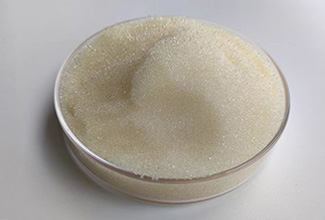
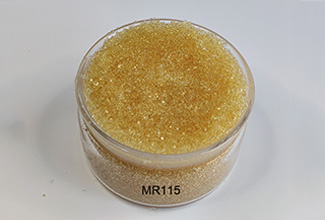
Ion exchange resins are a class of polymeric compounds featuring a three-dimensional network structure and containing active functional groups. Typically appearing as transparent or translucent granules, their primary function is to adsorb impurity ions present in water, thereby achieving water purification. The performance of these resins directly determines the purity and stability of the deionized water produced, making them the most critical component within any deionization system.
Main Types and Functions of Resins Used for Deionization
Resins utilized for deionization are primarily categorized into two types: Strong Acid Cation (SAC) resins and Strong Base Anion (SBA) resins. Strong Acid Cation resins employ sulfonic acid groups (-SO₃H) as their functional groups; possessing strong ionization capabilities, they can fully dissociate across the entire pH range (1–14) and are capable of exchanging with all cations present in water—regardless of whether those ions originate from strong acids or weak acid salts. Strong Base Anion resins, conversely, feature a highly cross-linked polymer backbone; their functional groups typically consist of strong basic groups—such as quaternary ammonium groups—enabling them to maintain stability across a broad range of acidic and alkaline environments and to exchange with various anions in water, including both strong acid radicals and weak acid radicals.
Key Performance Indicators for Resins
There are three key indicators used to evaluate the performance of ion exchange resins: exchange capacity, regeneration efficiency, and service life. *Exchange capacity* refers to the total quantity of ions a resin can adsorb; a higher capacity indicates a stronger processing capability, allowing the resin to treat a larger volume of water. *Regeneration efficiency* refers to the degree to which a resin's exchange capacity is restored—using a regenerating agent—after it has become saturated; higher efficiency translates to lower regeneration costs. *Service life* directly impacts the long-term operating costs of the system; high-quality resins can last for several years under conditions of normal usage and proper regeneration, whereas inferior resins are prone to issues such as fragmentation and contamination, necessitating frequent replacement.
The Critical Importance of High-Purity Resins for Water Production
High-purity resins are absolutely essential for the consistent and stable production of deionized water. If the resin quality is poor—characterized by low exchange capacity and poor regeneration efficiency—it will not only result in product water purity failing to meet required standards but will also lead to increased consumption of regenerating agents and higher equipment maintenance costs, potentially even compromising the overall stability of the entire production process.
Application Scenarios for Deionization Systems
Industrial Sector: Ensuring Core Production
The industrial sector constitutes one of the primary application areas for deionization systems. Boiler feedwater treatment represents a core application within this sector; in industries such as power generation and chemical manufacturing, utilizing deionized water as boiler feedwater effectively minimizes scale formation and corrosion, thereby preventing boiler malfunctions, extending equipment lifespan, and simultaneously reducing energy consumption. The semiconductor manufacturing industry imposes extremely stringent requirements on water quality; during the production of chips and integrated circuits, high-purity deionized water is essential for cleaning wafers and preparing photoresists. Since even trace amounts of ions can lead to product rejection, deionization systems serve as critical equipment on semiconductor production lines. In the chemical processing industry, deionized water is utilized for raw material preparation, as a reaction medium, and for product cleaning; this prevents ionic impurities from compromising chemical reaction efficiency and product purity, thereby ensuring that manufactured chemical products meet established quality standards.
Commercial Sector: Enhancing Service Quality
While purity requirements in the commercial sector are generally less rigorous than those in industrial or laboratory settings, the application of deionization systems remains widespread. In the automotive cleaning industry, using deionized water for car washing prevents calcium and magnesium ions present in tap water from forming mineral deposits (water spots) on vehicle surfaces, resulting in a cleaner, shinier finish with minimal post-wash watermarks. Similarly, in window cleaning applications, deionized water prevents water stains from forming on glass surfaces—a benefit particularly valuable for cleaning the windows of high-rise buildings—thereby significantly enhancing cleaning efficacy.
Laboratory and Medical Sectors: Ensuring Precision and Safety
Applications within the laboratory and medical sectors are equally indispensable. In laboratories, deionized water is utilized for chemical experiments, biological assays, instrument cleaning, and other purposes, serving as the fundamental basis for ensuring the accuracy and reliability of experimental results. In the medical sector, deionized water is employed in the preparation of water for injection and for the cleaning of sterilized instruments, thereby safeguarding medical safety and preventing impurities from causing harm to the human body.
Advantages and Limitations of Deionization Technology
Core Advantages of Deionization Technology
The widespread adoption of deionization technology across numerous fields is fundamentally driven by its distinct advantages. First and foremost is the high purity of the treated water; the technology is capable of deeply removing ionic impurities from water, thereby satisfying the exacting requirements of high-precision manufacturing and laboratory research—a feat that many other water purification methods struggle to achieve. Secondly, the technology offers controllable costs; for the majority of application scenarios, the operational costs associated with deionization systems remain relatively low. This is particularly true given that the ion-exchange resins utilized in the process can be regenerated and reused, significantly reducing consumable costs and making the technology well-suited for large-scale, long-term, and stable operational environments. Furthermore, deionization systems possess strong scalability; their scale can be flexibly adjusted to meet specific water processing volume requirements. They are adaptable to a wide range of applications—from compact units in small laboratories to large-scale industrial systems—demonstrating a high degree of practicality.
The Primary Limitations of Deionization Technology
However, deionization technology does have its limitations and should not be applied indiscriminately. Its core function is the removal of ions; it cannot directly eliminate other impurities in water, such as organic matter, bacteria, or particulate matter. If the raw water contains significant quantities of these impurities, it requires prior pretreatment (e.g., filtration or reverse osmosis); otherwise, the ion-exchange resins will become fouled, compromising both the efficiency of the deionization process and the service life of the resins. Secondly, ion-exchange resins require periodic regeneration. This regeneration process involves the use of chemical reagents—such as acids and bases—which not only adds operational steps but also necessitates the proper treatment of the resulting wastewater to prevent environmental pollution. Moreover, the performance of a deionization system is highly dependent on the quality of the resins used. The use of inferior resins not only compromises the purity of the treated water but also increases the frequency of regeneration and maintenance costs, potentially even destabilizing the entire production process.
How to Select the Appropriate Ion-Exchange Resins for Deionization
Core Principles for Resin Selection
Selecting the appropriate ion-exchange resins is crucial for ensuring the stable operation of a deionization system and for producing water of the required quality. Many users fall into the trap of focusing solely on price when making a selection; in reality, one must comprehensively consider multiple factors and align the choice with specific operational requirements.
Key Factors to Prioritize During Selection
First and foremost, one must consider the quality of the raw water—specifically, its Total Dissolved Solids (TDS) content and ionic composition. TDS levels vary significantly across different water sources; groundwater and industrial wastewater, for instance, typically have high TDS levels, necessitating the selection of resins with high exchange capacities and strong resistance to fouling. Additionally, if the raw water exhibits high alkalinity, priority should be given to weakly acidic cation-exchange resins; conversely, for low-alkalinity water, strongly acidic cation-exchange resins are the more suitable choice. Secondly, application requirements must be taken into account, as different industries have varying standards for water purity. Industries such as electronics and pharmaceuticals require water of extremely high purity, necessitating the use of strongly acidic cation resins paired with strongly basic anion resins—or even a combination with mixed-bed resins. In contrast, general industrial cleaning or commercial applications typically have lower purity requirements, allowing for the selection of more cost-effective resins. Finally, the system's flow rate and overall design configuration also play a significant role in determining the appropriate resin selection. For systems handling high flow rates, it is essential to select resins possessing high mechanical strength and rapid exchange kinetics to prevent resin fragmentation under the impact of high-velocity water flow. Furthermore, system parameters—such as regeneration methods and operating pressures—must be carefully matched to the specific performance characteristics of the chosen resin. The professional expertise of the supplier is also of paramount importance. A high-caliber supplier can provide customized resin selection solutions tailored to a user's specific requirements; moreover, they can offer ongoing guidance on resin regeneration and advice on equipment maintenance, thereby helping users minimize operating costs and avoid issues stemming from improper resin selection.
Sector-Specific Resin Selection Recommendations
The requirements of different industries vary significantly and cannot be addressed with a one-size-fits-all approach. For instance, in the treatment of high-salinity water, standard resins are susceptible to competitive inhibition by sodium ions; therefore, the selection of chelating resins or macroporous weak-acidic resins is required. Conversely, the pharmaceutical industry demands specialized resins that strictly adhere to industry standards and exhibit zero impurity leaching, thereby ensuring the safety and integrity of pharmaceutical products.
Conclusion
At the core of deionization technology lies the utilization of ion-exchange resins to remove dissolved ions from water, thereby providing high-purity water for a diverse range of industries. Ion-exchange resins serve as the critical components of such systems; their quality directly determines both the purity of the treated water and the overall operating costs of the system. The significance of this technology has become increasingly pronounced within the realms of modern industry and scientific research, where it serves as a vital safeguard for high-precision manufacturing processes and experimental operations. Consequently, enterprises and research laboratories must carefully select appropriate system configurations, resins, and professional suppliers to ensure the stable and efficient operation of their deionization systems.