Why Should Gold Be Recovered From Circuit Boards?
Printed circuit boards (PCBs) are the core components of almost all electronic equipment, and they are also secondary precious metal resources with extremely high gold content.Compared with native gold mines, the gold grade of abandoned circuit boards is usually dozens of times higher, and the economic value and resource value of developing “urban mines” are very prominent.
Relevant data from the United Nations "2024 Global Electronic Waste Monitoring Report" show that the gold content of a typical waste circuit board is about 90 grams per ton, and the gold content of the sorted high-grade circuit board can reach 400 grams per ton, and the server and aviation-grade high-reliability circuit boards can even reach 1.5 kilograms per ton.For comparison, the average mining grade of natural gold mines is only about 5 grams per ton, and the resource efficiency of extracting gold from circuit boards is much higher than that of traditional mining.
E-waste gold extraction is a systematic process that combines mechanical separation, chemical extraction and deep purification.Different technical routes have their own applicable scenarios. Among them, in the hydrometallurgical route, ion exchange resin is a mature solution enrichment method that can capture and concentrate dissolved gold from qualified leaching solutions to facilitate subsequent refining.
Where Is The Gold Distributed In The Circuit Board?
The gold on the circuit board is not evenly distributed, and most of it is concentrated in the functional contact parts.Common gold-containing locations include gold-plated connectors, contact pins, gold fingers on the edge of the board, and some pins and internal coatings of electronic components with high reliability requirements.Gold-plated is used in these parts to improve electrical conductivity, oxidation resistance and wear-resistant life. The thickness of the gold layer ranges from a few tenths of a micron to a few microns.
The gold content of different types of circuit boards varies greatly, which directly determines the economic value of recycling.The gold content of mixed ordinary waste board is usually in the range of 40 to 90 grams per ton. Most of these materials come from consumer electronics and ordinary home appliances, with low contact point density and thin coating.After sorting computer motherboards and communication boards, the gold content can be increased to 120~400 grams per ton.The integration of mobile phone motherboards is higher, and the gold content can reach more than 700 grams per ton, and some old models are even higher.
The economy of recycling depends not only on the grade of gold, but also on the copper content and overall composition of the raw materials.Copper is the metal with the highest content in circuit boards, usually accounting for 10% to 20%. It will compete with gold in the leaching process, which will also increase the difficulty of subsequent separation and purification.The proportion of plastics, ceramics, tin-lead, nickel and other components in raw materials will also affect the cost of pretreatment and the consumption of chemicals.Therefore, a stable and controllable feed composition is a prerequisite for the stable operation of the circuit board gold wire.
The Main Recovery Method Of Circuit Board Withdrawal
Mechanical Separation And Pretreatment Of Raw Materials
Before officially entering the chemical gold extraction step, mechanical pretreatment is an inseparable part of almost all processes.The core goal of this stage is to separate and enrich the gold-containing components from the complex electronic waste, reduce the amount of subsequent chemical treatment, and reduce drug consumption and impurity interference.
The conventional process is to disassemble manually or mechanically first, and dismantle large structural parts, gold-free plastic housings and large components.After that, the circuit board body is broken and crushed, and the material is processed to a suitable particle size to dissociate the metal and non-metallic matrix.In the future, the metal-rich components are separated from the non-metallic components such as resin and glass fiber by wind separation, magnetic separation, electrical separation or gravity separation.
The more adequate the pretreatment, the higher the efficiency of downstream gold withdrawal.If a large number of non-metallic impurities enter the chemical process, it will not only occupy the reaction space and consume agents, but may also cause blockage of the pipeline and increase the difficulty of solid-liquid separation.For mixed electronic waste with complex components, the sorting accuracy of the pretreatment link often directly determines the operating cost and final recovery rate of the entire line.
Fire Method Gold Extraction Process
Pyrometallurgy is one of the earliest and most industrialized circuit board gold extraction routes. At present, about 70% of the world's waste circuit boards are processed through pyrometallurgy routes.The basic principle is that through high-temperature smelting, the metal in the circuit board is melted to form an alloy, and the non-metallic components are separated and removed in the form of slag or flue gas.
The advantage of the fire process is that it has strong adaptability to raw materials, can handle mixed electronic waste with complex composition and different grades, and has a large processing capacity in a single production line, which is suitable for large-scale integrated smelting enterprises.With a mature pyroelectric production line and subsequent electrolytic refining, the comprehensive recovery rate of precious metals can reach more than 95%, and the gold recovery rate of some advanced top-blown smelting processes can exceed 98%.
But the limitations of the fire method are also obvious.The energy consumption of high-temperature smelting is very high, and the supporting waste gas treatment system is heavily invested, and the discharge of pollutants such as dioxin and heavy metal dust needs to be strictly controlled.In addition, the fire method produces polymetallic alloys. Gold needs to be enriched by copper electrolysis to the anode mud, and then refined in multiple steps to be purified. The overall process is long and there are many intermediate links. For materials with small processing capacity and low gold grade, the economy is insufficient.
Wet Gold Extraction Process
Wet gold extraction is the process route of dissolving the gold in the solid material into the solution through chemical reagents, and then separating and recovering the gold from the solution.Compared with the fire method, the equipment investment of the wet method is lower, and the operating temperature is close to room temperature, which is more suitable for small and medium-scale refined recovery scenarios.
Leaching is the core step of the wet process, and there are several common leaching systems.The chloride system is widely used. In an acidic chlorine-containing environment, the gold is oxidized to form a stable chloro-gold acid complex ion, with a fast leaching rate and high technical maturity.The thiosulfate system is a relatively environmentally friendly alkaline system with lower corrosion resistance and better selectivity for some impurities, but the leaching rate is too slow and the stability of the complex is not as good as that of the chlorinated system.In addition, there are other leaching systems such as thiourea and halogen, each with applicable scenarios.
The core control points of the wet process lie in the selectivity of leaching, impurity control and terminal wastewater treatment.Base metals such as copper, iron, and nickel in circuit boards will dissolve together with gold, which not only consumes the leaching agent, but also increases the difficulty of subsequent purification.Therefore, wet routes usually need to be matched with targeted separation and enrichment processes in order to obtain high-purity gold products economically.

The Role Of Ion Exchange Resin In Gold Extraction Of Circuit Boards
How Does The Ion Exchange Resin Recover Gold?
In the process of gold extraction of circuit boards, ion exchange resins assume the function of separating and enriching gold in solution.It does not “take” the gold directly from the solid circuit board, but adsorbs and captures the gold complex ions that have been dissolved in the liquid phase.
In the acid leaching system of chloride, after gold is oxidized, it will exist in the solution in the form of negatively charged tetrachloroalloy acid ions (AuCl⁻-).Anion exchange resin with a positively charged functional group can adsorb this gold complex ion into the resin through ion exchange, thereby realizing the transfer and enrichment of gold from the dilute solution to the resin phase.
After the resin is adsorbed, the original low content of gold is highly concentrated on the resin, and only a small amount of gold-carrying resin or eluent needs to be processed in the future to recover the gold.This enrichment effect can significantly reduce the processing cost of subsequent refining, while making the recovery of gold in low-concentration gold-containing solutions economical.
It should be clear that ion exchange resin is a method of separating and enriching media, not directly extracting elemental gold from solid circuit boards.It must be combined with the pre-leaching process before it can function after the solid-liquid separation to obtain a clarified gold-containing solution.
[Looking for high-efficiency resin for your e-waste recovery line? Contact COMCESS technical team today to get a customized gold concentration solution tailored to your specific process!]

Which Ion Exchange Resin Is Suitable For Gold Withdrawal?
The resin suitable for circuit board gold extraction needs to be selected in combination with the chemical environment of the leaching system. There is no universal “universal resin”.
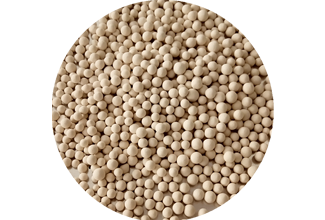
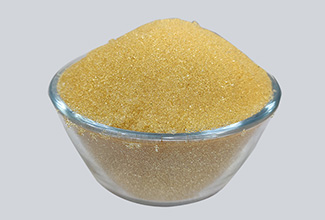
For the most common chloride leaching system, strongly alkaline anion exchange resin is the mainstream choice.This kind of resin has a quaternary ammonium⁻type positively charged functional group, which can maintain charge activity over a wide pH range, and has good adsorption capacity for AuCl-type anionic gold complexes.For some special gold-absorbing resins, the saturated adsorption capacity can reach 100~200 grams of gold per liter of resin, and the dynamic adsorption capacity of some models in the laboratory environment can reach 31.3mg/G.
Macroporous resins and special functionalized resins are also optional, depending on the composition of the solution, the types of impurity ions, and operating conditions.Resins with macroporous structures have better pollution resistance and are suitable for complex leaching solutions with high impurity content; resins with chelated functional groups are more selective for specific forms of gold complexes, and can better avoid the competitive adsorption of copper, iron and other ions.
When selecting the type, several core indicators need to be comprehensively evaluated: the saturation adsorption capacity of gold, the selectivity of gold relative to impurity metals, the ease of desorbing, the stability of the resin in the corresponding chemical environment, and the performance of regeneration and reuse.
In particular, it should be noted that the resins that perform well in the chlorination system cannot be directly applied to thiosulfate or other leaching systems.The complexation morphology and charge properties of gold under different leaching agents are completely different, and the corresponding resin selection logic will also change, which must be verified separately.
[Struggling to select the right resin for your unique leaching system? COMCESS provides premium, high-capacity anion exchange resins and expert testing to ensure maximum gold selectivity and recovery rates for your plant.]
The Complete Process Flow Of Resin Gold Extraction
The gold extraction of circuit boards with ion exchange resins is a multi-step coherent process, which can be roughly divided into the following stages.
The first is the pretreatment and composition characterization of electronic waste.The raw materials are disassembled, broken, and sorted to obtain metal-rich materials, and the content of gold, copper, and major impurities is detected at the same time to provide a basis for subsequent process parameter setting.
The second step is to choose the appropriate leaching process to dissolve the gold.According to the nature of the material and environmental protection requirements, determine the chlorination, thiosulfate or other leaching system, and complete the leaching of gold under the corresponding working conditions, so that the gold is transferred from the solid phase to the liquid phase.
The third step is solid-liquid separation and solution clarification.Through filtration, sedimentation, filtration, etc., the leaching slag and the gold-containing solution are separated, and the suspended solid particles in the solution are removed to avoid impurities clogging the resin bed and affecting the adsorption effect.
The fourth step is the resin adsorption process.The clarified gold-containing solution is passed through the resin column at a suitable flow rate, or in full contact with the resin in the stirring tank.Under the verified operating conditions, the gold complex ions in the solution are captured by the resin, and the gold concentration in the effluent is greatly reduced.
The fifth step is the desorbed and gold recovery of the gold-carrying resin.The adsorbed and saturated resin is separated from the system, and the gold is eluted from the resin through a special eluent to obtain a high concentration of gold-containing precious liquid; some processes will directly incinerate the gold-containing resin to recover gold from the ash.The precious liquid obtained by elution is then used to obtain crude gold by reduction, electrolysis, etc.
The final step is product refining and resin evaluation.The crude gold is further purified to achieve the target purity, and the desorbed resin is regenerated at the same time, the reuse performance and life loss are evaluated, and the waste liquid and waste residue generated in the process are treated simultaneously.
The specific process details will be adjusted with the leaching system, gold concentration, impurity level and product purity requirements. There is no unified standardized process, and it is usually necessary to make customized designs based on actual materials.
Key Factors Affecting The Adsorption Performance Of Gold
The effect of resin adsorption of gold is not a fixed value, and will be affected by many conditions.
The concentration and existence form of gold are the basic prerequisites.The higher the concentration of gold in the solution, the faster the adsorption rate of the resin and the higher the working capacity; however, if the chemical morphology of the gold changes, such as pH fluctuations that cause the complex to dissociate, the adsorption effect will directly decrease.
The chemical environmental impact of the solution is significant.Taking the chlorination system as an example, the concentration of chloride ions and the pH value of the solution will change the stability of the gold complex, and it will also affect the charged state of the resin functional group, thereby changing the adsorption capacity and selectivity.The content of oxidizing and reducing agents in the solution will also interfere with the valence state of gold, causing fluctuations in adsorption efficiency.
Competing metal ions are the most common source of interference in industrial sites.The circuit board leaching solution usually contains a lot of copper, iron, nickel, tin, lead and other metals. These ions will also form corresponding complexes to compete with gold for adsorption sites on the resin.The higher the impurity content, the worse the actual adsorption capacity and selectivity of the resin to gold. This is also one of the main reasons for the gap between laboratory data and industrial sites.
The nature of the resin itself and the operating conditions are equally critical.The skeleton structure, functional group type, and pore size of the resin determine the basic properties; the contact time, operating temperature, solution flow rate, and resin filling method will determine the adsorption efficiency in actual operation.The subsequent desorbent efficiency, the performance attenuation after resin regeneration, and the service life will also affect the comprehensive cost and long-term stability of the entire process.
Research Status Of Resin Gold Withdrawal
There have been many public laboratory studies that have verified the feasibility of recovering gold from the leaching solution of waste circuit boards with strongly alkaline anion exchange resins.
A study on the chlorinated leaching system showed that under optimized hydrochloric acid-sodium hypochlorite leaching conditions, 95% of the gold in the circuit board can be dissolved into the solution.In the follow-up, two different types of commercial strong alkaline anion exchange resins were used for continuous adsorption and purification. The purity of the gold-containing solution obtained was 94% and 92%, respectively. Based on the original circuit board material, the total recovery rate of gold is not less than 70%.
Another study used a similar process route to purify the polymetallic leaching solution through a strong anion exchange resin, and eluting with thiourea, the purity of gold can be increased from 8% in the leaching solution to 86%. The subsequent reduction and precipitation by sodium borohydride, the curing recovery rate of gold is close to 100%.
It should be clear that these data are all from the laboratory test environment, using pretreated materials or formulated simulation solutions, and the actual performance of industrial production will be different.The composition of raw materials in industrial sites fluctuates greatly, there are many types of impurities, and the composition of the leaching solution is unstable. The actual recovery rate and product purity are usually lower than the optimal laboratory values.
Therefore, before commercial selection, it is an essential link to carry out pilot verification using real representative raw materials and actual production leaching solutions.Only by verifying the adsorption capacity, selectivity, desorbent performance and regeneration life of the resin under conditions close to real production can it be determined whether the resin is suitable for a specific production line.
Comparison Of Ion Exchange Resins With Other Gold Extraction Technologies
Ion exchange resin is a unit operation in the whole process of gold extraction, and it is not a simple alternative relationship with other technologies. Each has different positioning and application scenarios.
|
Comparison Dimension |
Ion Exchange Resin |
Other Gold Extraction Technologies |
|
Core Function |
Capture and concentrate dissolved gold complex ions |
Can achieve different functions such as metal dissolution, separation, precipitation, adsorption, and refining |
|
Feed Requirements |
Requires qualified gold-bearing solution |
Depends on the specific technology; can process solids, slurries, or solutions |
|
Selectivity |
Depends on resin chemical properties and competing ions |
Depends on the respective separation mechanism |
|
Process Integration Position |
Typically used after leaching and solid-liquid separation |
Can be applied at different stages of the process flow |
|
Core Evaluation Metrics |
Adsorption capacity, selectivity, desorption performance, regeneration performance |
Recovery efficiency, energy consumption, reagent consumption, cost of "three wastes" treatment |
In the actual circuit board gold extraction production line, ion exchange resins are usually used in combination with leaching, solid-liquid separation, refining and other processes, and will not form a complete gold extraction route alone.It can replace enrichment units such as activated carbon adsorption and solvent extraction, or it can be combined with processes such as precipitation and electrolysis. It should be evaluated in combination with the material properties, scale and purity requirements of the entire production line.
How To Choose Ion Exchange Resin For Gold Extraction
To choose the appropriate ion exchange resin, it needs to be verified step by step in combination with specific process scenarios, and it cannot be directly selected based on the nominal parameters of the product.
The first step is to clarify the properties of the gold-containing raw materials and the determined leaching chemical system.The gold complex morphology corresponding to different leaching agents is completely different, and the resin selection direction is also different.It makes sense to set the leaching system first, and then talk about the resin selection.
The second step is to do an adsorption performance test, focusing on the gold adsorption capacity and selectivity in the presence of actual impurities.The composition of the circuit board leaching solution is complex, and the concentration of base metals such as copper and iron is much higher than that of gold. It must be tested in a real solution where multiple metals coexist to reflect the actual performance of the resin.
The third step is to evaluate the desorbed and regenerative properties.Adsorption is only the first step. Whether the gold can be efficiently eluted from the resin, whether the resin can be regenerated and reused after elution, and how many times the performance will be significantly attenuated after reuse, these directly determine the operating cost.At the same time, the corrosion resistance, mechanical strength and service life of the resin in the corresponding chemical environment must be investigated.
The fourth step is to make an economic calculation of the whole process.The solution treatment capacity, resin filling capacity and replenishment loss, gold adsorption loss, wastewater treatment cost, etc. should be taken into account, and the adsorption rate of a single batch should not only be looked at.
The standardized selection process should be to conduct a small laboratory trial screening first, narrow down the range of candidate resins, and then use real materials and actual process conditions for pilot verification, confirm that it is stable and feasible, and then land on the industrial production line.
COMCESS has accumulated resin application technology in the field of industrial gold-containing solution treatment, and can provide targeted resin selection technical support based on the leaching system composition and solution analysis data provided by customers.It should be noted that before the performance verification is completed in the target process system, it will not be determined in advance that a particular product is fully applicable.
FAQs
Can Gold Be Recovered From The Circuit Board With Only Ion Exchange Resin?
Can't do it directly.The object of the resin is the gold ions dissolved in the liquid, and it cannot directly handle the solid circuit board.The gold in the circuit board must first be dissolved into the solution through the leaching process, and then through the solid-liquid separation, the resin can enrich the gold in this process.
What Type Of Ion Exchange Resin Is Commonly Used For Gold Extraction?
For the chloride leaching system, a strong alkaline anion exchange resin is the most important choice.If it is another leaching system, such as a thiosulfate system, the resin corresponding to the chemical properties needs to be selected according to the complex form of the gold, and it cannot be directly used.
Can The Ion Exchange Resin Directly Extract Gold From The Solid Circuit Board?
Basically can't.The object of action of the resin is the ions in the liquid phase, which cannot directly react with the gold-plated layer on the solid circuit board.Its positioning is a solution purification and enrichment unit, not a front-end extraction unit.
Is The Ion Exchange Resin Suitable For Thiosulfate Immersion Gold System?
There is a possibility of application, but the actual performance depends on the complexation form of the gold in the system, the functional group properties of the resin, the competing ions in the solution and the specific operating conditions.The experience of the chlorination system cannot be directly copied, and must be verified by experiments.
What Determines The Efficiency Of The Resin Method To Withdraw Gold?
The final recovery efficiency is the result of the joint action of multiple links.The presence of gold, the overall composition of the solution, the selectivity and capacity of the resin, the adsorption operating conditions, and the subsequent desorbed and refining processes will all affect the overall gold recovery rate and product purity.
Can The Ion Exchange Resin After The Gold Is Recovered Be Reused?
Part of the resin can be reused after regeneration treatment.There is no fixed value for the effective number of cycles, which depends on the nature of the resin itself, the rationality of the regeneration process, and the degree of pollution and oxidation during use.Resins with serious pollution or excessive performance attenuation need to be replaced.