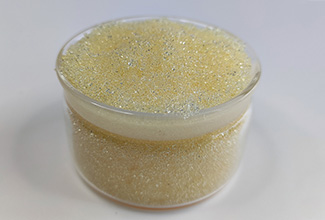
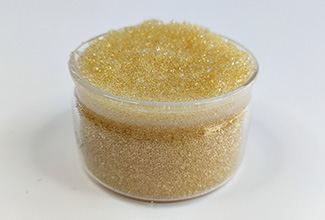
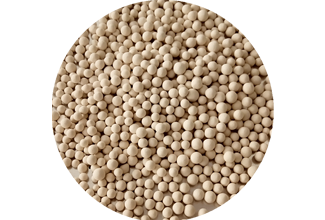
In the core processes of wet cleaning, lithography, etching, and doping of semiconductor wafer manufacturing, ultrapure water will directly contact the surface of the wafer.As the process nodes continue to shrink, in processes below 7nm, ionic impurities of the order of one billionth (ppt) may form defects in the gate oxide layer and channel region, resulting in reduced device yield and reduced reliability.Ion exchange resin is the core material for controlling trace ion pollution in water, and it is also an irreplaceable treatment unit in the preparation process of ultrapure water.
Many people will have questions: It is also an ion exchange resin. Why are the requirements for semiconductor ultrapure water much higher than ordinary industrial pure water?What are the problems solved by the mixed bed resin and the polishing resin in the process?Why are some ordinary resins that are nominally "ion-removing"unable to be used in semiconductor ultrapure water systems at all?These issues need to be understood from the working positioning, purity requirements and actual operating logic of the resin.
The Role Of Ion Exchange Resin In Semiconductor Ultrapure Water
The preparation of semiconductor ultrapure water (UPW) usually follows the multi-stage treatment logic of “pretreatment→ reverse osmosis (RO) → desalination unit → mixed bed /polishing unit → UPW circulation circuit”. Ion exchange resin assumes the core role of deep desalination and terminal refining, which is fundamentally different from the function of RO.
RO is the principle of physical screening. It relies on the pore size of the semi-permeable membrane to trap dissolved salts, and the removal rate of most salts can reach more than 99%.However, the conductivity of the secondary RO effluent is usually still 1-5µS/cm, corresponding to the concentration of residual ions in the order of ppm to ppb, and the removal efficiency of weakly dissociated substances such as silicate and boron is limited, and it completely fails to meet the resistivity requirements of semiconductor ultrapure water.
After RO, the residual ions must be further removed. The core reason is that semiconductor ultrapure water requires a resistivity close to the theoretical limit of 18.2MW・cm at 25℃, which means that there can be almost no free conductive ions in the water. This accuracy can only be achieved by ion exchange reaction.
The more you reach the end of the process, the higher the requirements for the purity of the resin itself.In the final polishing stage, the water inlet is already close to 18MW・cm of high-purity water, and the ionic strength is extremely low. At this time, the dissolution of the resin itself will become the main source of pollution.If the purity of the resin is not enough, not only will it not be able to further purify the water quality, but it will release ions, organic matter and metal impurities, making the water quality of the effluent worse than that of the water.
Mixed Bed Ion Exchange Resin For Semiconductor Ultrapure Water
The Working Principle Of Mixed Bed Resin
The mixed bed resin is composed of a strong acidic cation exchange resin and a strong alkaline anion exchange resin evenly mixed in proportion.The strongly acidic cationic resin has a sulfonic acid functional group (-SOHH), with HOH as the exchangeable ion; the strongly alkaline anionic resin has a quaternary ammonium functional group (-N (CHCH)OHOH), with OH⁻as the exchangeable ion.
When water flows through a evenly mixed resin bed, the cations in the water will exchange with the H⁻ on the cationic resin, and the anions will exchange with the OH-on the anionic resin.The H⁺ and OH-released by the exchange will immediately combine into water molecules, and the ion concentration difference will not be formed locally, and the exchange reaction will not be hindered from continuing.
This evenly mixed structure is equivalent to countless stages of Yang and yin beds connected in series, which can make the ion exchange reaction very thorough, and finally produce high-purity water with a resistivity close to the theoretical limit.The water resistivity of ordinary single-stage compound beds can usually only reach 1-10MW-cm, while mixed beds can stably reach more than 18.1MW・cm.
The Reason Why The Mixed Bed Resin Is Suitable For The Preparation Of High-Purity Water
The mixed bed is particularly suitable for the deep desalination of high-purity and ultrapure water. The core advantage is not that it can “remove ions”, but that it can reduce ion residues to a very low level, and the water quality of the effluent is stable.
The first is the low level of ion leakage.Because the exchange reaction of ordinary double beds will reach equilibrium, there will always be a small amount of ions flowing out before the exchange is too late, and the amount of ion leakage is usually in the order of tens of ppb.The yin-yang resin of the mixed bed is in full contact, and the exchanged ions will be immediately reabsorbed by the opposite resin. The leakage of a single cation in the semiconductor-grade mixed bed can be reduced to less than 1ppb, which can stably produce water with high resistivity.
The second is the high desalination efficiency.The conductivity of the secondary RO effluent is usually 1-5µS/cm. After the primary semiconductor・grade mixed bed treatment, it can be directly increased to more than 18MW-cm. There is no need for multi-stage series, the system structure is simpler, and the operating cost is lower.
In addition, the mixed bed has a better effect on the removal of weakly dissociated ions.Weakly ionized substances such as silicate and carbonate have limited removal efficiency due to pH changes in the compound bed; however, in the neutral environment of the mixed bed, the neutralization effects of H⁻ and OH-will continue to promote the movement of the dissociation balance, and finally achieve deep removal.
.png)
Polishing Resin For Semiconductor Ultrapure Water
What Is Polishing Resin?
Polishing resin is a refined grade resin prepared from ultrapure water, and its positioning is fundamentally different from ordinary desalination resin.The core of the design of ordinary desalinated resins (including ordinary mixed beds) is the exchange capacity. The goal is to deal with higher concentrations of ion loads and treat as much water as possible with a small amount of resin.
The core of the design of the polishing resin is extremely low self-dissolution.Its water inlet is already high-purity water of about 18MW-cm, and the ion concentration is already very low. Its task is to remove the remaining ppt-level trace ions, while ensuring that it will not release new impurities.
Semiconductor-grade polishing resins are usually completely transformed into H-type and OH-type when they leave the factory. After multiple ultrapure water leaching and solvent purification processes, the remaining impurity ions, non-polymerized monomers, and oligomers are all minimized.Many high-end polishing resins belong to the disposable type and are no longer produced, just to avoid the introduction of new pollution in the acid-base regeneration process.
The Importance Of Polishing Resin Purity In Semiconductor Manufacturing
In semiconductor ultrapure water systems, resins must not only remove pollutants, but also not become a new source of pollution. This is the core difference between polished resins and ordinary resins.Resin with insufficient purity is used at the end, which is more harmful than effective.
Trace ion pollution is the most direct impact.Alkali metal ions such as sodium and potassium will migrate to the inside of the gate oxide layer in the high-temperature process, causing the threshold voltage of the MOS device to drift and the chip reliability to decrease.According to the SEMI F63 standard, processes below 7nm require a single metal ion concentration of less than 0.5ppt, and the ion leakage of ordinary resins is usually on the order of ppb, which simply does not meet this requirement.
Ion leakage is an easily overlooked problem.In ultrapure water with low ionic strength, the poorly bound ions on the resin will desorb, that is, reverse dissolution.The ion release of ordinary resin in a high-purity water environment will even exceed its adsorption capacity, and the more it is treated, the worse the water quality.
Extractable matter and organic pollution (TOC) are equally critical.The remaining monomers, oligomers, and processing aids on the resin skeleton will slowly dissolve into the water, forming TOC pollution.In the advanced process, 1-2ppb of TOC will form carbon residues on the surface of the wafer, affecting the adhesion of the photoresist and the graphics accuracy, resulting in yield loss.The 2-hour leaching ΔTOC of high-end semiconductor polishing resins can be less than 1ppb, while ordinary industrial resins are usually in the order of tens of ppb.
Metal pollution comes from the raw materials and production processes of the resin itself.Styrene monomers, iron, copper, nickel and other heavy metals brought in by production equipment will be combined on the resin skeleton and released slowly during operation.These metal ions will cause the leakage current of the device to increase and the breakdown voltage of the gate oxide layer to decrease, which is an invisible factor affecting the life of the chip.
Application Scenarios Of Polishing Resin
Polishing resin is mainly used in three key locations of ultrapure water systems, which assume different roles in water quality assurance.
The first is the final polishing unit, which is set after the main mixing bed and is the last ion check before the ultrapure water is released.It can increase the water outlet resistivity from 18MW・cm to a stable 18.2 MW・cm, and at the same time control silica, TOC, and trace metals to the order of ppt to meet the standard requirements of SEMI F63.
The second is the UPW loop.Ultrapure water will come into contact with the pipe wall in the pipeline, dissolving trace amounts of ions and organic matter, and the water quality will decrease after long-distance transportation.A polishing resin tank is set up on the circulation circuit to continuously remove trace impurities from the pipeline and maintain the stability of the water quality of the entire pipeline network.
The third is to use point (POU) polishing.Installing a small polishing unit at the inlet of key machines such as ion implantation, EUV lithography, and wet cleaning can eliminate secondary pollution caused by branch pipes and valves, ensure that the water in contact with the wafer fully meets the process requirements, and avoid the front-end qualified water reaching the machine instead of exceeding the standard.
Mixed Bed Resin Vs Polished Resin: What Is The Core Difference?
Many people will wonder which is better for mixed bed and polished resin. In fact, there is no distinction between the advantages and disadvantages of the two. Instead, they assume completely different purification roles in the water treatment process, with completely different design goals and performance focus.
|
Comparison Dimension |
Mixed Bed Resin |
Polishing Resin |
|
Core Function |
Deep demineralization |
Final-stage trace ion polishing |
|
Primary Treatment Target |
Residual ions (ppb-level concentration) |
Extremely low-concentration ionic contamination (ppt-level) |
|
Priority of Exchange Capacity |
Important; determines operating cycle and cost |
Secondary; subordinate to purity requirements |
|
Ion Leakage Level |
Very low (single-ion ppb level) |
Extremely low (single-ion ppt level) |
|
Resin Purity Requirement |
High |
Extremely high |
|
Typical Application Scenarios |
Demineralized water / high-purity water production stage |
Final polishing, recirculation loops, points of use |
The mixed bed is responsible for carrying the top and bottom, undertaking the ion load of the RO effluent, and upgrading the water from “desalinated water”to the level of "high-purity water". It is the main treatment unit of the ultrapure water system.The polishing resin is responsible for the last kilometer, and refined trace control is done on the basis of high-purity water to meet the most stringent advanced process requirements.
If the polishing resin is placed in the front desalination position, it will soon be exhausted by high-concentration ions, and the operating cost will increase significantly; if the ordinary mixed bed is placed in the end polishing position, ion leakage and dissolution will exceed the standard, and the water quality requirements of the semiconductor process will not be met at all.The two are a relationship of upstream and downstream cooperation, not a substitute relationship.
What Pollutants Do Semiconductor-Grade Resins Need To Control?
The water quality requirements of semiconductor ultrapure water are multi-dimensional, and the corresponding resin also needs to control multiple types of pollutants at the same time, not just common salt isolates.
The first category is conventional anionic ions.Sodium (NaNa), calcium (Ca2Ca), and magnesium (Mg2Mg) are the most common cations, and chlorine (Cl⁻) and sulfate (SO22⁻) are the most common anions. They are the main factors affecting the resistivity and the most basic removal objects of resins.In addition, weakly dissociated ions such as silicate and borate are also very critical. They are not easy to be completely removed by RO, and silica precipitation or boron doped deviations will form in the subsequent process, which requires deep resin treatment.
The second category is trace metals.Heavy metals such as iron, copper, zinc, nickel, and lead, plus alkali metals such as sodium and potassium, are the core risk pollutants in the semiconductor process.According to the SEMI F63 standard, the advanced process requires a single metal ion concentration of less than 0.5ppt, even if a very small amount is deposited on the surface of the wafer, it will cause device performance failure.
The third category is organic pollution (TOC).The RO and activated carbon at the front end of the ultrapure water system have removed most of the raw water organic matter, and at the end, the resin's own dissolution is the main source of TOC.Organic pollutants will adsorb on the surface of the wafer, forming a carbon film that is difficult to clean, resulting in defects in lithographic graphics and poor film adhesion.
One point needs to be emphasized here: the selection of semiconductor-grade resins must consider not only the ability of the resin to remove pollutants, but also the level of pollutants released by the resin itself.Many ordinary industrial resins have a high exchange capacity, but their ion leakage, TOC dissolution, and metal impurities all exceed the standard. When used at the end of semiconductor ultrapure water, they will become a new source of pollution.
Core Selection Criteria For Semiconductor-Grade Ion Exchange Resins
The selection of semiconductor-grade resins cannot only depend on the exchange capacity. There are several more critical indicators that directly determine whether the process requirements can be met.
Ion Leakage
Many people choose to give priority to the exchange capacity, and feel that the higher the capacity, the more cost-effective, but for semiconductor applications, ion leakage is the core indicator that determines the upper limit of effluent water quality.
The exchange capacity represents the total amount of ions that the resin can exchange, and reflects the ability to handle high-concentration water.However, in ultra-pure water with low ionic strength, the ions that are not tightly bound to the resin will desorb, which is ion leakage. At this time, the amount of leakage is the bottom line of the ion concentration in the effluent.
The sodium leakage of ordinary industrial resins is usually in the range of a few ppb to tens of ppb, while the ion leakage of semiconductor-grade resins can be controlled in single digits ppt or even lower.Especially in the end polishing unit, there are very few water ions in the water, and the leakage of resin directly determines the limit of the final water quality.
Toc And Organic Dissolution
Semiconductor ultrapure water is particularly sensitive to TOC from resin sources, because the front-end process has reduced the organic matter of raw water to a very low level, and the dissolution of the terminal resin is the main source of TOC.
In advanced processes, 1-2ppb of TOC may cause defects in the photoresist pattern, so semiconductor-grade resins will use high-purity polymeric monomers. After multiple solvent extraction and ultra-pure water leaching, the soluble oligomers and residual monomers are minimized.The TOC dissolution of ordinary mixed bed resins is usually tens of ppb, while high-end semiconductor polishing resins can achieve ΔTOC less than 1ppb.
Metal Pollution
The trace metals in the resin mainly come from two channels: one is the impurities of raw materials such as styrene and divinylbenzene, and the other is the metal ions brought in by reactors, pipelines and other equipment during the production process.These metals will bind to the resin skeleton, release slowly during operation, and are difficult to completely remove through regeneration.
Semiconductor-grade resins will use high-purity raw materials. The production process uses non-metallic contact technology as much as possible. The finished product must be deeply pickled and purified to reduce the metal impurities of the resin itself below the ppb level, and ensure that the metal dissolved during operation is on the ppt level.
Switching Capacity And Operating Performance
The indicators of exchange capacity, regeneration performance, resin stability, and service life are still important. After all, factories have to consider operating costs and maintenance cycles.However, these indicators must be discussed under the premise that the water quality is up to standard, and the purity requirements of the resin cannot be reduced in order to pursue high capacity.
For example, if it is also a mixed bed, the exchange capacity of the semiconductor grade may be slightly lower than that of the industrial grade, but the ion leakage is several orders of magnitude lower, and the water quality of the effluent is much more stable.When selecting the type, the treatment capacity and water quality requirements should be balanced, and the operating cost and service life should be considered under the premise of meeting the water quality standards.
Particle Size And Hydraulic Properties
The particle size distribution of the resin will affect the water flow state and pressure drop of the bed.The particle size deviation of the homogeneous resin is small, the bed filling is more uniform, the water flow distribution is consistent, there will be no partial flow, the exchange efficiency is higher, and the pressure drop is lower.
For renewable mixed-bed resins, the particle size and density difference between yin and yang resins should be appropriate. When backwashing, they can be thoroughly layered and regenerated separately, otherwise cross-contamination will lead to increased ion leakage in subsequent operations.Most semiconductor-grade resins use a homogenization process, and the particle size deviation is usually controlled within ±10%, and the hydraulic performance is more stable.
How To Choose The Right Resin For Semiconductor Ultrapure Water System
There is no need to stare at a single product parameter for selection. You can match step by step along the logic of "inlet water quality → treatment stage → target water quality → resin type → operating conditions".
First look at the water quality and treatment stage of the water inlet.If the water inlet is secondary RO-produced water with a conductivity of 1-5µS/cm, it belongs to the deep desalination stage. The goal is to produce 15-18MW・cm of high-purity water for mature processes or back-end packaging. It is sufficient to choose semiconductor-grade mixed bed resin.
If the goal is to meet the SEMI F63 standard of advanced processes below 7nm, which requires a stable resistivity of 18.2MW・cm, metal ions below 0.5ppt, and TOC below 1ppb, then it is necessary to add a polishing resin unit after the mixed bed, and use a high-purity polishing resin for final refining.
If it is a circulating circuit or a point-of-use scenario, the water inlet is already ultrapure water above 18MW-cm, but to maintain the water quality and eliminate secondary pollution of the pipeline, choose a polishing resin with low leakage and low dissolution, which does not require too high exchange capacity.
Special attention should be paid here, and the product cannot be selected only based on the exchange capacity of the resin.The ion concentration in the front section is high, and a resin with a large capacity is required to reduce the regeneration frequency; the ion concentration at the end is extremely low, and no matter how high the capacity is, it will not be able to be used. On the contrary, if the purity is not enough, it will pollute the water quality.The actual selection must be combined with the water quality of the inlet and the final water quality requirements to match the resin at the corresponding stage.
Professional semiconductor water treatment suppliers will give corresponding resin selection plans based on the specific working conditions of the factory, such as raw water quality, water production, process nodes, and operation methods, and can also provide system debugging and water quality verification services.For example, manufacturers such as COMCESS, which focus on the field of semiconductor ultrapure water, have different grades of mixed bed and polishing resin products, covering the whole process requirements from mature processes to advanced processes, and can also cooperate with on-site testing and process optimization.
Quality And Testing Requirements Of Semiconductor-Grade Ion Exchange Resins
When purchasing semiconductor-grade resins, you can't just look at the word "semiconductor-grade"in the product name, but pay attention to specific quality data and test and verification methods.
First look at the complete technical specification sheet.In addition to the basic indicators of exchange capacity, moisture content, and particle size distribution, the focus is on the purity-related parameters such as ion leakage rate, TOC dissolution, and metal impurity content.Also pay attention to the test conditions, such as the leaching time and the water quality of the water inlet. The data under different test conditions are not comparable.
Secondly, we must pay attention to batch consistency.The resin is mass-produced. If the purity of different batches fluctuates greatly, it will cause the water quality of the system to be unstable, and even the batch quality will exceed the standard.Reliable suppliers will have strict factory quality control, each batch has a corresponding test report, and the deviation of key indicators is controlled within a small range.
Sample testing and on-site verification are also important.Factory inspection is the result of ideal laboratory conditions, and the actual operating conditions are more complicated.If there are conditions, you can take a resin sample and use the actual water inlet for a small test, run continuously for a period of time, and measure the resistivity, ion concentration, and TOC of the water outlet to see if it can stably meet the requirements.The results of the actual test are of more reference value than any product manual.
Summary in one sentence: The quality of semiconductor-grade resins must be judged by actual quality data and application tests, not by the word "grade"in the product name.
Conclusion
Regarding the ion exchange resin for semiconductor ultrapure water, it can be concentrated into three core components.:
The core value of mixed bed resin is deep desalination, undertaking RO effluent, significantly reducing the residual ion load in the water, and raising the water to the level of high-purity water. It is the main treatment unit of the ultrapure water system.
The core value of polishing resin is terminal refining, stricter control of ppt-grade trace ions, while inhibiting self-dissolution, to ensure that the water quality of the final ultrapure water meets the most stringent process requirements.
The selection of semiconductor-grade resins should not only focus on the index of exchange capacity, but also pay attention to the purity-related parameters such as ion leakage, TOC dissolution, and metal pollution, as well as the batch consistency and practical application performance of the product.