What Is Clarifier Overflow in Lithium Processing?
Source of Clarifier Overflow
In lithium hydrometallurgy, salt lake lithium extraction and lithium residue leaching processes, raw materials are sent to a clarifier for solid-liquid separation after leaching and neutralization reactions. Solid suspended particles settle to the bottom to form sludge, while the upper clear liquid continuously overflows. This stream is defined as clarifier overflow.
Clarifier overflow is an intermediate dilute process stream rather than high-concentration lithium feedstock. It contains dissolved lithium salts, impurity ions including magnesium, calcium, sodium and potassium, plus a small amount of fine suspended solids.
Water Quality Characteristics of Overflow
Clarifier overflow generally has low lithium concentration and belongs to dilute lithium aqueous solution. It contains a wide variety of impurity ions, among which magnesium and calcium hardness ions account for a relatively high proportion, and trace colloidal suspended matter exists in some working conditions.
Direct discharge leads to loss of lithium resources and salt pollution to water bodies. If recycled back to the front-end process, continuous accumulation of impurities will cause scaling and increase the operational load of the main production line.
Why Is Lithium Recovery from Clarifier Overflow Important?
Improve Overall Lithium Resource Recovery Rate
Traditional lithium extraction processes mainly recover lithium from high-concentration main feed streams, ignoring lithium contained in clarifier overflow. Ion exchange resins can capture lithium that would otherwise be lost with wastewater, raising the total lithium recovery of the whole production line and boosting lithium salt output.
Reduce Production and Resource Costs
The mining cost of lithium ore and salt lake brine remains high. Recovering lithium from overflow realizes lithium production growth without substantial addition of raw ore, thus cutting the unit production cost of lithium salts.
Meet Environmental Discharge Standards
Clarifier overflow contains soluble lithium salts and abundant dissolved salts. Direct discharge causes salt contamination of receiving water. Lithium recovery reduces total salinity of wastewater, relieves the burden of downstream wastewater treatment, helps enterprises comply with industrial discharge regulations and lowers the risk of environmental penalties.
Mitigate Impurity Accumulation in the Process
Full recirculation of overflow to front-end leaching results in continuous enrichment of magnesium, calcium and other impurities inside the system, triggering equipment scaling, pipeline blockage and deterioration of lithium salt product purity. Separate lithium recovery from overflow removes most impurity ions and reduces adverse effects caused by cyclic impurity accumulation.
How Ion Exchange Resins Recover Lithium
Mechanism of Ion Exchange
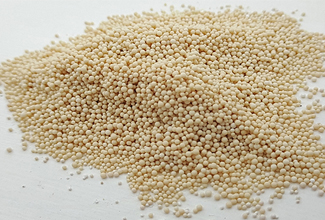
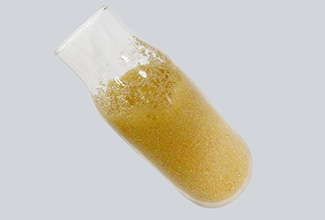
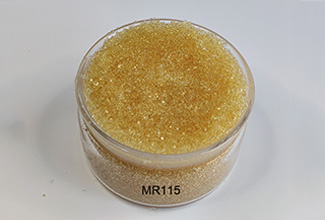
Ion exchange resins are porous organic macromolecular materials with functional groups. Exchangeable ions are bound to resin functional groups. When clarifier overflow flows through the resin bed, lithium ions in the solution undergo displacement reaction with exchangeable ions on the resin. Lithium ions are adsorbed and fixed on the resin skeleton, while most impurity ions flow out with the effluent.
Selectivity Mechanism of Lithium-Selective Resins
Conventional anion and cation exchange resins show poor selectivity toward lithium ions and adsorb various cations non-preferentially. Lithium-selective chelating ion exchange resins adopt special organic chelating functional groups to preferentially recognize and capture lithium ions. In multi-cation mixed solution, Li⁺ is adsorbed selectively while most impurity ions such as magnesium and calcium are hardly retained by resins, realizing primary separation of lithium from impurities.
Note: Inorganic lithium ion sieves (titanium/manganese-based adsorbents) are another popular lithium adsorption material, but they do not fall into the category of ion exchange resins. This article focuses on ion exchange resin technology.
Lithium-Selective Resins for Clarifier Overflow
Types of Lithium-Selective Adsorption Resins
Lithium-selective chelating ion exchange resins are the mainstream product for lithium recovery from dilute solutions. They feature strong adaptability to low-lithium clarifier overflow and maintain favorable lithium adsorption capacity under high Mg/Li ratio conditions. Ordinary cation exchange resins are not suitable for lithium recovery from overflow because they adsorb magnesium, calcium and sodium indiscriminately and cannot selectively capture lithium ions.
Performance Requirements of Resins for Clarifier Overflow
High lithium selectivity: preferential adsorption of lithium ions in the coexistence of massive magnesium, calcium, sodium and potassium ions;
Fouling resistance: tolerate trace colloids and suspended particles in overflow and resist rapid pore clogging;
Stable cyclic performance: slow attenuation of adsorption capacity after repeated adsorption-elution cycles;
Good mechanical strength: low particle breakage rate to reduce bed pressure drop and resin consumption.
Limitations for Resin Selection
Excessive suspended solids in clarifier overflow will cover active sites on resin surfaces. Even high-selectivity lithium chelating resins suffer sharp decline of adsorption efficiency, so pretreatment units are mandatory.
Key Ions Affecting Lithium Recovery: Li⁺, Mg²⁺, Ca²⁺, Na⁺ and K⁺
Magnesium Ion (Mg²⁺)
Magnesium is the primary interfering ion in clarifier overflow. The hydrated radius of Mg²⁺ is larger than that of Li⁺ with higher charge. Under high Mg/Li ratio, magnesium competes for resin adsorption sites, reduces lithium adsorption capacity, lowers the purity of final eluate and increases the burden of subsequent lithium refining.
Calcium Ion (Ca²⁺)
Calcium ions tend to form calcium carbonate and calcium sulfate scale inside resin beds and pipelines, blocking resin micropores and raising bed pressure drop. Calcium ions also compete for adsorption sites and reduce lithium loading capacity.
Sodium Ion (Na⁺) and Potassium Ion (K⁺)
Sodium and potassium normally exist at high concentrations. A large amount of alkali metal ions creates homionic competition, occupying resin exchange sites and decreasing lithium adsorption quantity. Sodium and potassium entering eluate increase the purification load of lithium salts.
Lithium Ion (Li⁺)
Lithium concentration in overflow directly determines resin treatment scale. Lower lithium concentration requires larger resin volume and higher treatment flow rate, pushing up the unit cost of lithium recovery.
Pretreatment Requirements Before Resin Adsorption
Removal of Suspended Solids
Although clarifier overflow has undergone clarification, fine suspended solids and colloids remain. Precision filters shall be installed before the resin column to remove suspended solids and prevent particles from adhering to resin surfaces, clogging resin pores, causing resin fouling and increasing bed pressure drop.
pH Adjustment of Feed Water
Lithium-selective chelating resins operate within an optimal pH range. Excessively high pH triggers precipitation of metal hydroxides, while excessively low pH suppresses lithium adsorption. The pH of clarifier overflow must be stabilized within the recommended range of the target resin.
Optional Pre-Hardness Removal (Requires Evaluation)
When overflow contains extremely high magnesium and calcium, a pre-softening unit may be considered. However, conventional sodium-form softening resins release sodium ions while removing calcium and magnesium, which aggravates sodium competitive adsorption. Therefore, adoption of this pretreatment must be comprehensively evaluated based on water quality and trade-off analysis, and cannot be directly copied for all projects.
Removal of Free Oil and Organic Matter
If flotation reagents and organic additives are introduced from upstream processes, organic substances will coat resin functional groups and cause irreversible organic fouling with permanent loss of adsorption capacity. Activated carbon units can be equipped to eliminate organic pollutants.
Lithium Adsorption and Elution Process
Adsorption Stage
Pretreated clarifier overflow flows downward (or upward) into resin adsorption columns. As the stream passes through the resin layer, lithium ions are selectively adsorbed onto resins, while most magnesium, calcium, sodium and potassium ions are discharged with tailwater. Feed is stopped once resins reach adsorption saturation.
Bed Rinsing Stage
After resin saturation, clean water is used to rinse the resin bed. Residual overflow feed and free impurity ions trapped in voids of resin columns are flushed out to avoid carrying impurities from raw overflow into eluate and guarantee the purity of lithium-rich eluate.
Elution (Desorption) Stage
Suitable eluent is fed into the resin column to break the binding force between resin functional groups and lithium ions. Lithium ions adsorbed on resins are desorbed into liquid phase to obtain high-concentration lithium-rich eluate. The lithium-rich stream is delivered to lithium refining section for production of lithium carbonate or lithium hydroxide.
Resin Regeneration Stage
For most lithium-selective chelating resins, elution and regeneration are often integrated into one single operation. Certain resin grades require separate regeneration after elution to restore lithium adsorption activity. Regenerated resin columns can re-enter the adsorption process to realize continuous cyclic operation.
Factors Affecting Resin Performance
Influent Lithium and Impurity Ion Concentration
Lower lithium concentration of overflow leads to less lithium uptake per unit resin. Higher concentration of magnesium, calcium, sodium and potassium intensifies ionic competition and reduces lithium adsorption capacity and selectivity.
Influent pH and Temperature
pH deviating from the optimal range directly weakens adsorption capacity. Temperature affects ion diffusion rate; moderate temperature rise accelerates adsorption kinetics. Nevertheless, excessive temperature not only accelerates resin aging and degradation, but also significantly reduces lithium selectivity of some chelating resins.
Liquid Flow Velocity (Empty Bed Contact Velocity)
Too high velocity: lithium ions fail to diffuse into resin interior, resulting in insufficient adsorption and low lithium recovery.
Too low velocity: reduced equipment throughput and increased capital investment. The optimal empty bed velocity shall be determined via dynamic tests.
Resin Fouling and Cycle Times
Suspended solids, organic contaminants and calcium-magnesium scale cause resin fouling. With repeated adsorption-elution cycles, resins age and break gradually, and effective adsorption capacity decays slowly. Resin performance should be inspected periodically and resin replacement carried out when necessary.
How to Select a Resin for Lithium Recovery
Resin Selection Based on Feed Water Quality
Test the concentration of lithium, magnesium, calcium, sodium and potassium in clarifier overflow and calculate the Mg/Li ratio. For overflow with high Mg/Li ratio, prioritize high-selectivity lithium chelating resins. Economical lithium-selective resins can be adopted for streams with low impurity and low Mg/Li ratio.
Evaluation of Adsorption Capacity and Selectivity
Compare dynamic lithium adsorption capacity of different resins, with focus on selectivity under coexistence of multiple impurities. Do not rely merely on static adsorption data from pure lithium solution. Dynamic bench tests using on-site clarifier overflow are mandatory.
Check Cyclic Stability of Resins
Prioritize resins with slow capacity attenuation, high mechanical strength and low breakage rate after multiple adsorption-elution cycles to cut long-term resin replenishment cost.
Matching Elution and Regeneration Process
Verify compatibility of the resin with existing eluent and regenerant on site. The lithium enrichment factor and impurity entrainment of eluate should meet the requirements of downstream lithium salt production to reduce refining cost.
Comprehensive Evaluation of Capital and Operating Cost
Besides resin procurement cost, calculate reagent consumption, water consumption, resin replacement cycle and energy consumption. Compare the total recovery cost per kilogram of lithium and select the most economical solution.
Conclusion
Clarifier overflow contains recoverable low-concentration lithium resources. Ion exchange resin technology serves as an effective solution for lithium recovery from such dilute streams. The core of the whole process is to adopt lithium-selective chelating ion exchange resins equipped with complete pretreatment units to mitigate negative impacts from interfering ions (Mg²⁺, Ca²⁺, Na⁺, K⁺) and suspended solids.
During engineering design, it is necessary to fully assess overflow water quality, pH and ionic composition, reasonably control process parameters of adsorption, rinsing, elution and regeneration, and implement anti-fouling measures for resins. Recovering lithium from clarifier overflow via resin technology raises total lithium recovery and lithium product yield, while lowering salt discharge of wastewater. It balances economic benefits and environmental compliance and possesses sound engineering application value in lithium hydrometallurgy and salt lake lithium extraction projects.