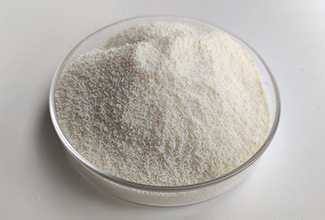
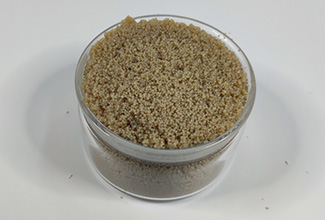
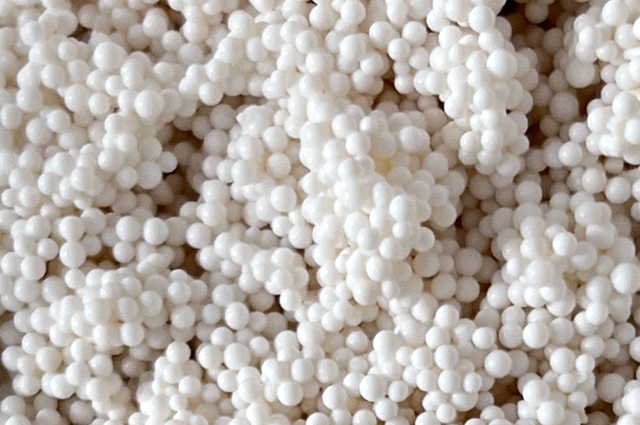
In industrial water treatment, commercial water purification equipment, and residential water softening systems, ion exchange resin is the key consumable used to soften water. Its fundamental operating principle involves using functional groups on the resin surface to adsorb calcium and magnesium ions—which cause water hardness—and exchange them for sodium ions; this reduces the hardness of the raw water, thereby preventing issues such as scale formation and equipment corrosion.
Resin Fouling and Scaling: The Primary Cause of Ion Exchange Channel Blockage
Fouling and scaling on the surface and within the internal pores of the resin are the most common and primary causes of the decline in water-softening performance. Ion exchange resins rely on their porous structure and surface functional groups to facilitate ion exchange; during prolonged operation, various impurities in the water continuously adhere to and accumulate on the resin surface and inside the pores. This directly blocks ion exchange channels and significantly reduces the number of effective exchange sites, ultimately leading to a substantial drop in the resin's capacity to adsorb calcium and magnesium ions.
Organic Contamination
Macromolecular organic substances present in raw water—such as humic acids, fulvic acids, and industrial organic residues—adhere firmly to the resin's functional groups and the inner walls of its pores. This type of contamination is highly tenacious and difficult to remove completely via conventional regeneration methods; it persistently coats the resin's active sites, hindering the ion exchange process involving calcium and magnesium ions, and leads to a progressive decline in softening performance.
Iron and Manganese Ion Contamination
Groundwater and industrial raw water commonly contain trace amounts of iron and manganese ions; prolonged operation results in the formation of metal oxide precipitates on the resin surface. These precipitates harden within the resin pores, causing "iron poisoning" or "manganese poisoning." This form of contamination causes irreversible damage, directly disrupting the ion exchange equilibrium and drastically reducing the resin's softening capacity.
Oil, Grease, and Suspended Matter Contamination
Oils, colloids, and suspended solid impurities found in industrial wastewater and surface raw water form a hydrophobic film over the resin surface. This film isolates the resin from the water, blocking ion exchange reactions and clogging the resin pores; consequently, the resin gradually loses its adsorption and exchange capabilities, ultimately resulting in treated water hardness levels that exceed permissible limits.
Resin Aging and Degradation: Irreversible, Permanent Performance Deterioration
Ion exchange resins have a finite service life and cannot be recycled indefinitely. After undergoing countless cycles of adsorption, exchange, and regeneration, the resin suffers from the degradation of both its physical structure and chemical properties; this damage is permanent, and the original water-softening performance cannot be restored through standard regeneration or cleaning procedures.
Resin Particle Fragmentation and Damage
Prolonged exposure to water flow impact, pressure fluctuations, and corrosive acidic or alkaline regenerants causes resin particles to gradually crack and fragment, generating significant amounts of fine resin powder. Fragmentation drastically reduces the effective ion-exchange surface area; simultaneously, the resulting fines clog the voids within the resin bed, leading to uneven water distribution and a marked decline in overall water-softening efficiency.
Significant Loss of Functional Groups
The sulfonic acid functional groups on the surface serve as the core active sites for strong-acid cation softening resins. Prolonged exposure to alternating acidic and alkaline conditions, water temperature fluctuations, and water-quality-induced degradation causes these surface functional groups to detach or become inactive. As the number of functional groups directly determines the resin's ion-exchange capacity, their loss results in an irreversible decline in the resin's softening performance.
Aging and Failure of the Cross-linked Structure
The internal cross-linked structure is crucial for maintaining the stability of the resin's pore structure and its overall mechanical strength. During long-term operation, this structure gradually loosens and degrades, causing pore deformation and collapse. This disrupts the reaction space required for ion exchange, leading to a continuous deterioration in the resin's structural stability and its capacity for adsorption and ion exchange.
Improper Regeneration Procedures: Man-Made Defects in Soft Water Performance
Regeneration is the critical process for restoring the water-softening performance of ion-exchange resins; the standardization of regeneration parameters and operational procedures directly determines whether the resin can fully regain its adsorption capacity. Most instances of poor water-softening performance caused by human error stem from improper regeneration practices, which result in incomplete resin activation and residual calcium and magnesium ions, thereby continuously impairing subsequent softening effectiveness.
Improper Regenerant Concentration
If the concentration of the regenerating brine is either too high or too low, the regeneration efficiency is compromised. Excessively low concentrations provide insufficient sodium ions to fully displace the calcium and magnesium hardness ions adsorbed onto the resin. Conversely, excessively high concentrations can corrode the resin structure and accelerate aging; this not only wastes chemicals but also leads to a progressive decline in resin performance over time.
Insufficient Regenerant Dosage
To cut costs, some users deliberately reduce the dosage of the regenerant, preventing the resin bed from being fully wetted and undergoing complete ion exchange. Calcium and magnesium ions adsorbed deep within the resin cannot be thoroughly eluted; residual hardness ions occupy a significant number of active sites, drastically reducing the resin's softening capacity and leading to a rapid failure to meet effluent quality standards.
Insufficient Contact Time
Ion exchange requires adequate reaction time. If the flow rate of the regenerating solution is too high or the soaking time too short, the regenerant cannot react fully with the resin, and the resin in the deeper layers fails to reactivate. Incomplete regeneration results in a state where the surface layer is reactivated while the inner layer remains inactive, leading to inconsistent overall softening performance.
Abnormal Regeneration Temperature and Flow Rate
While appropriate temperatures accelerate ion exchange reactions, low temperatures significantly slow down the reaction rate, severely impairing regeneration efficiency. Furthermore, flow rates that are either too high or too low disrupt the ion exchange equilibrium within the resin bed, causing localized regeneration failure and ultimately resulting in unstable softening performance for the entire system.
Abnormal Water Flow Velocity and Pressure: Disruption Of the Ion Exchange Reaction Equilibrium
The ion exchange reaction between the resin and hard water requires stable water pressure, an appropriate flow rate, and sufficient contact time. During operation, excessive flow velocity or water pressure that is either too high or too low can completely disrupt the ion exchange equilibrium, resulting in incomplete reactions and failure to meet effluent hardness standards; these are common underlying causes of hidden malfunctions in water softening systems.
Excessive Flow Velocity and Insufficient Contact Time
When the influent flow rate exceeds the rated standard, water passes rapidly through the resin bed, significantly reducing the contact time between the water and the resin. Consequently, calcium and magnesium ions exit the equipment before they can be adequately adsorbed and exchanged by the resin. In the short term, this results in effluent hardness exceeding limits; in the long term, continuous operation at high flow rates progressively lowers resin utilization efficiency.
Excessive Water Pressure Causing Resin Bed Compaction
Excessive influent pressure compresses the resin bed, causing the resin to become tightly packed and compacted, which drastically reduces the bed's porosity. A compacted resin bed is highly prone to flow channeling and preferential flow paths, where the majority of the water rushes through specific gaps without making sufficient contact with the resin. This leaves a large portion of the resin idle, causing a sharp drop in water softening efficiency.
Insufficient Water Pressure Leading to Uneven Water Distribution
When influent pressure is inadequate, the internal water distribution system fails to deliver water evenly, resulting in significant flow rate disparities across different areas of the resin bed. Some resin zones experience flow overload and insufficient treatment, while others remain idle due to a lack of water flow, leading to uneven and unstable overall water softening performance.
Abnormal Raw Water Quality: Exceeds the Resin's Operating Capacity/Tolerance Limits
Ion-exchange water-softening resins operate within specific water quality parameters and have finite limits regarding ion-exchange capacity and adsorption capability. When the raw water quality exceeds the resin's operational range, issues such as poor softening performance and system failure due to overloading will occur, even if the resin is in good condition and the equipment is operated correctly.
Excessively High Raw Water Hardness
If the calcium and magnesium ion content in the raw water far exceeds the equipment's rated treatment capacity, the resin will rapidly reach adsorption saturation; this drastically shortens the effective operating time and necessitates frequent regeneration cycles. Continuous exposure to high-hardness raw water forces the resin into a state of prolonged overload, preventing complete ion exchange and resulting in consistently excessive hardness in the treated water.
Excessive Heavy Metal Ion Content
Heavy metal ions—such as iron, manganese, and lead—present in the raw water at excessive levels bind more strongly to the resin's functional groups than calcium and magnesium ions do. They preferentially occupy the resin's active sites, creating competitive adsorption. This not only directly impairs the water-softening effect but also causes heavy metal poisoning of the resin, accelerating its degradation and premature failure.
Abnormal TDS and pH Levels
When the Total Dissolved Solids (TDS) in the raw water are excessively high, a large number of interfering ions disrupt the ion exchange reaction involving calcium and magnesium, thereby reducing the resin's adsorption selectivity. Meanwhile, excessively high or low pH levels compromise the activity of the resin's functional groups and alter the ionic charge state, directly inhibiting the normal ion exchange process and leading to a significant decline in water-softening performance.
Resin Bed Caking and Equipment Structural Failure: Causing Abnormal Water Flow
The structural integrity of the water softening equipment and the condition of the resin bed are fundamental to ensuring effective water softening. Deformation of the resin bed and equipment component blockages resulting from long-term operation directly lead to disrupted water flow distribution and reduced resin utilization, thereby compromising the softening performance.
Resin Bed Compaction and Clogging Due to Long-Term Operation
Prolonged exposure to water flow pressure and the accumulation of impurities cause the resin to gradually compact and harden. As impurities fill and clog the voids within the resin bed, resistance to water flow increases, making the system highly susceptible to the formation of preferential flow channels. Consequently, a significant portion of the resin becomes unable to participate in ion exchange reactions, drastically reducing the equipment's effective treatment capacity.
Clogging of Water Distribution and Filtration Components
Internal components such as water distributors, filter screens, and collection assemblies can become clogged over time by suspended solids, resin fines, and other impurities, resulting in uneven water distribution and collection. This prevents water from flowing uniformly through the resin bed, leading to localized short-circuiting and flow channeling, which significantly impairs overall water softening efficiency.
Insufficient Resin Filling and Model Mismatch: Configuration Defects Leading to Suboptimal Performance
The resin loading quantity and the suitability of the resin type directly determine the total ion exchange capacity of water softening equipment. Many water softening systems underperform not because of resin failure or improper operation, but rather due to an ill-conceived initial resin configuration, where the inherent performance capabilities fail to meet water treatment requirements.
Insufficient Resin Fill Height
Insufficient resin volume or inadequate bed depth directly results in low total exchange capacity, limiting the total amount of calcium and magnesium ions that can be adsorbed. Under standard flow loads, the resin saturates rapidly, failing to consistently produce compliant soft water; the overall water treatment capacity becomes mismatched with the equipment's requirements.
Improper Mixing of Resin Types
Cation exchange resins vary in type, degree of cross-linking, and performance characteristics, each requiring specific water quality, operating conditions, and regeneration parameters. Indiscriminately mixing different resin types disrupts ion exchange reactions and causes mutual interference, significantly reducing the stability and efficiency of the softening process.
Use of Inferior Replacement Resins
To cut costs, some users opt for low-priced, substandard, or non-compliant replacement resins. These resins typically feature unstable cross-linked structures, low functional group content, and irregular pore structures. Their inherent ion exchange capacity is far lower than that of standard water-softening resins, and they are highly prone to fouling, degradation, and fragmentation during operation, resulting in poor softening performance and a very short service life.
Conclusion
The causes of poor water-softening performance in ion-exchange resins can be systematically categorized into three groups: issues with the resin's inherent properties, operational errors, and problems related to raw water quality or equipment configuration. Specifically, resin fouling and aging represent irreversible damage to the resin itself; improper regeneration procedures and abnormal flow or pressure conditions are operational issues that can be optimized; and substandard raw water quality or mismatched equipment and resin specifications are system compatibility issues.
In practical operation and maintenance, users need not resort to blind resin replacement or excessive regeneration. Instead, they can pinpoint the root cause of malfunctions by following a logical sequence: first troubleshooting operating parameters, then inspecting equipment status, and finally assessing the extent of resin degradation. By implementing targeted measures—such as optimizing regeneration processes, adjusting operating parameters, improving influent water quality, replacing aged resin, and optimizing equipment configuration—users can rapidly restore the resin's stable softening performance and ensure the long-term, efficient operation of the entire water treatment system.