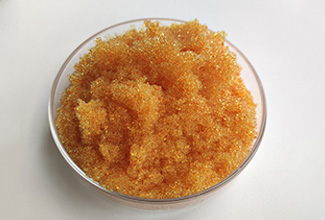
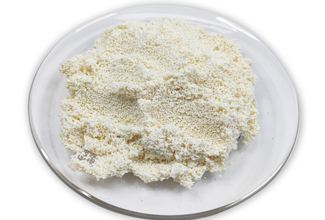
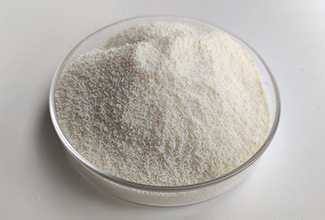
In sectors such as semiconductors, photovoltaics, pharmaceuticals, and high-end electronics manufacturing, the quality of ultrapure water directly impacts product yield. While much attention is often focused on reverse osmosis (RO) and electrodeionization (EDI) equipment, the mixed-bed resins used in the final polishing stage are frequently overlooked. In reality, as the final barrier in ultrapure water production, the proper selection and standardized regeneration of mixed-bed ion exchange resins directly determine the final concentrations of Total Organic Carbon (TOC) and metal ions in the effluent.
Working Principles of Mixed-Bed Resins and Ultrapure Water Standards
Mixed-bed resins consist of a uniform mixture of strong-acid cation exchange resins and strong-base anion exchange resins, packed into a single exchange column. Common mixing ratios include 1:1 and 1:1.5 (cation to anion resin), depending on the specific influent water quality and effluent requirements.
The advantage of this design is its ability to simultaneously remove both anions and cations, achieving deep demineralization. During normal operation, the effluent resistivity can reach 18.2 MΩ·cm—the theoretical limit for pure water. Furthermore, the effluent quality remains stable, avoiding the fluctuations often associated with the alternating operation of single-bed resin systems.
Mixed-bed units are typically positioned downstream of RO or EDI equipment to serve as the final polishing stage. According to a 2024 market report by Market Research Intellect, the global market for ultrapure water resins is valued at approximately $1.5 billion. Applications in the semiconductor and pharmaceutical sectors are seeing the fastest growth; the market size is projected to reach $2.3 billion by 2031, with a compound annual growth rate (CAGR) of about 6.5%.
Regarding water quality standards for ultrapure water, requirements vary across different industries. The semiconductor industry imposes the most stringent requirements. According to the SEMI F63 standard, ultrapure water for advanced processes at the 14nm node and below must meet the following criteria:
- Resistivity ≥ 18.2 MΩ·cm (at 25°C)
- TOC ≤ 1 ppb
- Key metal ions (e.g., sodium, iron, copper) controlled at the 0.01 ppb level
- Particles > 0.05 μm ≤ 1 particle/mL
Requirements for standard electronic-grade and pharmaceutical-grade water are somewhat less strict; TOC is generally required to be below 5 ppb, and metal ion levels are controlled at around 0.1 ppb.
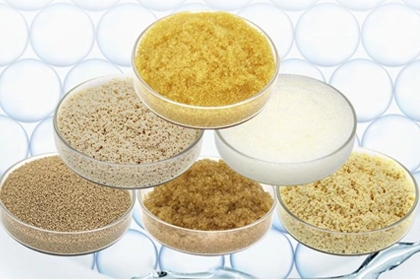
Key Indicators for Selecting Mixed-Bed Resins
Improper selection can lead to persistently high TOC, metal ion leakage, or excessively short regeneration cycles. In practical projects, resin quality can be evaluated based on the following dimensions:
Resin Type and Matrix Structure
Common resin types include gel-type, macroporous, and uniform-particle-size resins.
Gel-type resins are cost-effective and suitable for standard ultrapure water systems. However, they have small pore sizes and moderate fouling resistance; they also tend to leach more organic matter from the matrix, resulting in a higher TOC background level.
Macroporous resins feature a more developed pore structure and strong resistance to organic fouling, making them suitable for applications with high influent organic content. They exhibit lower leaching levels than standard gel-type resins and offer more stable metal ion removal performance.
Uniform-particle-size resins are the preferred choice for semiconductor-grade ultrapure water. As the name implies, the particle size is highly uniform, with a uniformity coefficient that can be kept below 1.05. These resins ensure even water flow distribution—preventing channeling or dead zones—and allow for more thorough regeneration; most importantly, they exhibit very low TOC leaching.
According to the domestic group standard "Technical Requirements for Product Certification of Ion Exchange Resins Used in Polishing Mixed Beds for Semiconductor Ultrapure Water Processes," the uniformity coefficient for polishing mixed-bed resins should not exceed 1.2, while high-end semiconductor-grade resins require a coefficient of ≤ 1.05. When selecting resins for the semiconductor and photovoltaic industries, preference is given to uniform-particle-size, highly cross-linked mixed-bed resins—such as the uniform-particle versions of 001×7 and 201×7—as they can significantly lower the TOC background level in the effluent.
Particle Size Distribution and Uniformity Coefficient
Resin particle sizes generally range from 0.3 to 1.2 mm, with 0.4 to 0.6 mm being the most common range. Particles that are too small create high flow resistance and are prone to resin loss (washout), while particles that are too large result in slow exchange rates and poor effluent quality.
The uniformity coefficient is a key indicator of particle size distribution. The closer this value is to 1, the more uniform the particle sizes are. Standard resins typically have a uniformity coefficient of around 1.3, whereas uniform-particle resins can achieve values below 1.1, and semiconductor-grade resins can reach 1.05 or lower.
This parameter should not be underestimated; non-uniform particle sizes can lead to flow channeling (short-circuiting), where small particles lodge between large ones. This causes uneven regeneration—over-regeneration in some areas and incomplete regeneration in others—eventually leading to metal ion leakage.
Exchange Capacity and Regeneration Efficiency
Exchange capacity is categorized into total exchange capacity and operating exchange capacity. Total exchange capacity represents the resin's theoretical maximum, while operating exchange capacity refers to the portion utilized during actual operation, typically 60% to 80% of the total capacity.
For standard strong-acid cation resins, the volumetric total exchange capacity is generally above 4.5 eq/L, while for strong-base anion resins, it exceeds 1.3 eq/L. Uniform-particle resins, due to their consistent size and high regeneration efficiency, tend to exhibit a higher ratio of operating exchange capacity.
Regeneration efficiency is also crucial. High-quality resins can recover over 90% of their capacity after proper regeneration. Industry test data indicates that for high-end uniform-particle resins from leading international brands, capacity recovery rates reach 92%–94% for cation resins and 88%–90% for anion resins. In contrast, standard non-uniform resins may only achieve around 85% and 78%, respectively—a significant difference.
Control of TOC Leaching
TOC (Total Organic Carbon) is a crucial yet often overlooked parameter in ultrapure water. A significant portion of the TOC in the effluent from mixed-bed ion exchangers originates from substances leached by the resin itself, such as residual monomers (styrene, divinylbenzene) and various oligomers.
To control TOC leaching, the first step is to select resins formulated for low leaching. Reputable resins designed for ultrapure water undergo multiple washing cycles at the factory to remove loose surface oligomers.
Secondly, new resins must undergo pretreatment before being put into service. They should not be loaded directly into the column after unpacking, as this would result in excessively high initial TOC levels. The correct procedure involves alternating acid and alkali soaking, followed by rinsing with large volumes of deionized water until the effluent TOC stabilizes within acceptable limits.
Effluent TOC should also be monitored regularly during routine operation. If levels consistently exceed 5 ppb and cannot be reduced, one must consider whether the resin is degrading due to aging or if there is an issue with the specific batch.
Metal Ion Background Levels
Metal impurities such as iron, copper, and sodium can be introduced during the resin manufacturing process. If these impurities remain in the resin, they may gradually leach out during operation, compromising the quality of the effluent water.
When selecting a resin, it is essential to request a test report on metal ion background levels from the supplier—ideally containing ICP-MS data. Batch consistency should also be verified to avoid significant fluctuations in metal content between different batches.
According to the ASTM D5127 standard, metal background levels (such as aluminum, copper, and iron) in resins used for Class E-1.2 ultrapure water must be controlled to below 0.002 μg/L.
.png)
Mixed Bed Resin Regeneration Strategy
The core contradiction of mixed bed resin regeneration is that chemical regeneration can restore the exchange capacity, but improper operation will introduce new TOC and metal ion pollution.There are currently three mainstream regeneration methods, each with applicable scenarios.
Chemical Regeneration (Acid-Base Regeneration)
This is the most commonly used regeneration method, and it is also the solution used by most systems.
The basic process is to backwash and layer first, using the density difference between the yin and yang resins, so that the yang resin sinks below and the yin resin floats on it.The backwash flow rate is generally controlled at 8 to 15 m/h, and the expansion rate of 50% to 70% is more appropriate.Whether the stratification is thorough directly affects the subsequent regeneration effect.
After the stratification is completed, the male resin is regenerated with 4% to 6% hydrochloric acid or sulfuric acid, and the female resin is regenerated with 4% to 8% sodium hydroxide.The flow rate of the regenerated fluid is about 4 to 8 BV/h, and the contact time is not less than 30 minutes.
After the regeneration is complete, replacement and positive washing must be carried out to flush out the remaining regenerating agent.Finally, use compressed air to mix the two resins evenly, and continue to wash until the water is qualified.
The advantages of chemical regeneration are high capacity recovery rate, low cost, and suitable for large-scale applications.The disadvantage is that acid-base waste liquid will be produced, and the treatment cost is high.In addition, if the purity of the regenerator is not enough, such as the high iron content in industrial-grade liquid alkali, it will pollute the resin and cause the metal ions in the effluent to exceed the standard.
There are two optimization directions in actual operation.The first is to use electronic-grade regenerators, such as SEMI-grade hydrochloric acid and sodium hydroxide, which have much lower impurity content.The second is to increase the flushing step of ultrapure water after regeneration, rinse at least 3 to 5 bed volumes, and thoroughly wash out the remaining regenerating agent in the resin pores.
Thermal Regeneration
Thermal regeneration is for certain special resins, such as acrylic thermal regeneration resins.By heating to 80 to 90 degrees, the resin releases the adsorbed ions and realizes regeneration.
This method does not use chemicals, there is no waste liquid discharge, and the TOC risk is low.But the disadvantage is that the energy consumption is high, and it is only suitable for specific types of resins, and the versatility is not strong.
Replaceable Regeneration
That is, a one-time mixed bed, the whole can is replaced when the resin is saturated, and sent back to the manufacturer for centralized regeneration.
The advantage of this method is that it is simple to operate, the water quality of the effluent is stable, and it will not cause pollution due to improper on-site regeneration operations.However, the single cost is high, which is suitable for small systems or key process points.
.png)
Key Points Of Toc And Metal Ion Control
Toc Control Strategy
The source of TOC is not only resin dissolution, but also many other links that need to be systematically controlled.
Resin selection is the first step.Priority is given to low-dissolution homogeneous resins, and suppliers are required to provide TOC dissolution test data.Don't try to choose industrial-grade resins cheaply, the cost of TOC treatment in the later stage may be higher.
Sufficient pretreatment of the new resin should be done.The usual practice is to soak in 5% sodium hydroxide for more than 12 hours, and then rinse repeatedly with ultrapure water until the effluent TOC drops below 5 ppb before putting it into use.This step is not easy to save. The initial TOC of many systems is high because the pretreatment is not done well.
Operation monitoring is also very important.It is recommended to install an online TOC monitor and set an alarm threshold, such as triggering an inspection if it exceeds 3 ppb.In this way, the problem can be found in time, so as not to wait until the product is defective before it can be traced back to the water quality.
Attention should also be paid to the regeneration link.Use a high-purity regenerating agent and rinse thoroughly after regeneration.In addition, the system pipelines and storage tanks should be cleaned regularly to prevent the growth of biofilms.The organic matter released by biofilm shedding is also one of the important sources of TOC.
Metal Ion Control Strategy
The control of metal ions must be grasped from the source, and every link must not be relaxed.
The metal background of the resin itself is the first barrier.When purchasing, suppliers are required to provide ICP-MS test reports to confirm that the background values of key metals such as iron, copper, and sodium are below 10 ppb.
The purity of the regenerator is the second level.Many systems have excessive metal ions, and the problem lies in the regenerator.The iron content in industrial-grade sodium hydroxide may be as high as tens of ppm, which will be adsorbed on the resin during regeneration and slowly released during operation.Therefore, semiconductor-grade systems must use SEMI-grade or higher purity acid-base.
The pipe material is also easy to ignore.Ordinary stainless steel pipes will precipitate metal ions, especially iron and chromium, in the ultrapure water environment.The contact parts of the ultrapure water system should be made of PVDF or PFA material to fundamentally avoid metal precipitation.
Online monitoring cannot be less.Install an online metal ion analyzer to focus on monitoring sodium ions and silica. Changes in these two indicators can reflect the working state of the resin in advance.
The last is to replace the resin on time.Resin has a life span, generally 2 to 3 years.After reaching the design life, it should be forcibly replaced, and do not reluctantly continue to use it.After the resin ages and degrades, not only does the exchange capacity decrease, but organic matter and metal impurities will also be dissolved, and the gains will not outweigh the losses.
Practical Case: Optimization Of Ultrapure Water System In Semiconductor Factory
I have been in contact with a semiconductor packaging factory before. The TOC of their ultrapure water system fluctuates between 3 and 8 ppb for a long time. Iron and copper ions occasionally exceed the standard, and the root cause has never been found.
After on-site investigation, several problems were found.The mixed bed uses ordinary gel-type resin, and the TOC dissolution itself is high.The industrial-grade liquid alkali is used for regeneration, and the iron content exceeds 50 ppb.There is also 304 stainless steel used in the main pipeline, and the inner wall has shown signs of corrosion.
Later, three transformations were made.The mixed bed resin was replaced with 001×7U and 201×7U of uniform grain and low dissolution type, the regenerator was upgraded to SEMI-grade acid-base, and all the pipes in contact with ultrapure water were changed to PVDF material. At the same time, online TOC and sodium ion monitoring were added.
After the transformation was completed, the TOC stabilized below 1 ppb, both iron and copper fell to within 0.05 ppb, and the regeneration cycle of the resin was extended by about 30%.
Selection And Procurement Checklist
Finally, a checklist that can be used directly when purchasing mixed bed resins has been compiled. It is recommended to confirm this information with the supplier.:
- Suitable resin type (gel type / macroporous type / homogeneous type)
- Suitable for particle size range and uniformity coefficient (UC<1.1 is better)
- Full switching capacity and working switching capacity
- TOC dissolution data (with factory inspection report)
- Background value of metal ions (with ICP-MS report)
- Recommended regenerator type and concentration
- Increase the design service life or number of cycles
- Do you provide recycling services or replacement solutions?
Conclusion
In the preparation of ultrapure water, the selection and regeneration of mixed bed resin is not a simple process of adding acid and alkali to the resin, but a systematic work involving materials, processes and management.The right resin is selected, and with standardized regeneration operations and strict online monitoring, the semiconductor-grade water quality standards of TOC <1 ppb and metal ion <0.1 ppb can be fully realized.
If your ultrapure water system is facing TOC fluctuations or metal ions exceeding the standard, it is recommended to systematically investigate from the three directions of resin selection, regenerator purity, and pipeline material.If you are not sure, you can contact the technical support of the resin supplier and let the professionals diagnose on-site, which is usually much more efficient than your own exploration.