1. What is Ion Exchange Resin Breakage?
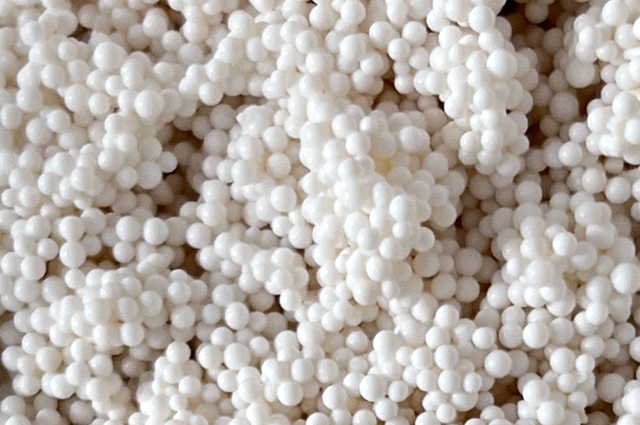
Ion exchange resin breakage refers to the phenomenon where the solid particle structure of the resin cracks and disintegrates during storage, transportation, and operation, forming fragments or fine powder. This loss of structural integrity is not an accidental result of a single factor, but rather the product of the combined effects of multiple internal and external factors.
A deep understanding of the mechanisms and root causes of resin breakage is crucial for ensuring the stable operation of ion exchange systems. Broken resin not only leads to a decrease in exchange capacity and processing efficiency, but can also clog equipment pipelines, increase operating resistance, ultimately causing system failures and driving up maintenance costs. Only by accurately grasping the essence of the problem can effective prevention and control strategies be developed from the source.
2. Why Does Resin Break Down?
Behind the breakage of ion exchange resin lies a clear physical and chemical mechanism. These mechanisms are the foundation for understanding various breakage causes and the core basis for developing targeted solutions.
Mechanical stress is the most direct driving force for breakage. When the external force on the resin particles exceeds their structural strength limit, the particles will break at the weakest point. This external force can be either an instantaneous impact or continuous compression and friction.
Osmotic pressure impact is closely related to the swelling characteristics of the resin. The ion concentration difference between the inside of the resin particles and the external environment creates osmotic pressure. When this concentration difference changes drastically, the resin will expand or contract rapidly, generating huge internal stress, which can lead to structural breakage.
Thermal stress originates from temperature fluctuations. The coefficient of thermal expansion of resin has a certain range. Sudden increases or decreases in temperature will create a temperature gradient inside and outside the resin particles, causing uneven thermal expansion and contraction. Long-term cycles will lead to cracks in the particles and eventually breakage.
Chemical degradation destroys the resin structure at the molecular level. Oxidizing agents, extreme acids and alkalis, and other chemical substances attack the polymer chains of the resin, causing chain breakage or damage to the cross-linked structure, significantly reducing the mechanical strength of the resin and making it brittle and prone to cracking.
3. Resin Breakage Caused by External Mechanical Forces
3.1 Damage During Transportation and Handling
Transportation and handling are the primary scenarios in which resin suffers mechanical damage. During transport, if packaged resin is subjected to collisions, drops, or prolonged violent vibrations, strong impacts will occur between the particles and between the particles and the packaging container, directly causing surface damage or particle breakage.
If the stacking height is too high during storage and transportation, the lower layer of resin will be excessively compressed. This continuous static pressure will exceed the compressive strength of the resin particles, leading to particle deformation, adhesion, and even breakage, especially for resins with larger particle sizes or relatively loose structures, where the damage is more pronounced.
3.2 Hydraulic Impact During Operation
During system operation, hydraulic impact is a significant factor leading to resin breakage. When the water flow rate is too high, the resin particles will be carried by the rapidly flowing liquid, resulting in violent movement within the resin bed. High-speed friction between particles and repeated collisions between particles and the inner wall of the equipment will continuously wear down the resin surface, gradually destroying its structural integrity.
During operations such as backwashing, the resin bed undergoes an expansion process. If the expansion rate is not properly controlled, the dispersion and collision of resin particles will be more intense, further exacerbating the risk of wear and breakage, and producing a large amount of fine powder resin.
3.3 Pressure Sudden Changes
Sudden pressure changes during system start-up and shutdown can cause strong hydraulic shocks to the resin. During startup, the pressure rises sharply, the resin bed is rapidly compacted, and instantaneous impact forces are generated between particles; during shutdown, the pressure drops sharply, the resin bed expands too quickly, and the stress state of the particles changes drastically, all of which can lead to resin particle breakage.
Abnormal system design or operation can also lead to the emergence of localized high-pressure areas. In these areas, the pressure on the resin particles far exceeds the normal range, making them highly susceptible to structural damage and the formation of broken particles.
4. The Influence of Temperature on Resin Stability
4.1 Rapid Temperature Changes
Rapid temperature changes trigger the thermal expansion and contraction effect of resin particles. When the temperature rises sharply, the internal expansion rate of the resin particles is faster than the external rate; when the temperature drops sharply, the external contraction rate is faster than the internal rate. This difference in internal and external deformation generates thermal stress within the particles.
Long-term, repeated temperature cycles cause fatigue accumulation in the resin particle structure. Initially small internal defects expand continuously, eventually leading to particle cracking and breakage, reducing the service life of the resin.
4.2 Excessive Operating Temperature
If the system operating temperature exceeds the resin's tolerance range, it will directly lead to a decrease in the resin's mechanical strength. High temperatures will disrupt the intermolecular forces between the resin polymer chains, making the resin structure loose and soft.
Simultaneously, excessively high temperatures will accelerate the formation and propagation of microcracks within the resin. These microcracks expand rapidly under the influence of external forces such as water flow, ultimately leading to resin particle breakage and affecting the system's treatment effect.
5. Resin Damage Caused by Chemical Factors
5.1 Oxidative Damage
Free chlorine, ozone, and other oxidants in water are the main substances causing oxidative damage to the resin. These oxidants have strong chemical reactivity and will attack the polymer backbone of the resin, destroying its molecular structure.
Oxidation will cause the polymer chains of the resin to break, reducing the degree of cross-linking and decreasing the mechanical strength. Damaged resin particles are extremely prone to breakage during subsequent operation, and their ion exchange capacity will also decrease significantly.
5.2 Extreme pH or Chemical Environment
Extreme acidic or alkaline environments can cause abnormal expansion of the resin. Under strongly acidic or alkaline conditions, resin particles will excessively absorb moisture and swell beyond the limits of their structure.
Prolonged exposure to extreme pH environments will gradually destroy the resin's cross-linked structure, reducing the degree of cross-linking. This not only reduces the resin's mechanical strength but also deteriorates its ion exchange performance, significantly increasing the risk of resin breakage under these dual effects.
6. Osmotic Pressure Shock and Structural Damage Caused by the Regeneration Process
6.1 Excessive Regenerant Concentration
During the regeneration process, excessively high regenerant concentrations can create a significant osmotic pressure difference between the inside and outside of the resin particles. High concentrations of regenerant cause rapid outward permeation of water from the resin particles, or rapid inward diffusion of the regenerant from the outside.
This sudden change in osmotic pressure leads to rapid contraction or expansion of the resin particles, generating enormous internal stress. When this stress exceeds the structural strength of the resin, the particles will burst internally, forming broken particles.
6.2 Excessively High Regenerant Flow Rate
Excessively high regenerant flow rates generate a strong impact force on the resin bed. High-speed flowing regenerant causes violent movement of the resin particles, intensifying collisions and friction between particles and between particles and equipment components.
Simultaneously, excessively high flow rates can lead to uneven contact between the regenerant and resin particles. Some areas of resin may be damaged due to excessive regenerant scouring, and localized stress concentration can cause particle breakage, affecting the regeneration effect and resin lifespan.
6.3 Excessively High Regeneration Frequency
Each regeneration process involves a cycle of expansion and contraction of the resin. Excessive regeneration frequency means that resin particles must frequently endure the stress caused by these volume changes.
Long-term, frequent expansion and contraction can lead to structural fatigue in the resin. The resin's elasticity gradually decreases, becoming brittle and prone to cracking, significantly increasing the probability of breakage during subsequent operation or regeneration.
7. Resin Quality and Aging Issues
7.1 Production Quality Defects
Defects in the resin's own production quality are an inherent factor contributing to its brittleness. Improper control during production can lead to insufficient cross-linking and poor structural stability.
Resins with incomplete polymerization reactions contain numerous voids and weak points. These resins are highly susceptible to cracking at internal defects when subjected to external forces, temperature changes, or chemical effects, failing to meet long-term operational requirements.
7.2 Natural Aging and Long-Term Degradation
Even under normal operating conditions, resins undergo a natural aging process. Prolonged contact with water, ions, and various chemicals causes the resin's polymer structure to slowly degrade.
Aging leads to decreased resin elasticity and increased brittleness. Originally tough resin particles gradually lose their impact and friction resistance, making them prone to breakage under even minor external forces during daily operation.
8. Equipment and System Design Defects
8.1 Water Distribution System Design Issues
The rationality of the water distribution system design directly affects the stress state of the resin. An improperly designed system can lead to uneven water distribution within the resin bed, with some areas exhibiting excessively high flow velocities and others exhibiting dead volumes.
In areas with excessively high flow velocities, the hydraulic impact and friction on the resin particles are intensified; simultaneously, uneven water distribution can cause localized stress concentration, making the resin in those areas more susceptible to breakage.
8.2 Internal Equipment Structural Issues
If there are sharp parts inside the equipment, such as rough welds or protruding bolts, the resin particles will scrape against these sharp parts during flow, directly causing surface damage or even particle breakage.
Rough surfaces on the inner walls of the equipment also exacerbate resin wear. Repeated friction between resin particles and rough surfaces continuously depletes the resin's structural strength, leading to increasingly pronounced resin breakage over long-term operation.
9. Water Quality Issues Accelerate Resin Breakdown
9.1 Increased Friction Due to Suspended Solids and Colloids
Suspended solids, colloids, and other impurities in the raw water will enter the resin bed with the water flow. These solid impurities will become trapped between resin particles, and under the influence of the water flow, they will frequently rub against the resin particles.
Friction not only directly wears down the resin surface but may also clog the gaps between resin particles, leading to increased system flow resistance. Increased flow resistance further intensifies the impact of water flow on the resin, creating a vicious cycle and accelerating resin breakdown.
9.2 Oxidizing Impurities
Various oxidizing impurities in the raw water, such as dissolved oxygen, ferrous ions, and permanganate, will have a continuous oxidizing effect on the resin. Although the oxidizing power of these impurities is not as strong as free chlorine, the long-term cumulative oxidizing effect is still significant.
Oxidizing impurities will gradually destroy the polymer structure of the resin, leading to a decrease in resin mechanical strength and performance degradation. Damaged resin has a significantly higher risk of breakage in subsequent operation than unoxidized resin.
10. Environmental and Storage Factors
10.1 Freezing Causing Resin Cracking
Improper storage at low temperatures can easily lead to freezing of resin. The expansion of water inside the resin particles as it freezes can directly cause cracking, resulting in irreparable damage. This structural damage caused by freezing makes the resin extremely prone to breakage during subsequent use.
10.2 Rapid Expansion Due to Drying and Re-soaking
If resin dries out during storage, its internal structure will be in a contracted state. When the dried resin is re-soaked, it will rapidly absorb water and expand dramatically. This drastic volume change in a short period creates enormous stress within the resin, ultimately leading to particle breakage.
10.3 Damage Due to Improper Storage Conditions
Damp and poorly ventilated storage environments can easily cause resin to mold; mixing with other chemicals may cause chemical corrosion. These conditions indirectly reduce the mechanical strength of the resin, decrease its structural stability, and increase the risk of breakage during subsequent use.
11. Key Drivers of Resin Breakage
Among the many factors leading to resin breakage, hydraulic shock during operation, osmotic pressure shock during regeneration, and chemical oxidation damage are the most common key drivers. These three types of factors often persist throughout the entire operating cycle of the resin, having a more direct and lasting impact, and are key areas requiring close attention in daily operation and maintenance.
Various stresses do not act in isolation but often superimpose, exacerbating the degree of resin breakage. For example, chemical degradation reduces the mechanical strength of the resin, causing it to break even under relatively small hydraulic shocks or thermal stresses; while thermal stress caused by temperature changes further expands the microcracks formed within the resin due to osmotic pressure shocks, accelerating structural disintegration.
Incorrect operation accelerates resin damage because it disrupts the resin's stable operating state, subjecting it to prolonged extreme conditions. Excessive flow rates, overly concentrated regenerants, and frequent temperature fluctuations continuously amplify the effects of various stresses, exceeding the resin's tolerance limits, thereby accelerating resin breakage and failure.
12.Conclusion
Resin breakage is the result of multiple factors, including mechanical stress, osmotic pressure, thermal stress, and chemical degradation. Transportation and handling, operational procedures, system design, water quality, and storage conditions can all be sources of risk.
Long-term monitoring of resin condition and standardization of operations at each stage are crucial for preventing breakage. Extending resin life not only ensures stable system operation but also improves process economy and reliability, providing strong support for production operations.